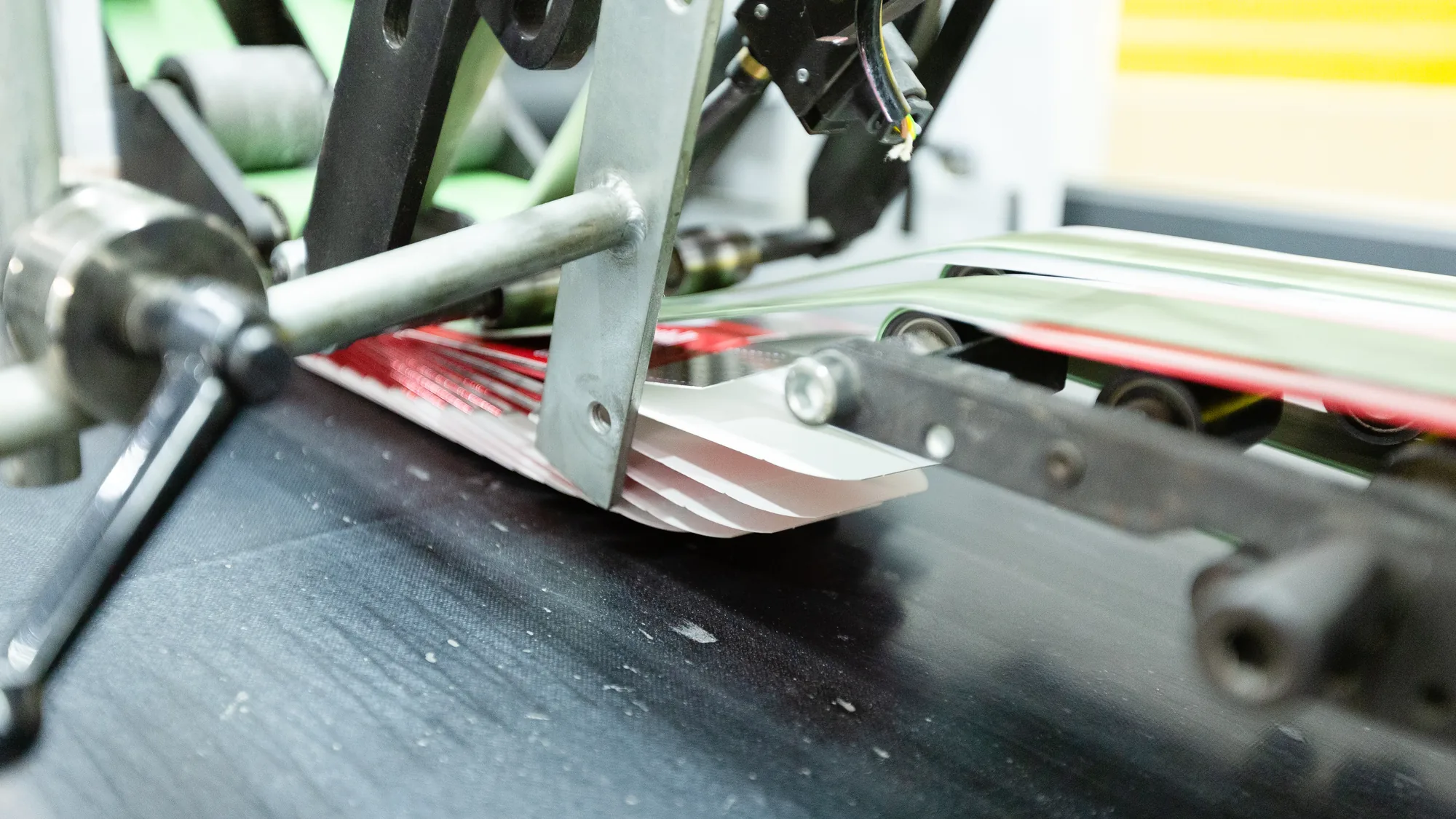
Structural design is the engineering layer beneath every package. It is the blueprint that determines whether a carton folds cleanly, protects the product inside, and runs at speed on a production press. Most content about structural packaging design comes from design agencies and brand consultancies. This article comes from a production floor.
Every folding carton begins as a flat sheet of paperboard. Structural design defines what happens to that sheet — where it is cut, where it is scored, how it folds into three dimensions, and whether it performs thousands of times without failure. When these decisions are made without manufacturing input, the result is predictable: cracking along score lines, misaligned panels, wasted substrate, and delayed launches.
With more than 100 years of manufacturing experience across four generations, Arkay Packaging connects structural engineering directly to production — with in-house engineering, digital plotters for rapid prototyping at its Design Studio in Hauppauge, New York, and vertically integrated manufacturing in Roanoke, Virginia.
This article explains structural packaging design through the lens of that manufacturing experience — covering what it is, why it matters for cost and quality, how prototyping works, and what brand teams should expect from a packaging partner that connects engineering directly to production.
What Structural Design Is — and What It Is Not
Structural design is frequently confused with graphic design, but they are distinct disciplines with different objectives. Understanding the difference is essential for brand teams evaluating packaging partners and structural design solutions for retail packaging.
Structural vs. Graphic Design
Structural design defines the three-dimensional form of a package: its geometry, material composition, panel layout, fold mechanics, and protective engineering. It determines how a carton is cut, scored, assembled, and erected — whether by hand or by automated machinery on a packaging line.
Graphic design, by contrast, applies visual branding to the structural surface. Typography, color, imagery, and finishing effects all live on the canvas that structural design creates.
Both disciplines are interdependent. A structurally poor package cannot be rescued by exceptional graphics. If panels misalign, score lines crack, or closure tabs fail, the visual presentation is compromised regardless of how refined the artwork is. Structural integrity comes first. The graphic layer follows.
Die-Lines: The Structural Blueprint
Every folding carton begins with a die-line — a 2D technical template that maps exactly where the package will be cut, scored, perforated, and folded. The die-line defines every panel, tuck flap, glue tab, and dust flap required to construct the finished carton.
Standard line coding follows industry convention:
- Solid lines indicate cut lines — where the substrate is severed
- Dashed lines indicate score lines — where the substrate will fold
- Dotted lines indicate perforations — partial cuts for tear-away features
A die-line drawn flat must fold precisely into its intended 3D structure. At production scale, that fold happens thousands of times per run. Dimensional accuracy in the die-line is not a preference — it is a manufacturing requirement. Even fractions of a millimeter in misplacement compound across a press run, producing cartons that do not close properly, do not erect on automated lines, or do not fit the product they are meant to protect.
The Structural Design Process
Structural packaging design follows a defined sequence — each step building on the last. Skipping steps or reordering them is the most common cause of rework and delayed launches.
1. Define Product and Performance Requirements
Every structural project starts with the product itself. Dimensions, weight, fragility, shelf orientation, and regulatory requirements establish the engineering parameters. A cosmetics carton protecting a glass bottle has fundamentally different structural needs than a spirits box supporting a heavy decanter.
2. Select the Substrate
SBS caliper, grain direction, barrier properties, and finishing compatibility are specified based on the performance requirements. The substrate decision affects every downstream step — from score line behavior to press format to final cost per unit.
3. Engineer the Die-Line
The structural engineer translates requirements into a 2D die-line — mapping every cut, score, perforation, fold, tab, and closure. The die-line must account for press layout, automated erection, and pallet efficiency simultaneously.
4. Prototype and Validate
A white sample is cut from the actual substrate — no ink, no finishing — to validate fold quality, product fit, closure function, and automated line compatibility. Digital plotters allow multiple structural concepts to be tested within the same session.
5. Resolve Structure-Finish Conflicts
Before production, the “omitting” process reviews how structural elements (score lines, die-cuts) interact with decorative elements (embossing, foil stamping, laminations). Conflicts are resolved in preproduction, not discovered on press.
6. Release to Production
Once the structure is validated and finish conflicts are cleared, the die-line is released for steel-rule die manufacturing and press setup. At this point, the structural design is locked — changes after die-cutting tooling is built add cost and delay.
What Are the Benefits of Structural Design?
Investing in structural packaging design pays off across the full product lifecycle — from the production floor to the consumer’s hands.
1. User-Oriented Design
Structural design shapes the consumer’s physical interaction with the package. How a carton opens, how it feels in the hand, how it reveals the product — these are engineered decisions, not accidents. Magnetic closures, lift-off lids, and drawer mechanisms all start with structural engineering.
2. Product Protection
The primary function of any package is protecting what is inside. Structural design engineers the right combination of caliper, panel geometry, and internal supports to absorb impact, resist compression during stacking, and prevent movement during transit.
3. Sustainability Through Material Efficiency
Right-sizing, caliper optimization, and waste-conscious die-line layouts reduce the total material consumed per unit. Fewer raw materials, less production waste, and more efficient palletization all contribute to a lower environmental footprint — backed by certifications like FSC, SFI, and PEFC.
4. Production Practicality
A well-engineered structure runs at speed on automated lines without jams, misfeeds, or manual intervention. Score lines fold cleanly. Tabs engage consistently. Glue flaps align. This practicality translates directly into lower labor costs and higher throughput.
5. The Feel Factor
Substrate weight, surface texture, and fold precision create a tactile impression that communicates quality before the consumer ever sees the product. A carton that feels substantial and opens smoothly signals a premium brand — structural design is what delivers that experience.
6. Brand Differentiation
Custom structural formats — shaped cartons, multi-panel windows, integrated inserts, unique closure mechanisms — create shelf presence that standard packaging cannot match. Structural design is one of the most effective ways to differentiate a product in a crowded retail environment.
Why Structural Design Determines Manufacturing Success
This is where structural packaging design moves from theory to practice. The decisions made in the structural engineering phase — score line depth, substrate selection, press format compatibility — determine whether a carton runs efficiently at production speed or generates rework, waste, and delays.
Score Lines and Fold Geometry
A score line is a permanent indentation pressed into paperboard at the exact location where a fold must occur. The precision of that indentation defines the quality of the fold.
Too light, and the paperboard does not bend cleanly — the fold wanders, producing inconsistent angles and sloppy panel alignment. Too deep, and the score damages wood fibers, causing visible cracking along the fold. Correct scoring produces clean, sharp 90-degree angles without compromising structural integrity.
Score line placement must account for multiple variables simultaneously: substrate caliper, grain direction, and any finishing applied to the surface (coatings, foils, laminations). A score that performs well on 18pt SBS may crack on 24pt SBS with a film lamination, because the added rigidity and surface tension change how the substrate responds to folding pressure.
At Arkay, this review is handled through a process called “omitting” — a systematic evaluation of how score lines, emboss zones, and decorative elements interact relative to the die-line. The goal is to identify and resolve conflicts between structural and finishing requirements before the job reaches the press, not after.
Substrate Selection for Folding Cartons
For premium folding cartons, the primary substrate is SBS (solid bleached sulfate) paperboard. SBS provides a bright white printing surface, consistent caliper, and excellent fold performance — qualities that make it the standard for cosmetics packaging, personal care, food, and consumer electronics packaging.
Substrate selection in packaging design structure considers several interdependent factors:
- Caliper — SBS ranges from 14pt to 28pt, with 28pt as the practical ceiling for offset lithographic production. Heavier calipers provide greater rigidity and shelf presence but require adjusted score depths and may limit certain finishing techniques.
- Surface finish compatibility — the substrate must accept the intended coatings, foils, or laminations without delamination or adhesion failure.
- Grain direction — paperboard folds more cleanly along the grain. Structural engineers orient panels to align primary folds with grain direction wherever possible.
- Barrier properties — moisture resistance, grease resistance, and light protection requirements influence substrate specification.
- Sustainability credentials — responsible sourcing is verified through FSC, SFI, and PEFC certifications, ensuring the paperboard comes from responsibly managed forests.
Designing for Press and Production Lines
Structural designs do not exist in isolation. They must account for the press format that will print them, the die-cut layout that will separate them, and the automated erection equipment that will fold and glue them on a packaging line.
Complex structures — octagonal cartons, multi-layer drawer boxes, nested inserts with interlocking tabs — deliver striking shelf presence. They also increase tooling cost, extend lead times, and may require manual assembly that slows fulfillment. Structural engineers balance brand ambition with production feasibility, recommending the most effective structure that runs reliably at scale.
This is where the collaborative relationship between brand teams and their manufacturing partner matters most. A structural engineer who understands press constraints from day one can propose alternatives that preserve the design intent while improving manufacturability — before tooling is cut and before the first sheet hits the press.
As Fred Vega, Structural Design Manager at Arkay, puts it: “One of the biggest mistakes brands make is designing packaging structures without considering mass production. We often see concepts like hexagon cartons, pyramid-style cartons, and other unconventional shapes created without proper industry-standard panel sizing, offsets, or manufacturing requirements in mind. A structure may look great in a rendering, but if it isn’t engineered for manufacturability, it can create major challenges in printing, converting, efficiency, scalability, and overall production costs. It can also slow down production on both the carton manufacturing side and the filling line side, creating inefficiencies throughout the entire supply chain.”
A useful test for any new die-line: does it run cleanly through automated erection and gluing? A straight-line carton tends to run efficiently. Designs with complex internals — interlocking tabs, multi-piece inserts, non-standard fold sequences — frequently require redesign before they can be automated at scale.
One real-world example: a personal care brand came to Arkay with a finished carton that was failing in the field — the structure could not hold the weight of the product and was breaking open after fill. Arkay’s design team, led by Fred Vega, re-engineered a more robust die-line that protected the product and ran cleanly through automated assembly. The original concept looked fine in a rendering; the engineering work was what made it function.
How Structural Design Reduces Total Packaging Cost
Structural packaging design is often treated as a creative exercise, but it is equally a cost optimization discipline. The geometry, material specification, and dimensional decisions made during structural engineering directly affect material spend, production efficiency, and freight cost.
According to PKG Branding, 63% of consumers say packaging affects their perception of a brand. Structural design is not just a cost line — it is a revenue lever. The challenge is engineering structures that elevate the brand experience while optimizing total cost.
Four structural decisions drive the largest cost impact:
Material optimization. Reducing substrate caliper by even one or two points — while maintaining compression strength and fold quality — reduces material cost per unit across an entire production run. A structural engineer who understands substrate behavior can specify the minimum caliper that meets performance requirements, rather than defaulting to heavier board as a safety margin.
Right-sizing. Packaging that is larger than necessary wastes substrate, increases void-fill requirements, and inflates dimensional weight for shipping. Right-sizing the package to the product eliminates excess material and reduces freight cost per unit.
Standardized structural footprints. When multiple SKUs share a common structural footprint with variable graphics, setup time on press is reduced and tooling is consolidated. The brand maintains distinct packaging for each product while the manufacturer gains production efficiency.
Pallet optimization. Carton dimensions that align to standard pallet footprints fit more units per shipment, reduce damage from shifting during transit, and lower transportation cost. This is an engineering decision, not a logistics afterthought — it belongs in the structural design phase. For spirits packaging and other heavy-product categories, pallet efficiency has an outsized impact on total cost per unit.
For a deeper exploration of how premium packaging balances cost and quality, Arkay’s complete guide to premium packaging covers the full production lifecycle.
Prototyping: From Concept to Physical Mock-Up
Prototyping is where structural design becomes tangible. A die-line on screen is a hypothesis. A physical prototype in hand is proof — of fold quality, product fit, closure function, and visual impact.
Digital Cutting and Rapid Prototyping
Traditional prototyping requires a custom steel-rule die — a physical tool that must be manufactured before any sample can be produced. Design changes mean a new die, additional cost, and additional lead time.
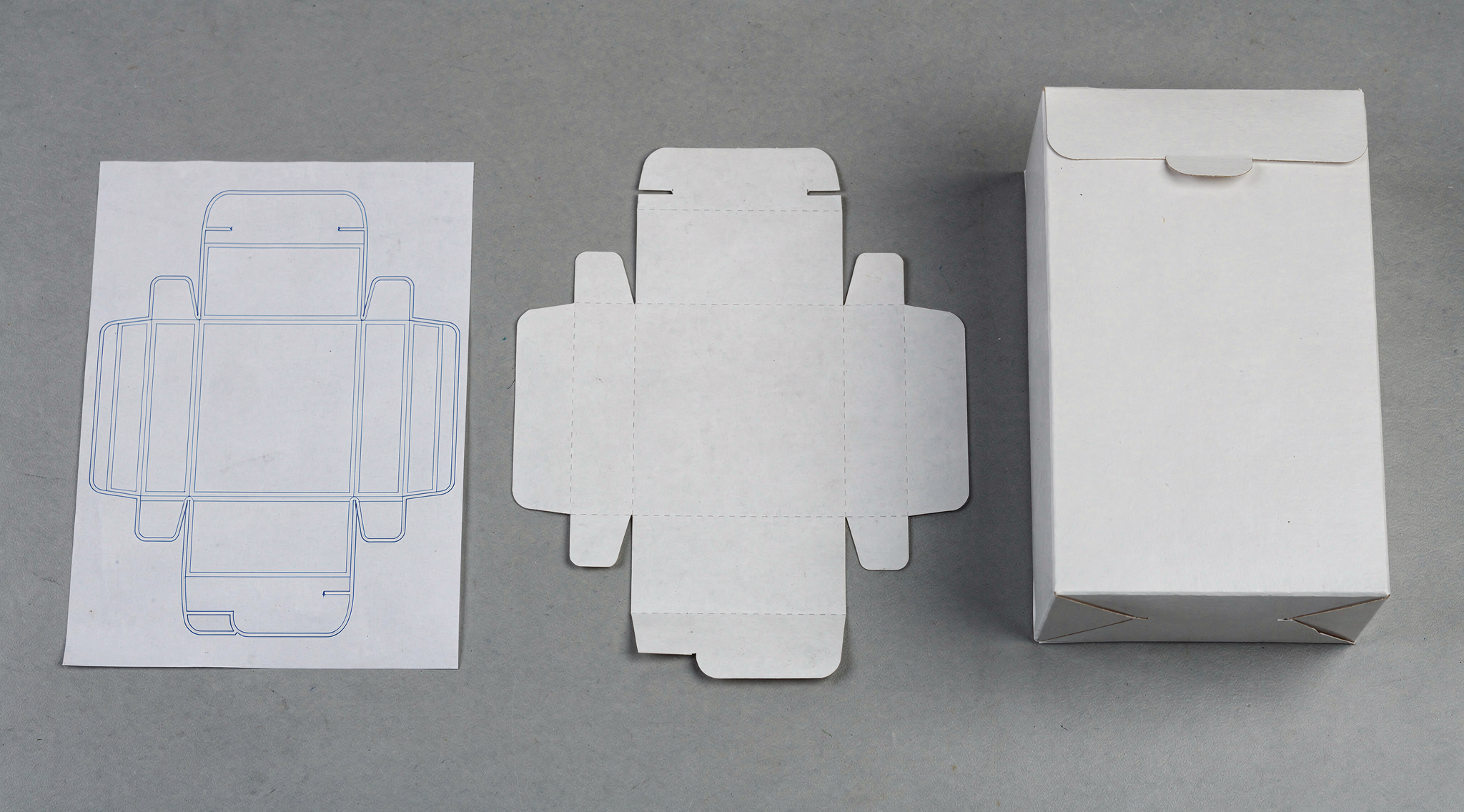
Digital plotters eliminate that constraint. These CNC-controlled cutting systems convert a digital die-line file directly into a physical prototype — cutting, scoring, creasing, and perforating the actual substrate with no tooling required. Design changes are immediate: update the file, re-cut, and evaluate within the same session.
Arkay operates digital plotters at both its Design Studio in Hauppauge, New York and its manufacturing facility in Roanoke, Virginia. This dual capability means structural concepts can be prototyped at the studio during the design phase and validated at the factory against actual production conditions.
The White Sample Process
Before any ink touches the substrate, a white sample is produced. A white sample is an unprinted prototype — cut and scored from the intended SBS substrate — that validates the structural design in isolation.
White samples answer the questions that matter before print investment:
- Does the carton fold cleanly along every score line?
- Does the product fit precisely, with appropriate clearance and protection?
- Do closure tabs engage and hold securely?
- Does the structure erect properly on automated equipment?
Multiple structural concepts can be explored simultaneously. A brand team reviewing 3 white sample variations can evaluate trade-offs in person — hand feel, opening mechanism, product reveal — rather than speculating from flat renderings.
Concept to Mock-Up in One Week
Arkay’s Design Studio delivers physical or printed digital mock-ups within one week. Brand teams can bring a concept — a sketch, a reference package, a set of dimensional requirements — and leave with a production-ready structural prototype. For customers visiting the studio in person, a mockup can be produced the same day using digital plotters and an in-studio printer mounted to the chosen substrate, so the brand team can leave with a working sample in hand.
This speed comes from having structural engineering, digital cutting, and production planning under coordinated control. There is no handoff between a design firm and a separate manufacturer. The same team that engineers the structure also understands the press that will print it and the substrate it will run on.
For brand teams working against launch timelines, this compresses the approval cycle significantly. Iterations that take weeks when prototyping is outsourced happen in days when engineering and cutting exist under one roof.
Engineer Your Next Packaging Structure With Arkay
The structural design advantages described above — score line precision, substrate expertise, rapid prototyping — are amplified when they exist within a vertically integrated operation rather than spread across separate vendors.
At Arkay, structural engineering, prototyping, prepress, printing, and finishing all operate under coordinated control between the Hauppauge Design Studio and the Roanoke manufacturing facility. This integration produces specific advantages for brands seeking structural design solutions for retail packaging:
No handoff gaps. The structural engineer who designs the die-line works with the same press operators who will run it. Design decisions account for actual production constraints — press format, substrate behavior, finishing sequence — from day one, not as late-stage corrections.
Real-time material testing. Substrate behavior is tested on the actual production SBS, not generic samples. Score response, fold quality, and coating compatibility are validated on the board that will run through the press.
The “omitting” process. Arkay’s proprietary review process ensures that structural elements (score lines, die-cuts) and decorative elements (embossing, foil stamping) align precisely. Conflicts between structure and finishing are resolved in preproduction, not discovered on press.
G7 color management. Once the structural canvas is validated, G7-certified color management ensures the graphic layer matches the intended design across every run, every SKU, and every reorder. The structural and visual layers of the package are engineered together.
**Premium packaging design with Paint on Press.** Arkay’s proprietary Paint on Press process enables up to 20 finish variations — validated on actual structural prototypes before production. Brand teams see exactly how each variation performs on the final structure, not on a flat swatch.
This vertically integrated model is supported by over 100 years of manufacturing heritage. Founded in 1922 and now in its fourth generation of family ownership, Arkay operates from a 140,000 sq. ft. carbon-neutral facility in Roanoke, Virginia. The company holds EcoVadis Platinum recognition (top 1% globally, consecutively since 2022), FSC, SFI, and PEFC certifications for responsible sourcing, and BRCGS packaging safety certification.
Arkay’s team partners with brands from concept through production, with manufacturing capabilities that span structural engineering, digital prototyping, printing, and finishing under coordinated control. To explore how structural packaging design can improve your next project, start a conversation with Arkay’s engineering team.
Frequently Asked Questions
What Is Structural Packaging Design?
Structural packaging design is the engineering of a package’s physical form, materials, and three-dimensional geometry. It defines how a package is cut, scored, folded, and assembled — focusing on protection, functionality, manufacturing efficiency, and sustainability rather than visual graphics.
Why Is Structural Design Important for Packaging?
Structural design determines whether a package protects its contents, folds cleanly at production speed, runs on automated erection lines, and optimizes material cost. Poor structural engineering leads to cracking score lines, misaligned panels, wasted substrate, and delayed launches — problems that graphic design cannot fix.
What Should Brands Consider When Designing Packaging Structures?
Brands should evaluate substrate selection (caliper, grain direction, barrier properties), fold geometry and score line precision, compatibility with automated erection equipment, pallet optimization for freight efficiency, and whether the structural partner connects engineering directly to production. The earlier manufacturing input enters the process, the fewer revisions and cost overruns result.
How Does Structural Design Reduce Packaging Costs?
Through material optimization (less board while maintaining strength), right-sizing (eliminating void space), standardizing footprints across SKUs (reducing setup time), and improving pallet efficiency (more units per shipment). These compound to reduce material, labor, and freight costs.
How Long Does Packaging Prototyping Take?
With digital cutting technology, prototypes can be produced without custom tooling — significantly reducing turnaround compared to traditional die-cutting. Manufacturers with in-house digital cutting and structural engineering can move from concept to physical mock-up in as little as one week.
Does Arkay Provide Structural Packaging Design Services?
Yes. Arkay offers in-house structural engineering at its Design Studio in Hauppauge, New York, with vertically integrated manufacturing in Roanoke, Virginia. Brand teams can bring a concept — a sketch, a reference package, or dimensional requirements — and receive a production-ready structural prototype within one week, with no separate design firm required.
Can Arkay Engineer Custom Folding Carton Structures?
Yes. Arkay’s structural engineers design custom die-lines for folding cartons across cosmetics, spirits, food, and consumer electronics packaging. With digital cutting for rapid prototyping and Paint on Press for testing up to 20 finish variations on the actual structure, custom carton development is validated against real production conditions before tooling is cut.

.png)