
The choice of packaging manufacturer rarely appears in a board deck. It shows up later — in every unboxing video, every retail audit, every returns spike, every customer review that turns on the way a product arrives. Most of its effects land long after the contract is signed.
The terms packaging manufacturer, packaging supplier, and packaging partner are treated as interchangeable. The underlying business models are not the same. Written from the floor of a fourth-generation folding carton manufacturer that has operated continuously since 1922, this guide defines the three roles, walks through the six factors that separate manufacturing partners from commodity producers, and surfaces the operational realities most brands only learn after a quality failure.
What Does A Packaging Manufacturer Do?
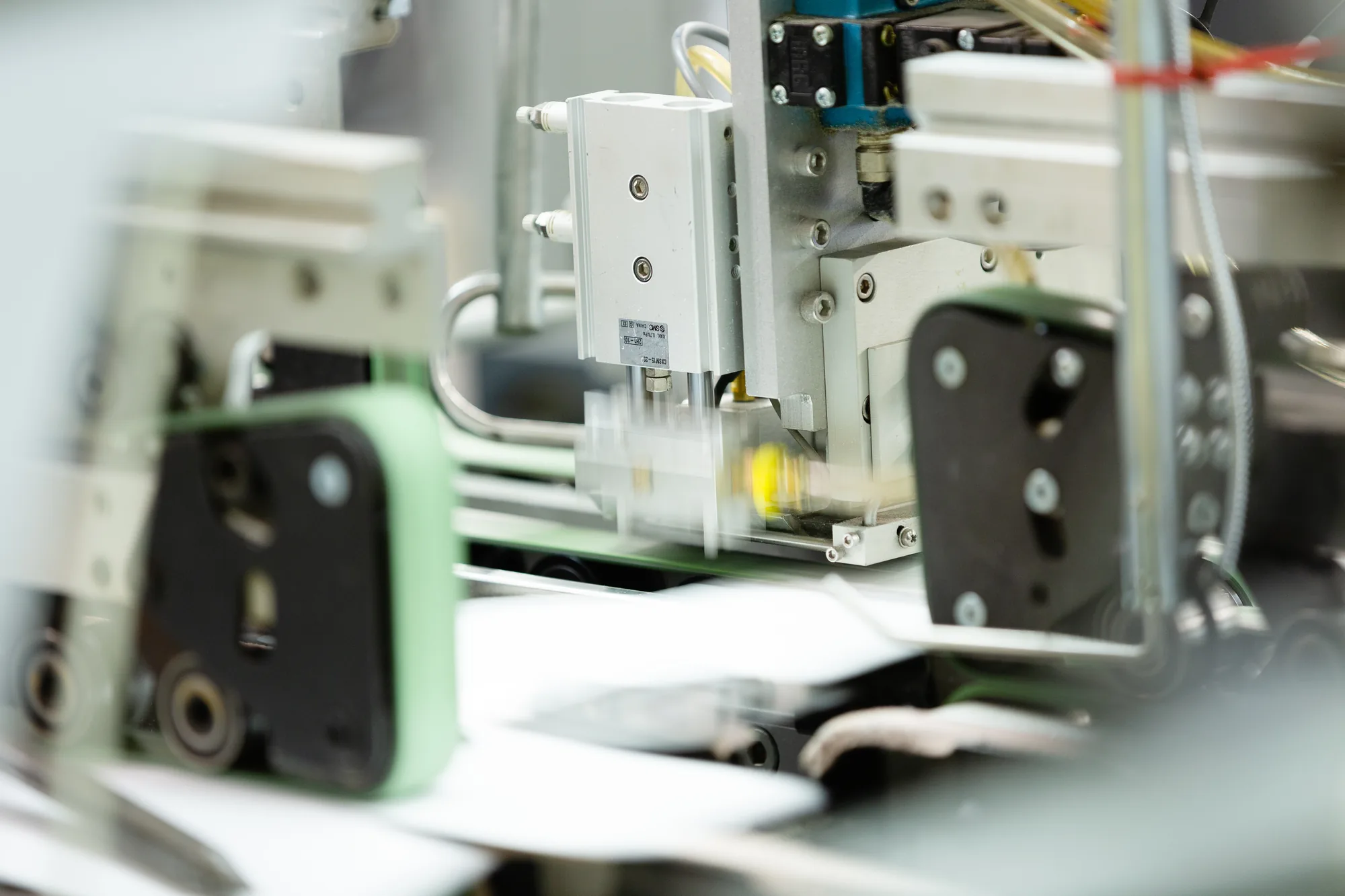
A packaging manufacturer transforms raw substrate into finished packaging in-house — sourcing paperboard, engineering structure, printing, finishing, die-cutting, gluing, and inspecting the result before it ships. A premium folding carton manufacturer does all of that with a tolerance for finish quality and registration accuracy that mass-market converters do not maintain.
A packaging supplier — sometimes called a distributor or merchant — sources finished packaging from one or more manufacturers and resells it. Suppliers add value through breadth of inventory, stock availability, and category coverage. They do not generally control the production floor where the packaging is made.
A packaging partner is the relationship model layered on top of either business form. The word describes how a brand and its production company work together: embedded in product development, sharing the brief from the start, treating the launch as joint work. A manufacturer can be a partner. A supplier can be a partner. Most premium brands eventually want the partner model — the question is how to recognize the producers capable of operating it.
How To Choose A Packaging Manufacturer
The strongest evaluations move past unit price and case studies and ask what is actually happening on the production floor. Six factors separate manufacturing partners that can deliver against a premium brand brief from suppliers that will only quote it.
1. In-House Operational Depth Versus Brokerage
The first question is whether the company quoting the job actually manufactures the packaging, or brokers it to a third-party factory that the brand cannot audit. Every handoff between facilities is a place where color, structure, or schedule can drift. Vertically integrated manufacturers run prepress, printing, foil, embossing, coatings, die-cutting, gluing, and quality control under one roof. The full picture of Arkay’s integration is on the capabilities page.
2. Verifiable Third-Party Certifications
A credible manufacturer answers certification questions with specifics, not adjectives. The signals that matter for premium folding carton work: G7 color management (calibrated, repeatable color process), FSC/SFI/PEFC (paperboard chain-of-custody for sustainability audits), EcoVadis (company-wide sustainability rating, Platinum at top 1% globally), BRCGS (packaging safety, particularly for food, nutraceutical, and personal care), and CarbonNeutral® (third-party verified carbon-neutral operations). Arkay has held EcoVadis Platinum consecutively since 2022. Full stack on the sustainability page.
3. Finishing Capability Beyond Generic “Custom”
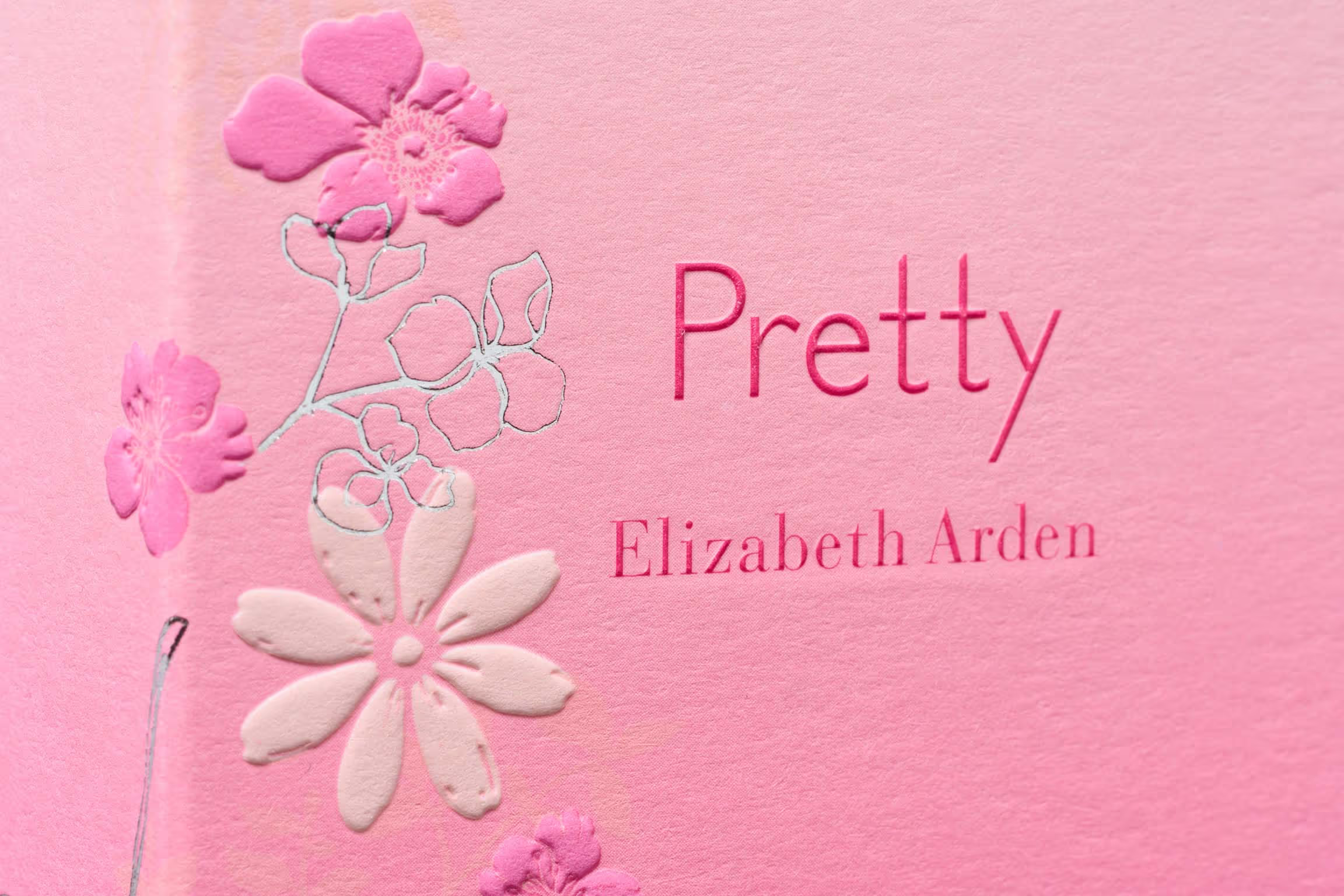
“Custom packaging” is a phrase the entire market uses with widely varying meanings. A serious premium manufacturer can articulate which finishing techniques are run in-house — cold foil, hot foil stamping, embossing, debossing, specialty coatings, soft-touch laminates, spot UV, and holographic — and which are subcontracted. Subcontracted finishing isn’t disqualifying, but it changes the risk profile. Arkay’s proprietary Paint on Press technology produces up to 20 substrate and finish variations testable on the production press. Embossing registration holds to ±0.3mm.
4. Sample-To-Production Quality Control
The most common quality failure on a premium launch is a sample that approves cleanly and a production run that doesn’t match. The root cause is almost always a mismatch between the sample environment and the actual press setup. A manufacturer with G7 color management, in-house finishing, and the ability to pre-validate substrate and finish on production equipment is materially less likely to produce that mismatch. Credible answers reference process controls at every stage — print, scoring, gluing, inspection — rather than a generic QC pass at the end of the line.
5. Domestic Supply Chain Reliability
Domestic manufacturing is increasingly a sourcing criterion in its own right — a way to compress lead times, protect intellectual property, and keep brand and procurement teams on the same time zone as the press room. The trade-off is well understood: lower offshore unit cost against longer lead times, freight exposure, IP risk, and slower iteration. Arkay’s case is proudly made in America.
6. The Partnership Model
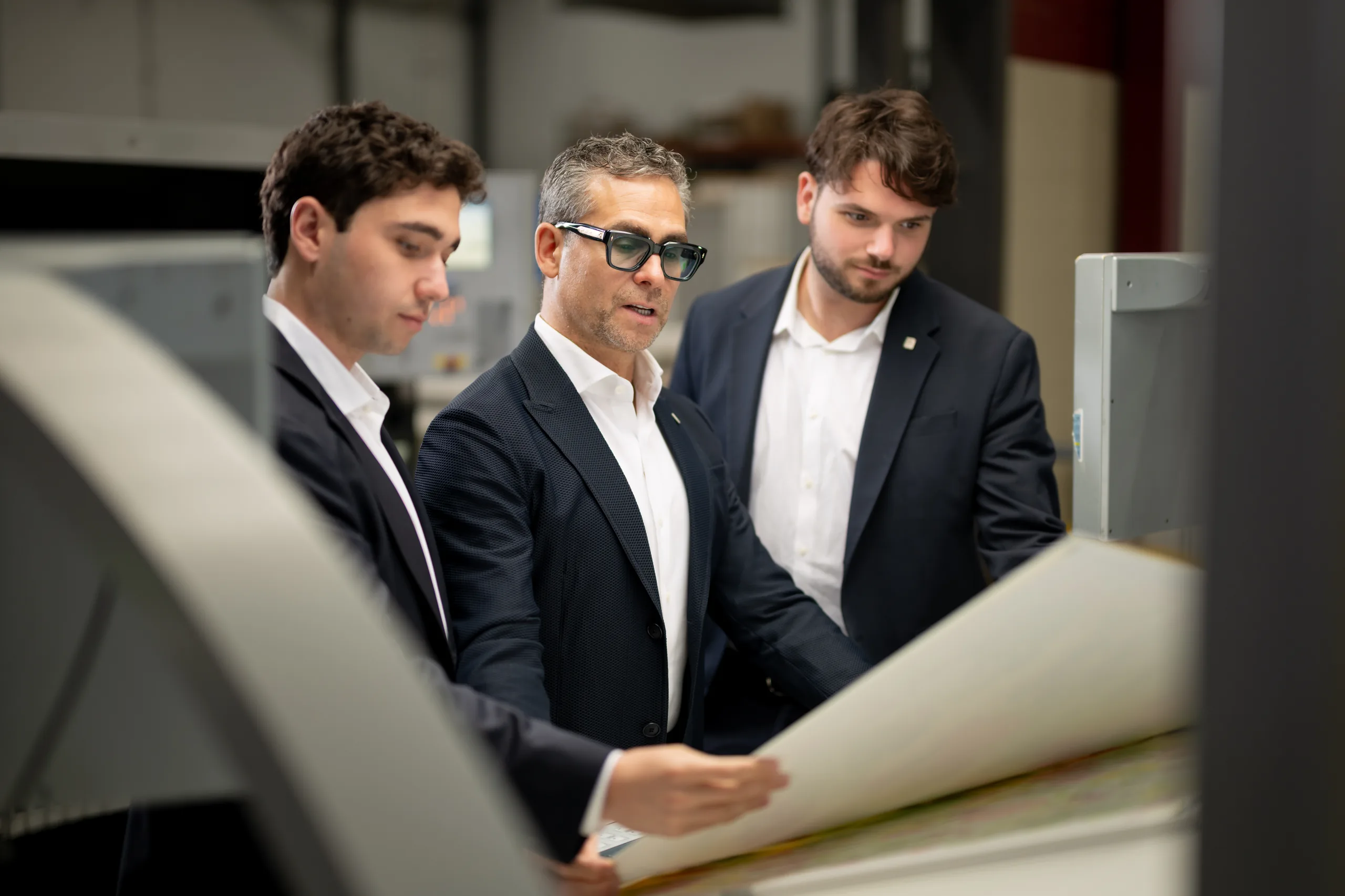
The last factor is hardest to assess on paper and easiest to assess in conversation. Does the manufacturer engage in the brief before specifications are finalized, or quote what’s already specified? Are accounts run by continuous teams or rotating reps? Does the manufacturer flag production challenges proactively, or react to them when they show up on a press check? The strongest premium brand relationships have all three signals — engagement, continuity, and proactive flagging — built into the account model.
Evaluating Suppliers And Partners
The same six-factor framework applies whether the producer is a manufacturer or a supplier. The substantive question is whether the supplier controls the floor where the packaging is made. For stock formats, a supplier with strong inventory can be the right answer. For premium launches with specific finishing requirements or sustainability credentials tied to specific certifications, a manufacturer with supplier-level breadth beats a supplier without manufacturer-level depth.
The diagnostic question to ask a supplier: “Are the certifications, finishing capabilities, and color management standards you reference your own, or the factories’ you broker through?” A credible answer is specific in both directions. Family-owned, generationally stable manufacturers tend to deliver the partnership model most reliably — account ownership survives leadership transitions and institutional knowledge accumulates rather than walks out the door.
Why Brands Choose Arkay
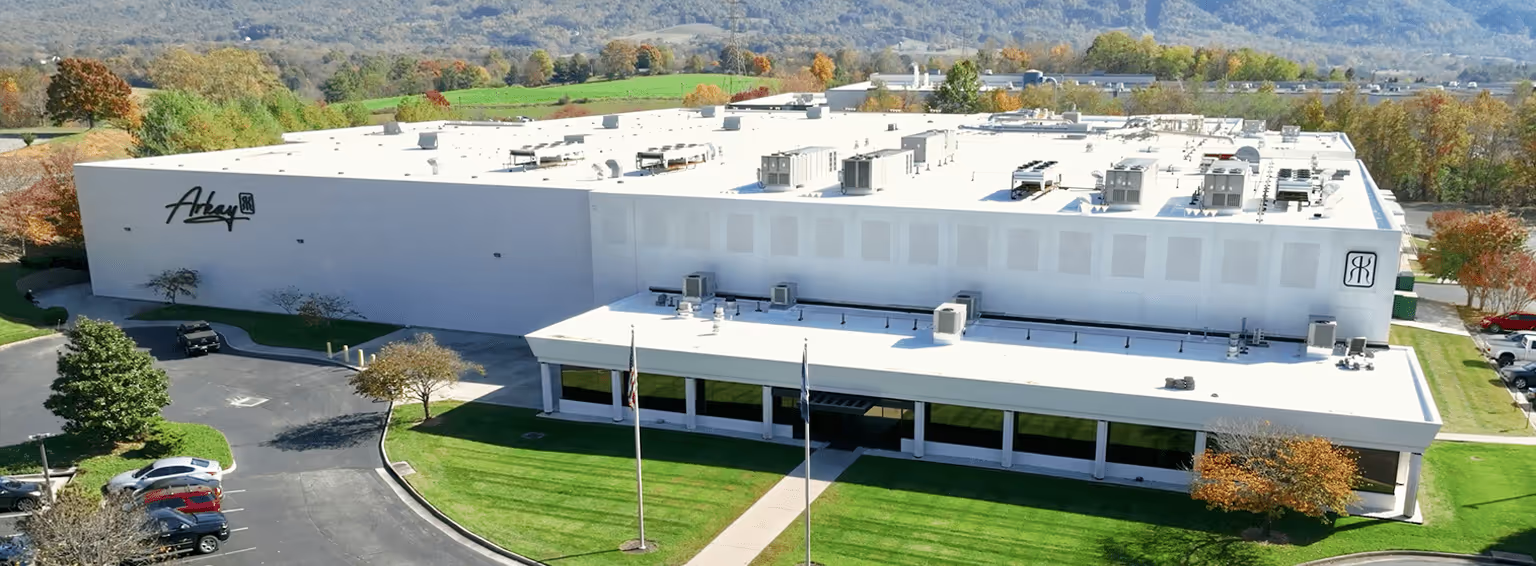
Brands choose Arkay for the combination of four-generation manufacturing continuity since 1922, in-house finishing capability including proprietary Paint on Press, verifiable sustainability credentials (EcoVadis Platinum consecutively since 2022, CarbonNeutral® operations, FSC/SFI/PEFC, G7, BRCGS), and a collaborative partnership model run from a single 140,000 sq. ft. facility in Roanoke, Virginia, with a design studio in Hauppauge, New York.
Operationally: SBS substrate from 14pt to 28pt; G7 color management; embossing registration held to ±0.3mm; finishing produced in-house, not subcontracted; Hauppauge mock-ups in one week. Paint on Press produces up to 20 substrates and finish variations on a single press setup. Learn more about the manufacturing model in the about Arkay overview, and premium specification guidance in the luxury packaging buying guide.
Start A Conversation With Us
Let’s talk about the right packaging for your brand. Whether you’re sizing up a new launch, a line extension, a sustainability redesign, or a move back to domestic production, our team is ready to talk through the brief.
Frequently Asked Questions
What does a packaging manufacturer do?
A packaging manufacturer designs and produces packaging from raw substrate — sourcing material, engineering structure, printing, finishing, and quality control under one roof. This is different from a packaging supplier, who resells finished packaging produced by third-party factories, and from a packaging partner, which describes the relationship model rather than the business model.
How should brands choose a packaging manufacturer?
Evaluate across six factors: in-house operational depth versus brokerage, verifiable third-party certifications (G7, EcoVadis, FSC, SFI, PEFC, BRCGS), finishing capability beyond generic “custom,” how sample-to-production quality is controlled, domestic supply chain reliability, and the partnership model. Unit price is the weakest signal of fit.
Who are the best packaging manufacturers for premium brands?
The strongest fit for premium and mid-market brands is a manufacturer that combines in-house printing and finishing, verifiable third-party certifications (EcoVadis Platinum, FSC, SFI, PEFC, G7, BRCGS), proprietary finishing capability such as press-side prototyping, and a collaborative account model. Domestic single-facility producers offer the most reliable supply chain for premium launches.
Why do brands choose Arkay as a packaging manufacturer?
Brands choose Arkay for four-generation manufacturing continuity since 1922, in-house finishing capability including proprietary Paint on Press technology with up to 20 substrate and finish variations, verifiable sustainability credentials (EcoVadis Platinum consecutively since 2022, CarbonNeutral® operations, FSC/SFI/PEFC chain-of-custody), and a collaborative partnership model run from a 140,000 sq. ft. facility in Roanoke, Virginia and a design studio in Hauppauge, New York.
What does a packaging supplier do?
A packaging supplier, sometimes called a distributor or merchant, sources finished packaging from one or more manufacturers and resells it. Suppliers add value through breadth of inventory, stock availability, and category coverage. They generally do not control the production floor, which limits the brand’s ability to specify or audit finish, color, and structural quality.
How do packaging suppliers support product launches?
A strong manufacturing or supplier partner pre-validates substrate, color, and finish on production equipment before the run begins, reducing the risk of sample-to-bulk drift that can derail a launch. They coordinate prototyping, structural engineering, mock-ups, and production scheduling against the launch date. Manufacturers with in-house design studios can move a brand from concept to a physical mock-up in days rather than weeks.
How should brands evaluate packaging suppliers?
The same six-factor framework applies whether the company is a manufacturer or a supplier. Confirm whether the partner owns the production floor or brokers through third parties, request specific certifications, review finishing capability against the brand brief, ask how color and finish drift between sample and production is controlled, and assess the account model. A supplier without manufacturing depth can be right for stock formats, but rarely for premium launches.
What questions should brands ask packaging suppliers?
Ask whether they manufacture in-house or broker to third-party factories; how color matching and finish consistency are controlled between sample and production; how lead times are defined; which certifications they hold and whether they are current; how account management works during a launch; and how cost is structured beyond unit price — tooling, setup, rework, and rush charges.
Who are the best packaging suppliers for premium brands?
The strongest suppliers operate with manufacturer-grade depth — own the production floor, hold verifiable certifications, and provide consultative account management. For premium launches with custom finishing requirements, a manufacturer that operates with supplier-level breadth (multiple substrates, vertical integration, in-house design) is typically a better fit than a pure distributor.
What does a packaging partner do for brands?
A packaging partner is involved in product development rather than just transactional fulfillment. The partner model means the manufacturer or supplier participates in structural engineering, finishing recommendations, and substrate decisions from the start of the brief — flagging production challenges before they become production problems. The term describes a relationship model: a manufacturer can be a partner, a supplier can be a partner.
How should brands choose a packaging partner?
Look for the operational signals that allow a partnership model to work: in-house manufacturing depth, design and prototyping capability before production, account continuity rather than transactional reps, and a willingness to engage on the brief before specifications are finalized.
Who are the best packaging partners for premium brands?
The strongest partners combine manufacturing depth (in-house printing and finishing, certifications, color management) with a partnership-model account approach — consultative engagement during the brief, structural and design input pre-production, and continuity across multiple launches. Family-owned and generationally stable manufacturers often deliver the partnership model most reliably because account ownership survives leadership transitions.