.jpg)

Beauty product packaging is a brand’s first physical touchpoint with the consumer, before the formula, before the unboxing, before the trial. In a category where purchase decisions happen at the shelf or through a screen, packaging is often the deciding factor.
The global cosmetic packaging market is valued at $31.68 billion in 2026 and projected to reach $40.33 billion by 2031 at a 4.95% CAGR (Mordor Intelligence, 2026). That scale reflects not just volume but complexity: beauty brands must make packaging decisions that work at retail, in photography, in shipping, and against retailer sustainability audits, simultaneously.
With more than 100 years of manufacturing experience across four generations, Arkay Packaging has partnered with global beauty brands across cosmetics, skincare, personal care, and fragrance. This guide covers the full beauty packaging system, primary, secondary, and tertiary, with a focus on secondary packaging as the retail and brand-identity layer where competitive advantages are built or lost.
The Three-Tier Beauty Packaging Framework
Understanding packaging as a system, not a container, is the foundation of effective packaging decisions. The three tiers serve different functions and often involve different manufacturers, different materials, and different strategic priorities.
Primary Packaging: What Holds the Product
Primary packaging is the container in direct contact with the formula: jars, tubes, bottles, pumps, compacts, airless dispensers, lipstick bullets, and dropper bottles. For cosmetics and beauty brands, primary packaging is where formula protection, dispensing mechanics, and fill-volume honesty intersect.
Material choices at the primary tier are driven by formula requirements: - Glass: premium perception, weight, breakage risk; dominant in fragrance and prestige skincare - Plastic (HDPE, PETG, PP): dominant by volume; formula-specific selection - Aluminum: premium and sustainable; refillable compacts, deodorant, mascara wands - Acrylic: glass-like clarity without fragility; mid-market cosmetics
For skincare packaging specifically, formula protection is the defining variable: airless structures for antioxidant-sensitive actives, opaque packaging for UV-sensitive formulas, UV-protective glass for light-degradable ingredients. These are manufacturing requirements, not aesthetic ones.
Secondary Packaging: Where Brand Equity Is Built
For most brand teams, the outer packaging is the real work: the surface where brand equity is built on the shelf, in photography, and in the unboxing moment. Primary containers (bottles, tubes, compacts) are typically sourced from specialty component suppliers; Arkay doesn’t manufacture these. What Arkay manufactures is the secondary packaging: the folding carton, set-up box, or sleeve that presents the product to the consumer.
To define the terms clearly: primary packaging is the container that holds the formula. Secondary packaging is the outer structure the consumer sees first: the folding carton on a fragrance, the rigid set-up box around a skincare gift set, the printed sleeve on a tube.
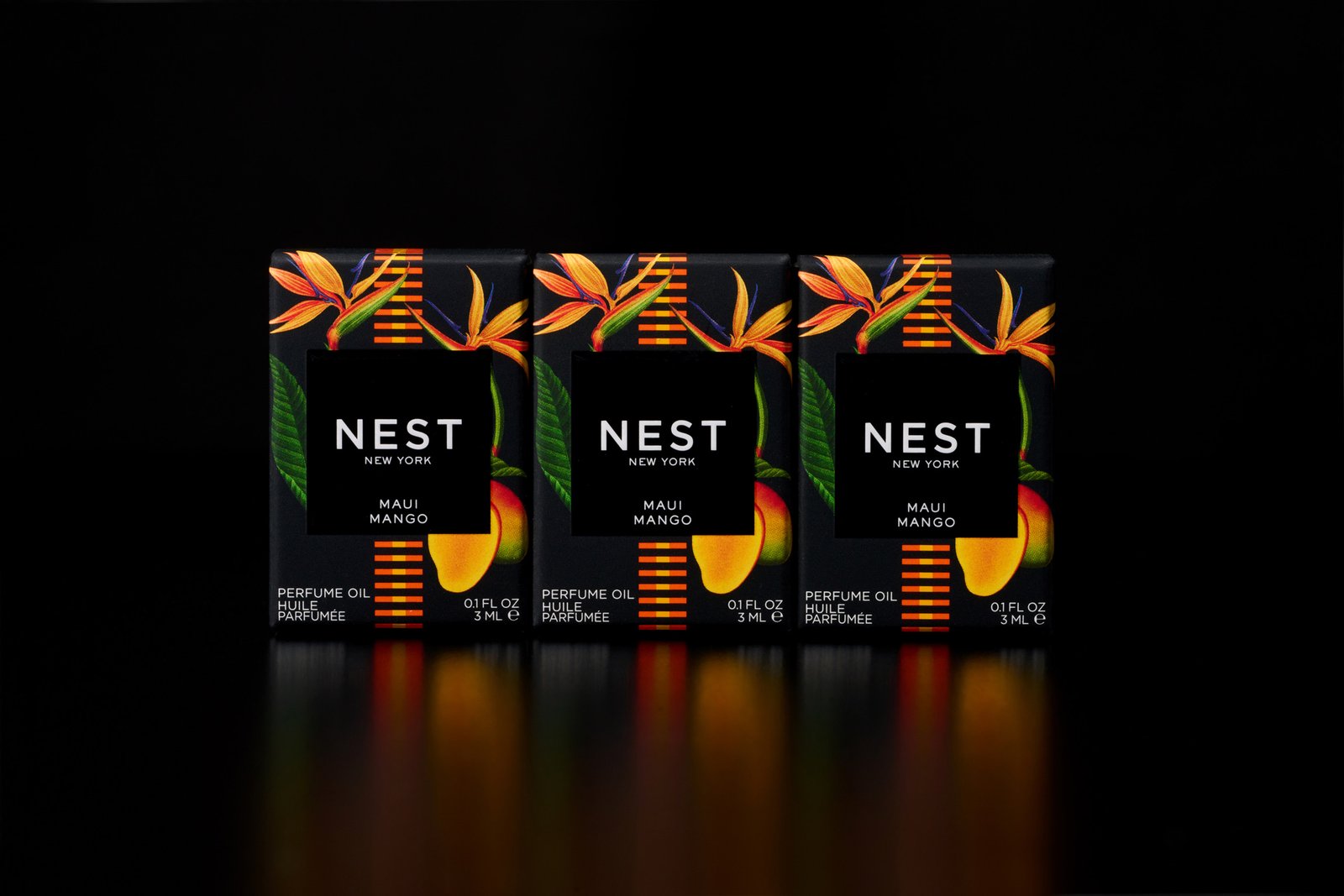
Secondary packaging is where finish decisions live: foil stamping, embossing, soft-touch lamination, and structural die engineering. A cosmetics brand launching a prestige fragrance, for example, builds brand presence on the shelf through the outer folding carton (SBS substrate, foil-stamped logo, soft-touch base). A skincare brand developing a gift set relies on the rigid set-up box as the primary packaging object that the consumer receives. A mid-market brand sleeving a skincare tube uses the printed sleeve as its only branded surface. In each case, the secondary packaging is the decision that most directly shapes how consumers perceive and value the product.
Skincare holds 45.01% of the cosmetic packaging segment’s revenue share (Mordor Intelligence, 2026). For skincare brands specifically, the secondary carton is often the only branded packaging a consumer sees; the primary container may be opaque, undecorated, or inside a pump.
Tertiary Packaging: Shipping and Distribution
Tertiary packaging (corrugated shipping cartons, case packs, and pallets) is functional infrastructure, not consumer-facing. It is optimized for protection, stacking efficiency, and shipping cost. One strategic intersection worth noting: the structural engineering of the folding carton affects how efficiently it nests in case packs, which affects per-unit shipping cost. This is a consideration at brief, not at production.
Types of Beauty Packaging: Secondary Formats
The secondary packaging market offers several structural formats. For most beauty brands, folding cartons are the right starting point; the other formats serve specific use cases where folding cartons are not the optimal solution.
Folding Cartons
The workhorse of beauty secondary packaging. Folding cartons are used across skincare, color cosmetics, fragrance, hair care, and beauty supplements. They are manufactured from paperboard (typically SBS for prestige applications), printed, die-cut, and shipped flat for brand-side or contract-fill assembly.
Structural variants available in folding carton formats: - Straight-tuck end: classic, clean; industry standard for most beauty cartons - Reverse-tuck end: top and bottom flaps fold from opposite sides; common for personal care - Auto-bottom / 1-2-3 bottom: stronger base; used for heavier primary containers - Sleeve-style: slides over a primary container; efficient for mid-market brands - Tray-and-sleeve: premium assembly; creates an elevated reveal
Cosmetic boxes and custom cosmetic packaging built on folding carton structures offer the widest finish range of any secondary packaging format; the full toolkit of foil, embossing, soft-touch, spot UV, and matte/gloss combinations is available on folding cartons because of SBS paperboard’s surface properties.
Rigid Set-Up Boxes
Two-piece lid-and-base boxes for ultra-premium, gifting, and collector-edition formats. Board is wrapped rather than printed directly (higher cost, longer lead time, different supply chain than folding cartons). Used when the packaging itself is meant to be kept as an object. See the value of luxury cosmetics packaging for the brand strategy context around rigid formats.
Sleeves and Wrap Formats
Paperboard sleeves over primary containers are a cost-effective secondary option for mid-market brands. Limited brand expression in real estate compared to a full folding carton; typically used when cost efficiency takes priority over premium presentation.
Pouches and Flexible Formats
Flexible sachets and pouches are the fastest-growing cosmetic packaging format, recording 7.41% CAGR through 2031 (Mordor Intelligence, 2026). Growth is driven by travel-size formats, refill pouches, and minimalism-positioned brands. Flexible packaging is outside Arkay’s folding carton specialization; brands evaluating flexible formats will find Arkay’s expertise most relevant for the secondary carton that packages a flexible refill or houses a set.
Packaging Materials for Beauty Brands
SBS Paperboard: The Premium Standard for Beauty Cartons
Solid Bleached Sulfate (SBS) is the dominant substrate for prestige cosmetics folding cartons. Its bright white surface, consistent bleached pulp composition, and smooth calendered finish make it the substrate of choice when high-fidelity printing and precision finish work are required.
SBS caliper range for beauty cartons runs 14–28pt: - 14–18pt: lightweight cartons for accessories, refill components - 18–24pt: standard for most beauty secondary packaging - 24–28pt: structured premium retail cartons, cartons holding heavy primary containers
SBS accepts the full finishing toolkit: foil stamping, embossing, soft-touch lamination, spot UV, matte and gloss coatings, aqueous overprint varnish. G7 color management on SBS delivers the press-to-press color accuracy, prestige beauty brands require for exact Pantone matching across production runs and across seasons.
Specialty and Sustainable Paperboard Options
For brands with sustainability requirements, FSC, SFI, and PEFC-certified paperboard stocks are available while maintaining the surface quality premium beauty brands need. The finish toolkit remains fully compatible with the certified board. For a complete guide to sustainable cosmetics packaging certifications and retailer mandate thresholds, see the sustainable beauty packaging guide.
Primary Packaging Materials (Brief Reference)
Primary container materials are outside Arkay’s folding carton manufacturing scope; brands evaluating glass bottles, plastic jars, or aluminum components will source from primary packaging specialists. The brief material reference: glass for prestige skincare and fragrance; plastic (HDPE, PETG, PP) for most formula types; aluminum for refillable and sustainable-positioned primary formats. The choice at the primary tier affects both the carton engineering required and the overall brand’s sustainability profile.
Customization Options for Cosmetics Packaging
Print and Color Accuracy
Four-color process printing is the foundation of cosmetic box decoration, but quality varies significantly by manufacturing process. For beauty brands with exact brand colors (which includes nearly all prestige and mid-market brands), G7 color management certification is the standard that ensures Pantone fidelity run-to-run and across production campaigns.
Makeup packaging with multiple SKUs or seasonal limited-edition variants benefits from Arkay’s proprietary Paint on Press technology, with up to 20 variations per production run without separate finishing passes. This capability is directly relevant for beauty brands managing shade extensions, limited-edition holiday sets, or regional market variants.
Surface Finishes: The Brand’s Sensory Signature
Surface finishes are where cosmetic packaging moves from functional to memorable. The available toolkit for folding cartons:
- Soft-touch matte lamination: velvety, tactile; signals luxury; the dominant finish in prestige beauty
- Gloss lamination: bright, reflective; classic color cosmetics presentation; widely used in mass and mid-market
- Foil stamping (hot and cold): metallic accent or full-coverage metallic; signals premium; see the foil stamping guide for technique selection
- Embossing and debossing: dimensional brand marks, raised or recessed texture detail; see the embossing and debossing guide for structural mechanics
- Spot UV coating: high-gloss contrast element against a matte surface; dramatic shelf presence
- Aqueous / OPV coating: protective overcoat; compatible with recyclability claims in most systems
Finish combinations are the norm in prestige beauty; a soft-touch matte base with an embossed brand mark and foil accent is the classic prestige carton formula because it delivers three distinct sensory signals simultaneously. Registration precision is what holds these combinations together: Arkay’s embossing tolerance of ±0.3mm ensures finish elements land exactly where the design specifies.
Structural Customization and Insert Systems
Custom die-line engineering adapts the carton structure to the exact dimensions of the primary container, minimizing movement and rattle, for a precise fit that reinforces quality perception when the carton is opened. For premium launches and gifting formats, insert systems (paperboard, foam, or vacuum-formed tray) cradle the primary container and control the reveal sequence.
Brands without an in-house structural packaging team can engage Arkay’s Design Studio in Hauppauge, NY. Concept to physical mock-up in one week, built to production tolerances, not a design agency approximation.
How to Evaluate a Beauty Packaging Manufacturer
The cosmetic packaging manufacturer's decision affects color accuracy, lead times, finish quality, sustainability documentation, and the ability to scale. Evaluating based on price alone is how brands end up with packaging that fails retailer audits, misses launch windows, and drifts off-color by the second production run.
1. Substrate and Finishing Capability
Confirm that the manufacturer runs SBS paperboard and executes all finishing (foil, embossing, specialty coatings) in-house. Outsourced finishing adds lead time, introduces quality handoff risk, and reduces color control between print and finish passes. Vertically integrated production means the sample you approved is what ships.
2. Color Management Certification
G7 color management certification is the industry standard for press-to-press Pantone consistency. Without it, color matching depends on operator interpretation rather than a calibrated process. For beauty brands with exact brand color standards, G7 certification is a non-negotiable qualification, not a preference.
3. Domestic vs. Offshore Manufacturing
Offshore manufacturing typically adds significant lead time to production schedules, introduces customs-clearance risk, and limits real-time communication during quality review. For new product launches with fixed retail window commitments, that variability is a significant risk. Arkay’s domestic manufacturing operation, a single 140,000 sq. ft. facility in Roanoke, VA, offers domestic lead times and same-timezone quality management without the supply chain uncertainty that offshore sourcing introduces.
4. Prototype Speed
The ability to move from design file to physical mock-up in days compresses the product development cycle and allows brands to confirm finish quality on a physical sample before committing to production. Ask any manufacturer: What is your prototyping timeline? Do you have an in-house design studio? The answer reveals how consultative the manufacturing relationship will actually be.
5. Sustainability Credentials
Major prestige and clean-beauty retailers have formalized sustainability requirements that include manufacturer documentation. A manufacturing partner without FSC, SFI, or PEFC certified material sourcing puts brand packaging programs at risk during retailer audits. For a complete guide to what these certifications require and how to evaluate a manufacturer’s sustainability claims, see the sustainable beauty packaging guide. To evaluate Arkay’s specific program depth, review the Arkay sustainability credentials: EcoVadis Platinum (consecutively since 2022), triple-certified sourcing, and CarbonNeutral® certification (current for 2026) are documented there.
Arkay Packaging: A Manufacturing Partner for Beauty Brands
With more than 100 years of manufacturing experience across four generations, Arkay Packaging works alongside beauty brand teams and packaging designers to engineer folding cartons that perform at every touchpoint, from retail shelf to unboxing.
Arkay is a fourth-generation, family-owned premium folding carton manufacturer that has operated continuously since 1922. From its carbon-neutral facility in Roanoke, VA, Arkay delivers finish-led packaging for cosmetics, personal care, spirits, and lifestyle brands, combining precision color management, proprietary Paint on Press technology, and vertically integrated production, all under one roof.
What that means for beauty brand programs: - SBS paperboard expertise: 14–28pt caliper range, full in-house finishing toolkit - G7 color management: pantone-accurate, run-to-run consistent - Paint on Press: up to 20 variations per run for multi-SKU and limited-edition programs - Design Studio, Hauppauge, NY: concept to physical mock-up in one week, no design team required on the brand side - BRCGS packaging safety certified: food-grade safety standards across production - EcoVadis Platinum: top 1% globally, held consecutively since 2022; FSC, SFI, PEFC triple-certified sourcing; CarbonNeutral® confirmed 2026
Arkay manufactures folding cartons and set-up boxes for beauty brands across cosmetics, skincare, personal care, and fragrance. If you’re sourcing secondary packaging for an upcoming launch or reformulation, talk with Arkay’s team to discuss specifications, sampling, and timelines.
Frequently Asked Questions
What is beauty product packaging?
Beauty product packaging is the full system of containers and outer packaging that houses, protects, and presents a cosmetic or skincare product. It includes primary packaging (the container in direct contact with the formula), secondary packaging (the outer carton or box), and tertiary packaging (shipping infrastructure). For brand strategy, secondary packaging, the folding carton, is the most visible component at retail and the primary vehicle for brand identity.
What is the difference between primary and secondary packaging in beauty?
Primary packaging is the container in direct contact with the formula: jars, tubes, bottles, pumps, compacts, and airless dispensers. Secondary packaging is the outer layer that houses the primary container: folding cartons, rigid set-up boxes, and sleeve wrap. Primary packaging is optimized for formula protection and dispensing; secondary packaging is optimized for brand expression, retail shelf performance, and unboxing experience. They often involve different suppliers and different manufacturing disciplines.
What types of packaging are used for beauty products?
Beauty products use both primary and secondary packaging formats. Primary containers include jars, tubes, bottles, airless pumps, compacts, and lipstick bullets, in glass, plastic, or aluminum. Secondary packaging includes folding cartons (dominant for prestige cosmetics), rigid set-up boxes for premium gifting, sleeves for mid-market products, and pouches for travel and refill formats. Folding cartons are the most widely used secondary format across skincare, color cosmetics, fragrance, and personal care.
What materials are used in cosmetics packaging?
Secondary packaging primarily uses SBS (Solid Bleached Sulfate) paperboard, a bright white substrate that holds color and finish with precision, in caliper ranges from 14pt to 28pt. Primary containers use glass (fragrance, prestige skincare), plastics including HDPE, PETG, and PP, and aluminum for refillable and sustainable-positioned formats. Material choices at each tier affect performance, brand perception, and sustainability compliance.
How do beauty brands customize their packaging?
Beauty brands customize secondary packaging through print (four-color process and spot color), surface finishes (soft-touch matte, gloss lamination, foil stamping, embossing, debossing, spot UV), and structural engineering (custom die lines, insert systems, closure mechanics). A combination of matte base, foil accent, and embossed brand mark is the classic prestige carton formula. Color accuracy across runs requires G7-certified print processes.
What should beauty brands look for in a cosmetic packaging manufacturer?
Five criteria: (1) substrate and finishing capability in-house (not outsourced); (2) G7 color management certification for Pantone fidelity; (3) domestic manufacturing for reduced lead time risk; (4) fast prototyping: physical mock-up within a week; (5) verified sustainability credentials (FSC, SFI, PEFC, EcoVadis rating) for major retailer compliance. Partners who meet all five criteria are equipped to serve beauty brand programs reliably.
Does Arkay manufacture beauty product packaging?
Yes. Arkay Packaging manufactures premium folding cartons for cosmetics, skincare, personal care, fragrance, and beauty supplement brands. From its carbon-neutral facility in Roanoke, VA, Arkay produces SBS paperboard cartons with in-house foil stamping, embossing, soft-touch lamination, and specialty coating; G7 certified and EcoVadis Platinum rated. The Design Studio in Hauppauge, NY, develops physical mock-ups within a week.

.png)