
Most brand teams reach for rigid packaging when the goal is "premium." It makes sense — rigid boxes feel substantial, photograph well and set the tone before the product is even visible.
But rigid is not the only path to premium. And for many categories, it is not the most practical one.
This guide covers what rigid packaging actually is, the formats it includes, how it compares to folding cartons and where the industry is headed. The perspective comes from the production floor — Arkay Packaging has spent more than 100 years producing finish-led folding cartons for brands that demand the same shelf impact as rigid, with better economics and logistics. Understanding when rigid is the right call and when it is not starts with knowing what you are actually choosing between.
What is rigid packaging?
Rigid packaging is any packaging format that maintains its structural shape whether it contains a product or not. Pick up an empty glass bottle, a metal tin, a plastic tub or a chipboard setup box — each holds its form without contents inside. That structural permanence is what defines the category.
The rigid packaging market is substantial. Grand View Research valued it at $530.9 billion globally in 2024, with projections toward $796.7 billion by 2030. The scale reflects how many industries depend on rigid formats — food, beverage, pharmaceutical, cosmetics, spirits and consumer electronics all rely on rigid structures for protection, shelf presence and regulatory compliance.
What makes rigid packaging relevant to brand teams is the perception it carries. Weight and density create a tactile signal of quality. Consumers associate structural heft with product value, which is why rigid formats dominate gift packaging, collector editions and ultra-premium launches.
But that perception has a cost — and an alternative that many brand teams overlook.
Types of rigid packaging
Rigid packaging spans several distinct formats, each suited to different industries and product requirements.
Setup boxes (rigid boxes)
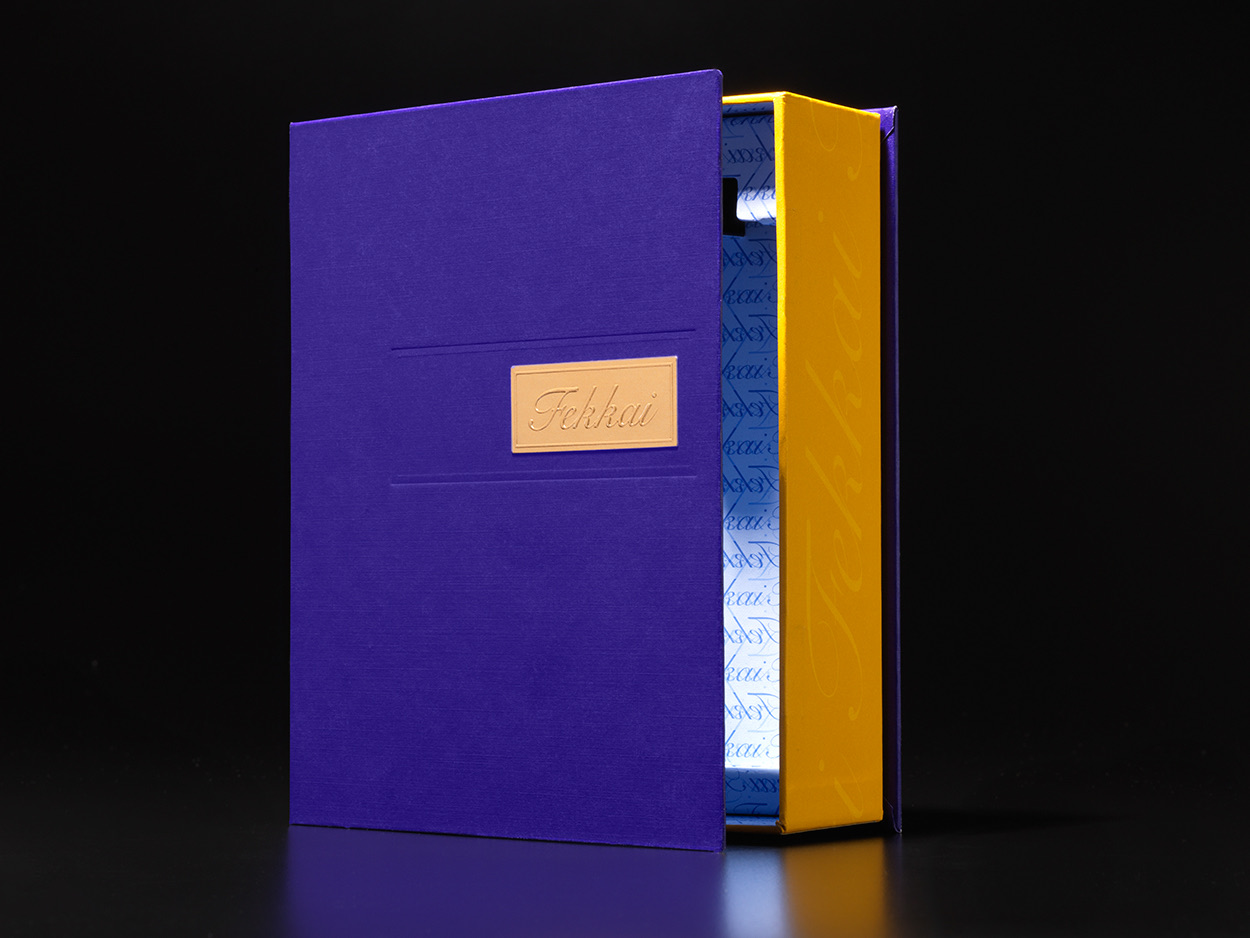
Setup boxes are the format most people picture when they hear "rigid packaging" in a brand context. Made from thick chipboard (typically 2–3mm) wrapped in decorative paper, fabric or specialty material, these boxes arrive fully assembled and cannot be collapsed flat. Magnetic closures, ribbon pulls, and specialty inserts are common features.
Setup boxes are the standard for luxury gift sets, jewelry, high-end cosmetics kits and prestige spirits. Their structural weight is part of the experience — the "slow reveal" of lifting a rigid lid is why brands invest in them for launches where unboxing is the marketing event.
The trade-off is logistics and cost. Setup boxes ship assembled, consuming significantly more warehouse and transit space than flat-packed alternatives. For a deeper look at how packaging format decisions affect logistics, see the guide to packaging supply chain management. Per-unit cost is materially higher due to thicker materials, manual assembly and lower production speeds.
Glass containers
Glass bottles and jars serve spirits, wine, fragrance, cosmetics and food. Glass provides an inert barrier, premium visual clarity and indefinite recyclability — it can be recycled endlessly without quality loss. The weight and breakage risk make glass less practical for e-commerce and high-velocity retail, but for on-shelf presence and brand storytelling, glass remains a core rigid format.
Metal packaging
Cans, tins and aluminum containers dominate food, beverage and personal care. Metal offers the strongest barrier protection of any rigid format, is infinitely recyclable and supports high-speed filling lines. Decorative tins also serve as rigid packaging in cosmetics, confectionery and seasonal gift markets.
Rigid plastics
PET, HDPE and PP containers are the workhorses of food, pharmaceutical and household products. Rigid plastic packaging holds the largest material share within the category — roughly 36–40% of the global rigid market (Grand View Research). Sustainability pressure is driving a shift toward recycled-content plastics and paper-based alternatives, but rigid plastic remains dominant for products requiring moisture barriers and visual transparency.
Folding cartons
Folding cartons occupy a unique position. Made from SBS (solid bleached sulfate) paperboard in the 14–28pt caliper range, they ship flat and are assembled at the point of fill. That makes them semi-rigid — they hold structural form on shelf but compress for efficient shipping and storage.
Folding cartons account for the majority of retail packaging across cosmetics, personal care, food, nutraceuticals and lifestyle goods. The premium packaging guide covers how brands use folding cartons to achieve premium positioning without the logistics constraints of true rigid formats.
Rigid packaging vs. folding cartons
This is where most packaging decisions get made — and where assumptions can be expensive.
- Structure: Rigid boxes — Non-collapsible, 2–3mm chipboard. Folding cartons — Foldable, 14–28pt SBS paperboard.
- Shipping: Rigid boxes — Ships assembled (more warehouse and transit space). Folding cartons — Ships flat.
- Cost per unit: Rigid boxes — Higher (thicker materials, manual assembly). Folding cartons — Lower (inline production, lighter materials).
- Tactile feel: Rigid boxes — Dense "heft" — signals luxury through weight. Folding cartons — Lighter — finishing techniques close the gap.
- Production speed: Rigid boxes — Slower assembly. Folding cartons — Faster inline offset and finishing.
- Recyclability: Rigid boxes — Varies by material and adhesive. Folding cartons — SBS is widely recyclable.
- Best for: Rigid boxes — Gift sets, collector editions, ultra-luxury launches. Folding cartons — Retail SKUs, multi-SKU portfolios, volume programs.
The table is honest. Rigid boxes carry a perception advantage through weight and density. For gift sets, limited editions and high-ceremony unboxing moments, that weight is part of the brand experience and worth the investment.
But for the majority of retail packaging — the everyday SKUs that sit on shelves at Sephora, Ulta, specialty retailers and e-commerce — the calculus shifts. Folding cartons ship flat, move faster through production and cost less per unit.
When finishing closes the gap
The question brand teams should ask is not "rigid or folding?" but "what does the consumer actually feel at shelf?"
The tactile connection a consumer feels when picking up a package does not require chipboard density. It requires finishing precision. Soft-touch coatings deliver the same velvety tactile sensation consumers associate with luxury rigid boxes. Foil stamping — hot or cold — adds metallic dimension that catches light. Embossing and debossing create three-dimensional depth directly on the SBS surface. Combined, these finishes produce a sensory experience that closes the gap between a folding carton and a rigid box — often with sharper graphic reproduction, because SBS prints with more color precision than chipboard wraps.
This is the distinction most packaging guides miss: premium is a function of finishing, not of thickness.
Rigid packaging examples by industry
Where rigid dominates — and where folding cartons have taken over.
Spirits: Rigid boxes are standard for gift sets and limited releases. But for the bottle carton that sits on the liquor store shelf, folding cartons with foil and embossing deliver the spirits packaging quality the category demands at a practical cost.
Cosmetics: Premium cosmetics lines increasingly use folding cartons for individual SKUs. When a brand manages dozens of shade variants across multiple product lines, rigid boxes for each unit become logistically impossible. Folding cartons with soft-touch coatings and cold foil provide the premium shelf signal at scale — which is why they dominate cosmetics packaging at retail.
One pattern Arkay sees repeat in the category: a national beauty retailer launched a holiday set in a rigid setup box, then re-issued the same holiday product two years later in a folding carton. The driver was total program cost at retail scale — not a shift in design intent.
Personal care and wellness: Rigid is rare in this category. Folding cartons handle the volume, variety and sustainability requirements that personal care brands face. The finishing flexibility of SBS — from minimalist matte to high-gloss metallic — matches the range of brand positions in the category.
Food and nutraceuticals: Rigid plastic and glass dominate for the primary container, but folding cartons serve as the secondary packaging layer — the printed carton that carries the brand identity, regulatory information and shelf appeal.
Rigid packaging trends
Four shifts are reshaping how brands think about rigid formats.
Sustainability is accelerating the shift from plastic to paper. Paper and paperboard packaging achieves an 80.9% recycling rate compared to 13.6% for plastic containers (U.S. EPA). Brands under ESG pressure are moving away from rigid plastic toward recyclable paper-based alternatives — folding cartons included. Certifications like FSC, SFI and PEFC provide the third-party verification that sustainable packaging claims require.
Smart packaging applies to every format. QR codes, NFC chips and digital product passports are being integrated into both rigid and folding carton packaging. The EU's Packaging and Packaging Waste Regulation is accelerating adoption. The technology is format-agnostic — what matters is whether the manufacturer can integrate digital elements without disrupting existing production workflows.
Collapsible rigid boxes are bridging the gap. Hybrid designs that fold flat for shipping but open into a rigid-feeling structure are gaining traction in e-commerce and subscription categories. They offer the premium unboxing experience of a setup box with some of the logistics advantages of a folding carton.
Finishing innovation is erasing the "premium gap." Cold foil applied inline during offset printing, micro-embossing, thermochromic inks and textured coatings are making folding cartons visually and tactilely indistinguishable from rigid packaging at shelf. For a broader look at what is production-ready today, see the guide to packaging innovation trends. This is the trend with the most commercial impact for brand teams managing cost against perception.
How to choose between rigid and folding carton packaging
The right format depends on the project, not a preference. This framework covers the four criteria that matter.
1. Start with your product
What are you packaging? Heavy, fragile items that need structural protection and a high-ceremony unboxing — rigid is the right call. Everyday retail SKUs where shelf appearance, logistics efficiency and multi-SKU consistency matter more — folding cartons deliver.
2. Factor in volume and logistics
High-volume programs amplify every cost and logistics difference. Folding cartons ship flat and run faster through inline production. If your brand manages dozens of SKUs across seasonal launches, the warehouse and shipping efficiency of flat-packed cartons is not a minor advantage — it is an operational requirement.
3. Evaluate finishing options
Before defaulting to rigid for the "premium feel," evaluate what finishing can achieve on SBS paperboard. Foil stamping, embossing, soft-touch coatings and specialty laminates can close the perceived quality gap entirely. The key is testing these finishes on actual production equipment with your actual substrate — not approximating in a design file.
4. Test before committing
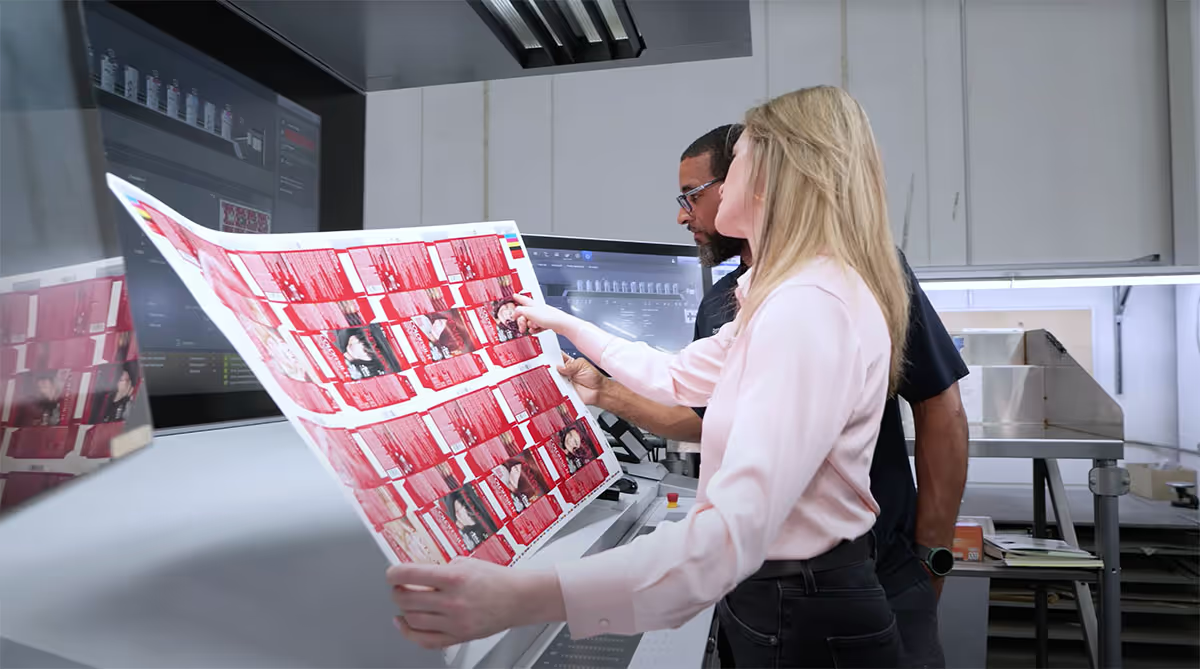
The strongest approach is to see both options in hand before locking a specification. Arkay's proprietary Paint on Press process allows brand teams to test up to 20 finishing variations on production equipment — comparing foil, embossing, coatings and substrate options side by side under real press conditions. The result is a locked specification validated at speed, not approximated in a presentation.
Achieving premium results without rigid packaging
The choice between rigid and folding carton packaging is a production decision, not a quality compromise. The brands achieving the best shelf results are the ones that invest in finishing precision rather than defaulting to format weight. When a folding carton with soft-touch coating, foil stamping and embossing sits next to a rigid box on the same shelf, the consumer responds to the tactile and visual experience — not the substrate thickness behind it.
A manufacturer that can engineer that level of premium perception into a folding carton — and prove it on press before production commits — gives brand teams the clearest path to the right specification at the right cost.
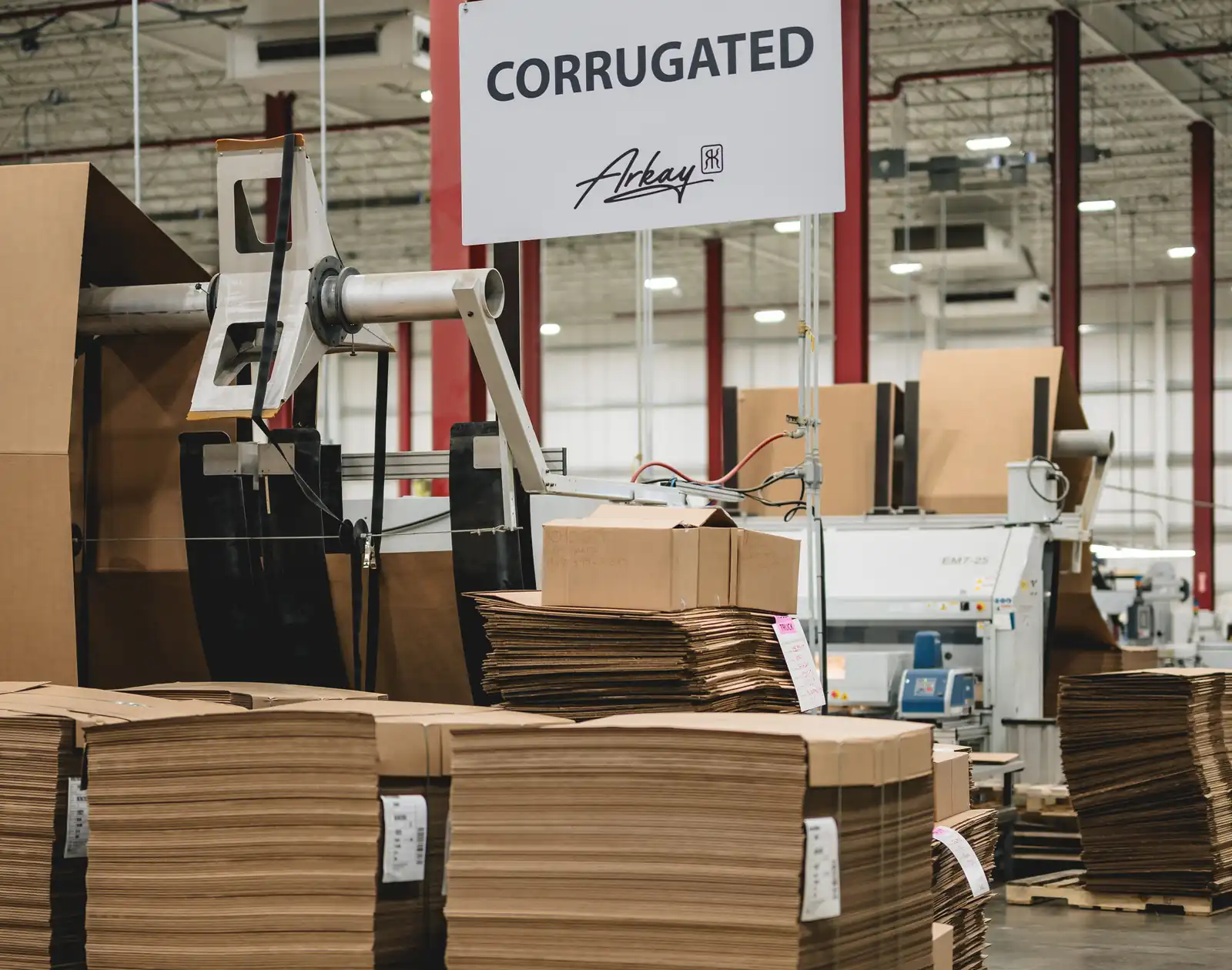
Arkay Packaging is a fourth-generation, family-owned premium folding carton manufacturer that has operated continuously since 1922. From its carbon-neutral facility in Roanoke, Virginia, Arkay delivers finish-led packaging for cosmetics, personal care, spirits and lifestyle brands — combining precision color management, proprietary Paint on Press technology and vertically integrated production under one roof.
What separates Arkay from commodity folding carton suppliers is the finishing depth: 8-station sheet-fed offset presses with inline cold foil and two coating units, offline hot foil stamping and embossing, G7 color management certification and AI-powered defect detection on every carton. These are the capabilities that make a folding carton feel like a rigid box — and print with more precision than one.
As Laura Slatkin shared on Innovation with Dennis Quaid: "Arkay is extraordinary when it comes to creating beautiful boxes."
Backed by EcoVadis Platinum recognition (top 1% globally, held consecutively since 2022), FSC, SFI and PEFC triple-certified sourcing, and CarbonNeutral operations, Arkay's sustainability credentials give brand teams defensible claims that rigid box suppliers cannot match.
Ready to see what premium folding cartons can deliver for your brand? Start a conversation with Arkay's team.
Frequently Asked Questions
What is rigid packaging?
Rigid packaging is any packaging format that maintains its structural shape whether full or empty. This includes glass bottles, metal cans, rigid plastic containers, setup boxes (chipboard) and composite canisters. Rigid formats provide the strongest physical protection and are used across food, beverage, pharmaceutical, cosmetics and spirits categories.
What is the difference between rigid and flexible packaging?
Rigid packaging holds its shape regardless of contents — glass jars, metal cans, setup boxes. Flexible packaging conforms to the product and collapses when empty — pouches, films, bags. Folding cartons are classified as semi-rigid: they ship flat like flexible packaging but provide structural form on shelf once assembled.
Is a folding carton rigid or flexible?
A folding carton is semi-rigid. It ships flat and is assembled at the point of fill, unlike a rigid setup box which arrives pre-formed and cannot be collapsed. Once assembled, a folding carton holds its shape on shelf and protects the product while offering cost and logistics advantages over true rigid formats.
Why do luxury brands use rigid boxes?
Rigid boxes signal quality through weight and structural density. The tactile impression of holding a heavy, non-collapsible box creates an association with value before the product is visible. This makes rigid boxes the standard for gift sets, collector editions and ultra-premium launches where the unboxing moment is part of the brand experience.
How do folding cartons achieve a premium look and feel?
Advanced finishing techniques close the perceived quality gap. Soft-touch coatings deliver a velvety tactile sensation. Hot and cold foil stamping add metallic brilliance. Embossing and debossing create three-dimensional depth directly on the SBS surface. Combined with G7-certified color management, these finishes produce a shelf presence that competes directly with rigid packaging — often with sharper graphic reproduction because coated SBS prints with more precision than chipboard wraps.
Can Arkay help brands transition from rigid to folding carton packaging?
Yes. Arkay's Design Studio in Hauppauge, New York works with brand teams to translate rigid packaging concepts into premium folding carton specifications. The proprietary Paint on Press process tests up to 20 finishing variations — foil, embossing, coatings — on actual production equipment so brands can see and feel the folding carton result before committing. For brands managing the transition from rigid to folding cartons across retail SKUs, this eliminates the risk of discovering the result does not match expectations after production.
Sources
- Grand View Research — Rigid packaging market size ($530.9B in 2024, projected $796.7B by 2030)
- Grand View Research — Rigid plastic share of global rigid market (36–40%)
- U.S. EPA — Paper and paperboard recycling rate (80.9%), plastic containers (13.6%)