
Packaging has always been a brand’s first physical impression. Connected packaging makes it the lasting one. A carton that once did its job on the shelf and then went quiet now carries a printed or embedded digital element — a QR code, an NFC tag — that turns the box into a two-way channel a consumer can open long after purchase.
That shift is already mainstream: 81.2% of brands have implemented connected packaging in some form (Appetite Creative, 2026, n=712). What most guidance leaves out is the physical side — what has to happen on press for the code to scan reliably. Arkay Packaging is a fourth-generation folding carton manufacturer that has operated continuously since 1922, working with brands that are adding digital capability to their carton programs. This is the manufacturer’s view of connected packaging; our smart packaging technology guide covers the wider landscape.
Connected Packaging Technologies: QR, NFC, and the Options Brands Deploy
Connected packaging — sometimes called smart packaging — spans a handful of technologies. Two dominate folding carton work.
QR Codes: The Universal Standard
A QR code is printed directly onto the substrate surface. It is cost-effective, needs no consumer hardware beyond a smartphone camera, and works across every SKU tier. The critical distinction is static versus dynamic: a static code locks the brand into one destination permanently, while a dynamic code lets the brand update the URL after the carton is already printed — enabling seasonal swaps, A/B testing, and regional targeting without a reprint. Dynamic QR is now the industry standard. A code can also encode GS1 Digital Link data for dual use: retail checkout scanning and consumer engagement from the same mark.
NFC: The Premium Experience
NFC uses a flexible chip sticker embedded beneath the substrate surface or inside the carton structure. The consumer taps the package with a smartphone — no app download required on modern devices. The tactile tap reinforces exclusivity, which is why NFC skews toward luxury and prestige lines. Placement is a manufacturing question: the chip must avoid metallic printing zones, foil-stamped panels, and structural fold lines. Brands rarely choose one exclusively — 47.1% of adopters now deploy both QR and NFC on the same packaging, using NFC for premium lines and QR for mass-market SKUs (Appetite Creative, 2026).
RFID and AR Triggers
RFID is primarily a supply chain tool — inventory, track-and-trace, anti-counterfeiting — and less common for consumer engagement. Augmented reality takes a different route: the printed artwork itself becomes the trigger, and a brand app or WebAR experience overlays content when a camera points at the pack. Both belong to the broader ecosystem, but for folding carton brands, QR and NFC remain the practical focus.
Why Brands Are Investing: The Consumer Engagement Case
The business case rests on a simple comparison: connected packaging outperforms traditional digital advertising on the metrics brands actually measure.
Scan rates climb with intent. A specific call-to-action placed front-of-pack earns 5–8% scan rates; incentivized campaigns reach 10–14% (Appetite Creative, 2026). But the scan is only the doorway. Once a consumer starts a QR-driven journey, the average click-through rate reaches 37%, against 2–5% for standard display advertising — and they stay, spending an average of 3 minutes inside the experience versus seconds for a typical digital ad. The package earns attention paid media struggles to buy.
The motive behind adoption is shifting, too. Authentication and anti-counterfeiting is now the single largest driver at 52.1% of brands surveyed, overtaking loyalty and engagement for the first time (Appetite Creative, 2026). Transparency demand is concrete: 57% of consumers scan food packaging QR codes specifically to verify ingredients. Connected packaging is no longer an experiment at the margins — 92.3% of industry professionals expect it to grow more important to their business.
Connected Packaging by Category: What Arkay Produces
Connected packaging looks different across the categories Arkay serves. These are the applications Arkay’s folding cartons are built to carry.
Spirits. Heritage and provenance sell in this category, and a serialized QR code or an NFC tap on a spirits carton can open distillery history, verify a batch, or gate age-restricted content. Arkay prints the scan-reliable, serialized cartons these programs depend on for spirits packaging.
Beauty and cosmetics. This is where connected packaging does the most work: a front-of-pack QR linking to tutorials and ingredient detail, or an NFC zone under a carton flap for authenticity verification in a category where counterfeiting is a real cost. Arkay engineers the QR placement and NFC die-cut zones into the structure of cosmetics packaging from the first proof.
Personal care and wellness. Transparency and everyday engagement drive adoption here: codes that surface ingredient sourcing, usage guidance, or an easy reorder. Because these codes have to scan reliably on every unit, inline serialization and vision-verified print quality are the requirement — both of which Arkay runs at the press.
Why Physical Execution Determines Whether the Digital Strategy Activates
Connected packaging depends on two distinct partners, and brands routinely conflate them. The first is the digital platform — a software vendor that creates the QR destination, manages dynamic content, and provides analytics. The second is the physical carrier — the folding carton manufacturer that prints the code reliably, at the right size, with the right contrast, on the right substrate, away from folds and metallic zones. Both must perform. A brilliant digital strategy fails at the physical layer if the code is misregistered, bleeding at a fold, too small, or printed under a glare-producing finish. What the carton manufacturer must deliver is specific:
- Code size and placement. A QR code should be 1cm × 1cm minimum, with 2cm × 2cm recommended for reliable scanning. It must sit on a flat, non-reflective panel — never across a fold line or seam — with at least 5mm clearance from die-cut edges.
- Print contrast. A minimum 4:1 ratio between dark modules and light background. Matte and satin aqueous coatings on SBS do not create the glare that can obscure modules, unlike high-gloss laminates or metallic finishes over the QR zone.
- Resolution. 300 DPI minimum. G7 color management controls the tonal consistency that defines each module — the same discipline that produces accurate Pantone matching also supports reliable scans.
- Serialization. Fixed offset plates produce identical units. Serialized connected packaging — required for anti-counterfeiting, GS1 Digital Link, and track-and-trace — needs variable data printing integrated inline.
Substrate is the quiet variable no platform can fix. What scans cleanly on one board can fail on another, and closing that gap is a matter of manufacturing know-how, not the code itself. SBS — Solid Bleached Sulfate, Arkay’s sole substrate — is flat, dimensionally stable, and white-surfaced, with no texture to distort modules and enough stiffness to hold precise panel geometry through finishing. It is inherently well-suited to scan-reliable QR production.
How Arkay Delivers Connected Packaging at the Press Level
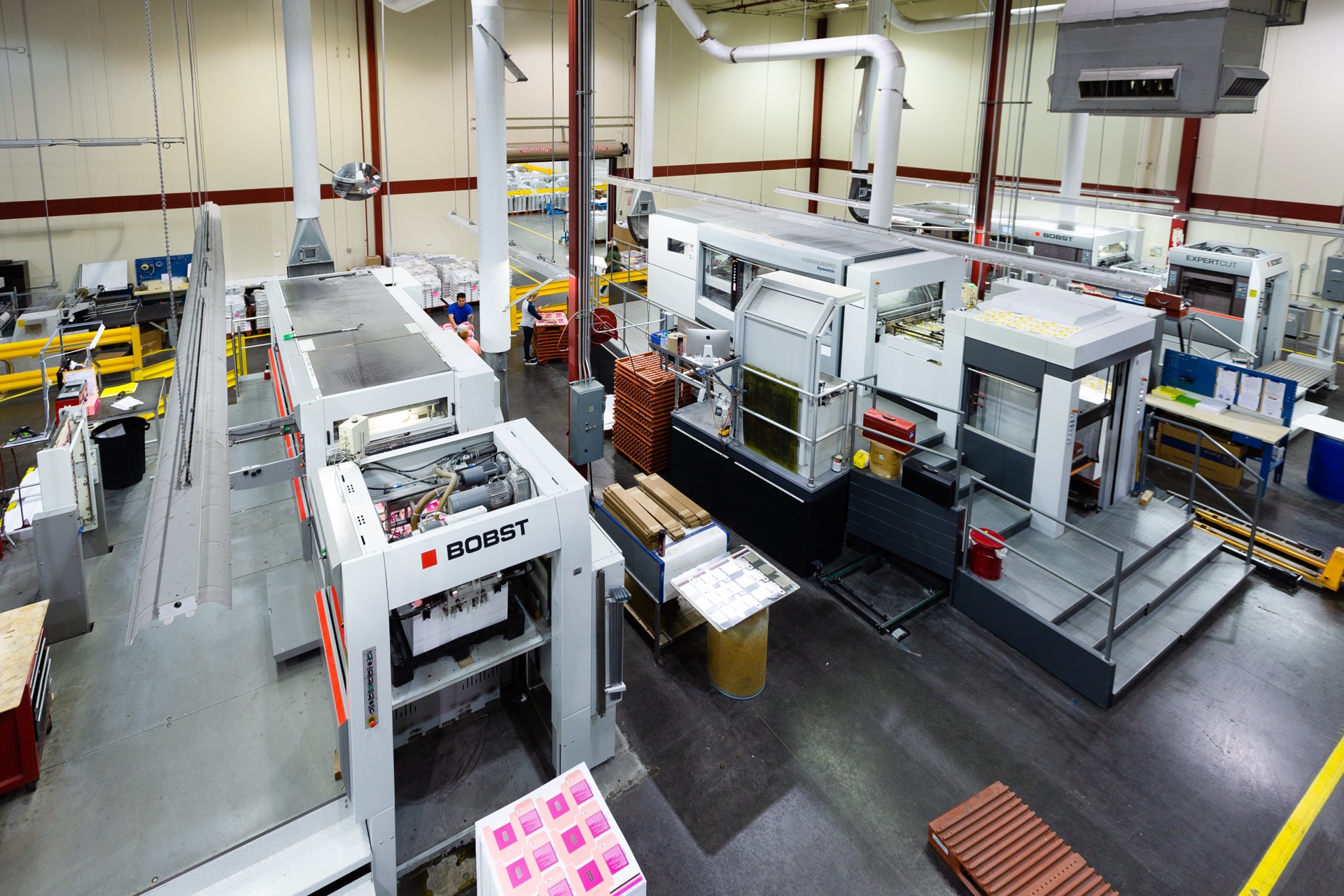
With more than 100 years of manufacturing experience across four generations, Arkay is one of the few folding carton manufacturers equipped to produce connected packaging at the press level — not as a service add-on, but as an integrated production capability. To be precise about the two-partner model: Arkay does not build the digital platform or manage the analytics dashboard. Arkay enables connected packaging through precise physical print.
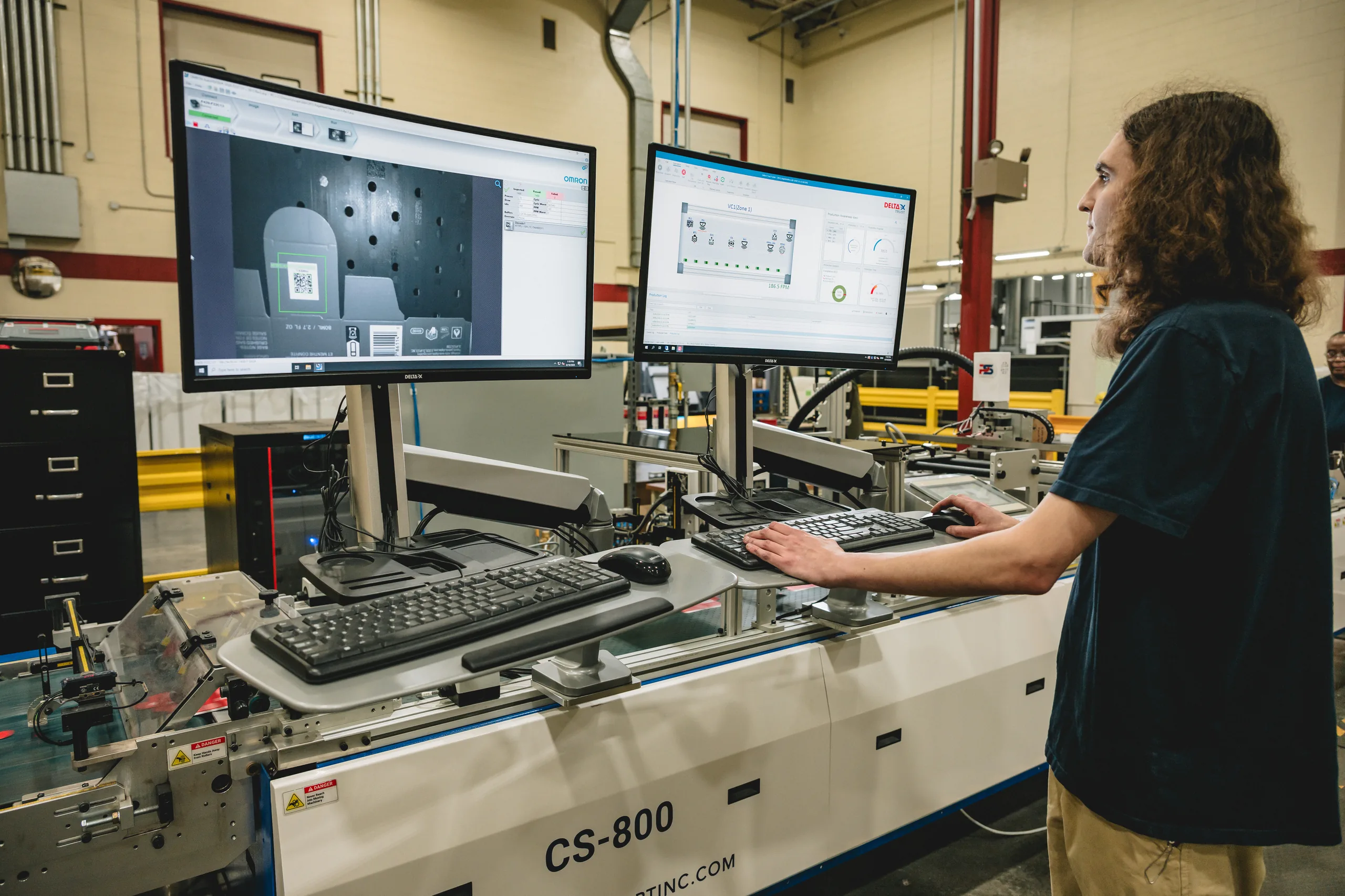
That capability rests on confirmed infrastructure. Arkay operates a PackSmart 3249 Dual Inkjet Carton Serialization system for inline QR coding — printing a unique code on every carton unit during the run, without removing the carton from the primary workflow. This is what anti-counterfeiting programs, GS1 Digital Link compliance, and track-and-trace applications require. Arkay’s G7 color management certification governs the module contrast and tonal definition that make those codes scan at scale, and AI-powered quality inspection validates QR print quality inline, catching scan-compromising defects before finished goods leave the press. Brands can explore the full serialization and finishing depth in Arkay’s folding carton capabilities and its AI-powered quality inspection.
For NFC, the workflow is collaborative: flexible NFC sticker labels are compatible with offset print, and Arkay’s ±0.3mm registration tolerance supports precise die-cutting of the placement zones that keep a chip clear of metallic print and fold lines. Because Arkay’s Hauppauge Design Studio can produce a physical mock-up in as little as one week, QR placement and NFC sticker zones can be engineered into the carton’s structural design from the first proof — so the digital elements are production-ready, not retrofitted.
Bring Your Connected Packaging Program to the Press
Let’s talk about the physical side of your connected packaging. Whether you are planning a QR program or adding NFC to a prestige line, the digital strategy only activates if the code prints reliably at scale — the conversation Arkay is built for.
Start the conversation with our team, or explore how connected elements fit a specific vertical on our personal care and wellness packaging page.
Frequently Asked Questions
What is connected packaging and how does it work?
Connected packaging is physical packaging — boxes, cartons, bottles — that carries an embedded or printed digital element such as a QR code, NFC tag, or RFID chip. When a consumer scans or taps the package with a smartphone, they access digital content hosted online: product information, brand stories, authenticity verification, loyalty rewards, or interactive experiences. The packaging itself becomes a persistent touchpoint between brand and consumer after the point of sale. QR codes are printed directly onto the carton surface and are the most widely deployed mechanism. NFC tags are embedded or adhered inside the carton structure and activated by a tap. The underlying digital experience is managed by a software platform; the physical execution — reliable print, correct placement, proper substrate — is managed by the packaging manufacturer.
How do brands use QR codes and NFC technology in connected packaging?
QR codes are the most widely used connected packaging technology: printed directly onto the carton, they link consumers to dynamic digital destinations — tutorials, sourcing pages, sustainability credentials, loyalty programs, or promotional content. Dynamic QR codes allow brands to update the destination URL after packaging is already in production, enabling seasonal campaign swaps, A/B testing, and regional targeting without reprinting. NFC technology — embedded chips activated by tapping a smartphone — is preferred for premium and luxury lines where the tactile interaction reinforces exclusivity. Brands increasingly deploy both: QR for mass-market SKUs, NFC for prestige lines. 47.1% of connected packaging adopters now use both technologies on the same packaging (Appetite Creative, 2026). Key use cases include consumer engagement, product authentication through serialized codes, sustainability transparency, and retail compliance via GS1 Digital Link for checkout scanning.
What are the consumer engagement benefits of connected packaging for CPG brands?
Connected packaging consistently outperforms traditional digital advertising on engagement metrics. QR codes with specific calls-to-action placed front-of-pack achieve 5–8% scan rates; incentivized campaigns reach 10–14%. Once consumers initiate a QR-driven journey, the average click-through rate reaches 37%, compared to 2–5% for standard display advertising (Appetite Creative, 2026). Consumers spend an average of 3 minutes engaging with connected packaging experiences — compared to seconds for conventional digital ads. Beyond engagement metrics, connected packaging creates first-party data collection opportunities, supports brand protection through serialized authentication, and enables sustainability transparency that resonates with the 57% of consumers who scan QR codes to verify product ingredients or sourcing.
Can QR codes be printed inline during folding carton production?
Yes, with the right production equipment. Standard offset printing uses fixed plates and produces identical units; it cannot generate the serialized or variable codes connected packaging requires. Inline digital inkjet heads integrated with the press can print a unique QR code on every carton unit during the production run without slowing the line. This enables serialization — each unit carries a distinct identifier — which is a requirement for anti-counterfeiting programs, GS1 Digital Link compliance, and track-and-trace applications. Print quality is validated inline via vision systems, so every code meets scan-reliability standards before it leaves the press.