
The proof looked perfect. The colors were precise, the embossing crisp, the structural design exactly what your team approved. Then the production run arrived and nothing matched. Registration was off. Color shifted between units. Cartons that held together in sampling fell apart in transit.
This is not a quality control failure. It is a technology gap.
Packaging technology is the production infrastructure that sits between a brand's approved design and the carton a consumer touches on the shelf. When that infrastructure is strong, every run matches the proof. When it is not, even the best design intent falls apart at scale.
Arkay Packaging has delivered finish-led folding cartons since 1922. This guide draws on a century of production experience to explain the technology that actually determines packaging quality, how to evaluate it, and where the industry is headed.
What is packaging technology?
Packaging technology refers to the integrated systems that determine how consumer packaging is manufactured, verified, and delivered: materials science, printing, finishing, quality control, and sustainability infrastructure working together.
For brand teams, packaging technology is not about any single machine. It is the combination of production capabilities that answers a practical question: can this manufacturer deliver consistent, specification-accurate packaging at the volume and quality standard your brand requires?
Over 3.4 billion luxury folding cartons were produced in 2023 featuring embossing, foil stamping, soft-touch textures, and structural die-cut elements (Grand View Research). What is driving that demand is not just more cartons. It is better ones. Brand teams are asking for tighter color tolerances, more complex finishing, and verifiable sustainability credentials. The technology behind the production line determines whether a manufacturer can deliver on those expectations.
The role of packaging technology
Packaging technology matters because it bridges the gap between creative intent and manufactured reality. A design file is a set of instructions. The production infrastructure determines how faithfully those instructions are executed across thousands or millions of units.
When the technology is strong, three things happen:
- Consistency holds across runs. Color matches from the first carton to the last, and from this month's run to next quarter's reorder. Multi-SKU portfolios look like they belong together on the shelf.
- Finishing lands as designed. Embossing, foil stamping, and specialty coatings reproduce at production speed without losing definition or registration.
- Defects get caught before they ship. Quality inspection happens on every carton, not a handful per batch.
When the technology is weak, the opposite compounds. Color drifts. Finishing degrades. Defective cartons reach the filling line or the retail shelf, and the brand absorbs the cost in rework, rejected runs, and delayed launches.
This is the gap Arkay has spent 100 years closing: the distance between what a brand approves on a proof and what arrives on a pallet.
How technology improves packaging manufacturing
Every carton passes through distinct production stages: printing, die-cutting, finishing, folding, gluing, and inspection. At each stage, technology either maintains or erodes the integrity of the original design. Here is where the most consequential decisions happen.
1. Color management and print precision
Printing registration errors are one of the most common production failures. The misalignment of colors, text, or graphic elements across a carton damages shelf presence immediately. A consumer cannot articulate what feels wrong, but they sense it: the box looks off.
G7 color management certification, administered by IDEAlliance, is the industry standard for proof-to-press accuracy. G7-certified processes reduce color variation from 15% deviation to less than 2%, a measurable consistency that brand teams can verify rather than hope for. Arkay has seen firsthand what happens when brands come from a non-G7 facility: color that looked acceptable on a single proof drifts across a long run, and by the time the production manager catches it, thousands of sheets have already printed.
As Mitchell Kaneff, Chairman and CEO of Arkay Packaging, shared on the Innovation with Dennis Quaid program: "Our Heidelberg printing presses now integrate AI technology for seamless operation and color management. Our Bobst expert-cut die-cutters deliver unmatched speed and pinpoint accuracy, while our two new Diana gluers bring superior quality and AI-driven defect detection."
For brand teams managing multi-SKU portfolios, where color must match not just across one run but across dozens of SKUs over months, AI-assisted color management is the minimum requirement for shelf-level consistency.
2. Precision die-cutting and structural accuracy
Die-cutting determines whether a carton folds correctly, glues securely, and survives transit without structural failure. When die lines are inconsistent, cartons arrive at the filling line with misaligned panels, weak fold points, or glue tabs that do not bond properly. The downstream cost in rejected units, line stoppages, and delayed launches far exceeds the original production savings.
Precision die-cutting systems like the Bobst ExpertCut operate at speeds exceeding 9,000 sheets per hour with synchronized register systems that maintain accuracy across every sheet. For embossed cartons, registration tolerance of ±0.3mm ensures that emboss zones align precisely with printed graphics and score lines. Lower-tier die-cutting systems cannot replicate that precision at production speed.
This matters most for brands in cosmetics, spirits, and premium consumer goods where carton structure is part of the brand experience. A package that buckles on shelf or opens poorly at unboxing does not just damage the carton. It damages the brand.
3. AI-powered defect detection
The final stage before a carton ships is where the most consequential quality decision happens. Traditional quality assurance relies on manual sampling: inspectors pulling a handful of cartons per run and checking them visually. Under production conditions, human inspectors miss 20–30% of defects, with accuracy degrading after just two hours of continuous observation (Overview.ai, 2024).
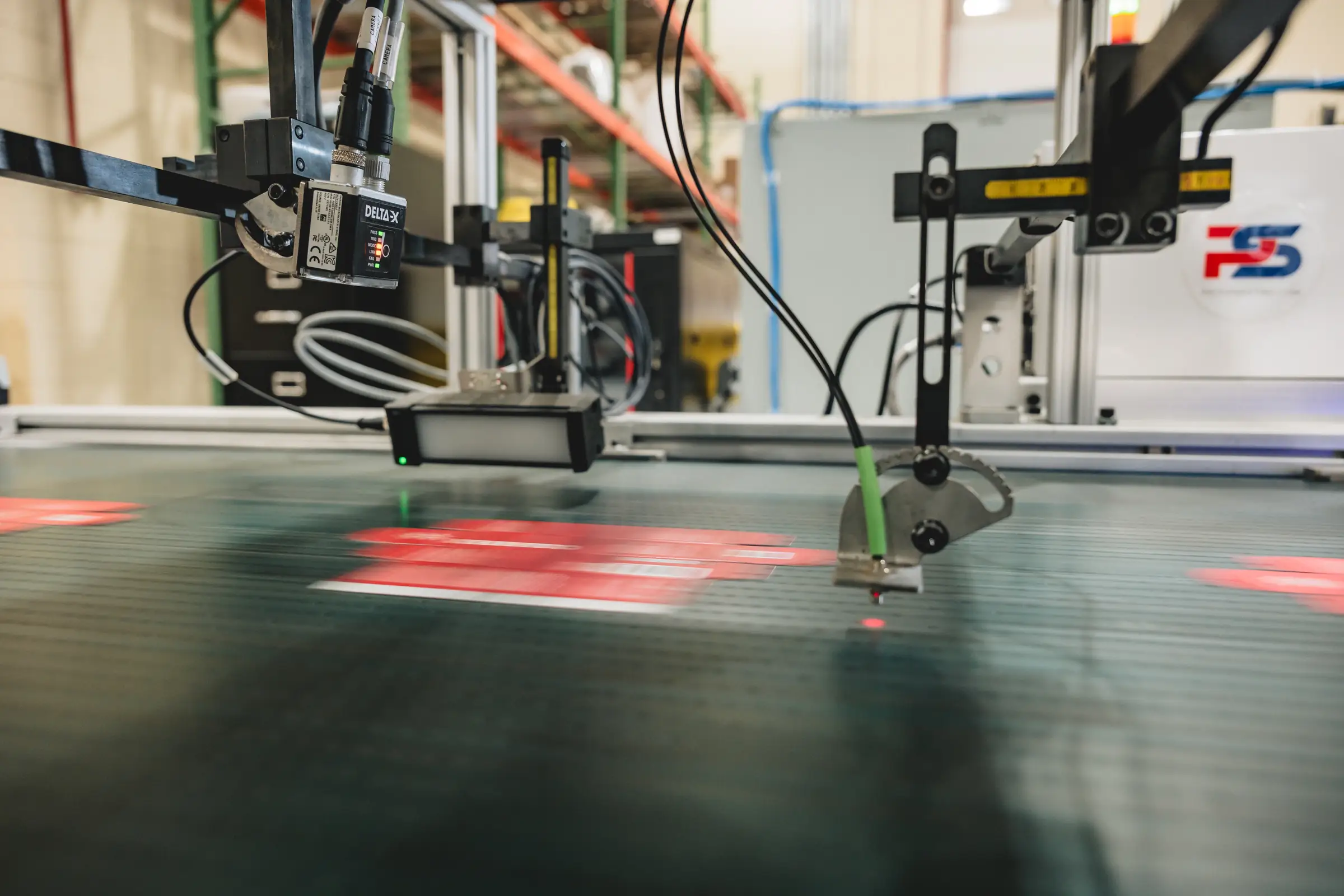
AI-powered inline inspection changes the equation in packaging innovation. Camera systems integrated into folder-gluers inspect every single carton at production speed, detecting delamination, glue gaps, fold misregistration, broken type, color variation, missing letters, incorrect UPCs or codes, and other print defects before any unit enters a shipping case. Detection rates reach 95–99% at 10,000+ parts per hour.
As one Arkay production manager shared on the Innovation with Dennis Quaid program: "You have to have your quality checks at each process. Is it printing? Is there anything to do with scoring? Is the carton being glued correctly? All these are little things that we look at here at Arkay and giving that quality to our customers has been the cornerstone for Arkay for over a century."
The AI does not replace the century of quality obsession. It enforces it at a scale and speed that human inspection alone cannot sustain. For brands evaluating manufacturers, this is the clearest signal of production reliability: does the facility inspect every carton, or sample a handful per run?
4. Finishing and special effects
Embossing, debossing, foil stamping, cold foil application, specialty coatings, and lamination transform a printed carton into a sensory experience that drives purchase decisions at the shelf. The challenge is that each finishing step introduces additional production complexity and potential for error.
Arkay's proprietary Paint on Press process addresses this by using production equipment to test and iterate finishing effects before a run begins. Brand teams bring 2D artwork to Arkay's design studio in Hauppauge, New York, where structural engineers and designers generate up to 20 approved variations from a single piece of artwork on actual press substrates with actual finishing effects. The result is fewer surprises at production and a bridge between creative intent and manufacturing reality that most facilities cannot offer.
"We are a special effects company. What we do with Paint on Press is that we're taking customer artwork that they've developed in their studio and we then take it into our facility here in Hauppauge and meet with our specialized teams. We have a whole team of designers, we have a whole team of structural engineers who take your 2D art form and turn it into 3D." — Mitchell Kaneff, CEO, on Innovation with Dennis Quaid
The main types of packaging
Packaging technology applies differently depending on the packaging type. Understanding these categories helps brand teams identify where technology investment has the greatest impact on their product experience.
Primary packaging
Primary packaging is what the consumer sees and handles: the folding carton on the shelf, the bottle, the tube, the jar. This is where print quality, finishing precision, color consistency, and structural design matter most. It is the layer that communicates the brand and drives purchase decisions.
For folding cartons specifically, primary packaging is where every technology discussed in this guide has the greatest impact. Color management, die-cutting accuracy, finishing, and defect detection all serve the goal of producing a primary package that matches the brand's approved design.
Secondary packaging
Secondary packaging groups primary packages for distribution and retail display. Think of the tray holding six bottles on a store shelf or the display box in a retail environment. Secondary packaging needs structural integrity and enough print quality to serve visual merchandising, but the finishing tolerances are typically less demanding than primary packaging.
Tertiary packaging
Tertiary packaging is the shipping layer: corrugated cases, pallets, and stretch wrap that protect products in transit. Technology plays a role here in structural engineering and load optimization, but the print and finishing requirements are minimal compared to primary packaging.
For brand teams evaluating packaging technology, the highest-impact investment is almost always in primary packaging, where the production infrastructure directly shapes the consumer's first impression of the product.
The future of packaging technology: smart packaging
One of the fastest-evolving areas in packaging technology is the integration of digital capabilities directly into the carton itself.
As Mitchell Kaneff shared on the Growing Up B2B podcast: "The latest is now as far as Amazon, everybody's going online, so we've been doing Amazon transparency and dynamic QR coding so we can label all the packaging that we're doing and a number of our customers are insisting that's on every package."
Smart packaging includes QR codes for consumer engagement and product authentication, dynamic tracking for supply chain transparency, and anti-counterfeiting features that protect brand integrity. These technologies are increasingly requested by brands selling through e-commerce channels, where product authentication is a growing concern. Demand is currently led by premium cosmetics — most major brands in the category are exploring it — and the underlying driver across industries is the same: more transparency for consumers and stronger protection against counterfeit product reaching the market. Arkay has invested in a second QR-printing machine to keep pace with this demand.
This is still an emerging capability for much of the industry. The manufacturers leading the shift are the ones integrating digital features into existing production workflows rather than treating them as a separate, outsourced step.
Arkay is actively developing QR-enabled packaging and authentication solutions as part of its innovation roadmap. We will cover smart packaging technology in depth in a dedicated guide.
Sustainability as a technology infrastructure
Sustainability in packaging is not a marketing position. It is a set of measurable technology and certification decisions that determine whether a brand's environmental claims hold up under scrutiny.
Paperboard already outperforms most alternatives on core environmental metrics. Recycling rates reach 72% globally, compared to 14–18% for plastic (Kings Research, 2024). Regulatory mandates are accelerating the shift: California's SB 54 requires a 25% reduction in plastic packaging by 2032, and the EU mandates all packaging be reusable or recyclable by 2030.
For brand teams, the question is not whether to pursue sustainable packaging but how to verify it. The difference between defensible sustainability claims and greenwashing risk comes down to third-party certification:
- EcoVadis Platinum awards go to the top 1% of manufacturers globally, verified annually through comprehensive environmental, labor, and ethics assessment. Arkay has held Platinum status consecutively since 2022.
- FSC, SFI, and PEFC triple-certified paperboard sourcing verifies responsible forestry practices across the entire supply chain.
- CarbonNeutral operations certification covers the full manufacturing footprint including 100% LED lighting and energy-efficient infrastructure. Arkay is certified for 2026.
As one Arkay manager shared on the Innovation with Dennis Quaid program: "Arkay is very dedicated to sustainability. We've installed LED lighting in all of this facility — the offices and on the plant. Arkay also invested in a white roof to reduce heat absorption and installed high-quality, energy-efficient air conditioners. Since 2022, Arkay has received every year the prestigious Platinum medal by EcoVadis, ranking us in the top 1% of rated companies worldwide."
These certifications are audited, not self-reported. For procurement leads managing ESG obligations, this level of specificity is the difference between a defensible sourcing decision and a compliance risk.
When brand teams arrive with sustainability goals, the conversation at Arkay is collaborative rather than prescriptive — the right substrate, finishing, and certification mix is built around what each brand is actually trying to achieve, not assembled from a fixed menu.
How to evaluate a manufacturer's packaging technology
Not every manufacturer invests equally in production technology. For brand teams selecting or evaluating a packaging partner, these four areas reveal the most about a facility's ability to deliver consistently.
1. Assess color management standards
Ask whether the facility is G7-certified and whether they can demonstrate proof-to-press color matching with measured ΔE values. A manufacturer that claims color accuracy without an independently verified standard is asking you to trust their eye, not their process.
2. Evaluate finishing and production integration
Manufacturers that print in one facility, finish in another, and assemble in a third introduce handoff risk at every stage. Vertically integrated facilities where printing, die-cutting, finishing, folding, gluing, and inspection happen under one roof minimize version-of-record gaps and reduce lead times. Ask whether your carton will leave one building or three.
3. Verify sustainability credentials
Request specific, third-party-verified certifications rather than internal sustainability statements. EcoVadis ratings, FSC chain-of-custody documentation, and CarbonNeutral certification are auditable and falsifiable. Self-reported environmental claims are not. The Arkay Sustainability Report 2025 details how these certifications apply at the manufacturing level.
4. Examine quality infrastructure
The question that matters most: does the manufacturer inspect every carton or sample a handful per run? Inline AI inspection versus manual sampling is the clearest dividing line between manufacturers that catch defects before they ship and those that discover them when the brand calls to complain.
How Arkay integrates production technology
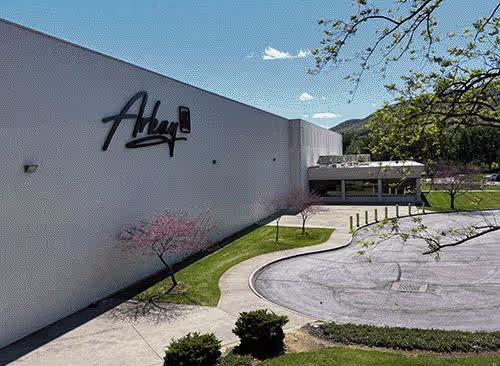
Arkay Packaging is a fourth-generation, family-owned premium folding carton manufacturer that has operated continuously since 1922. From its carbon-neutral facility in Roanoke, Virginia, Arkay delivers finish-led packaging for cosmetics, personal care, spirits, and lifestyle brands, combining precision color management, proprietary Paint on Press technology, and vertically integrated production under one roof.
What separates Arkay from most manufacturers is not any single machine. It is that every production technology operates within a single 140,000 sq. ft. facility. AI-assisted Heidelberg presses, Bobst ExpertCut die-cutters, Diana folder-gluers with AccuCheck AI defect detection, and the proprietary Paint on Press process all run under one roof. No handoffs. No offshore splits. No version-of-record gaps between design, production, and quality assurance.
Arkay holds G7 color management certification, BRCGS packaging safety certification for regulated categories including food and nutraceuticals, and EcoVadis Platinum status consecutively since 2022.
For brand teams across cosmetics, personal care, spirits, and lifestyle goods, this integration means one partner manages every stage of production. From the design studio where a concept becomes a physical mock-up within one week, through the press room where AI manages color on every sheet, to the glue line where cameras inspect every carton before it ships.
Arkay's commitment to quality and continuous innovation reflect more than a century of manufacturing expertise, refined by technology, not replaced by it.
Four generations. One facility. Every technology under one roof.
Ready to see how integrated packaging technology performs in practice? Let's get it on press.
Frequently Asked Questions
What are the latest trends in packaging technology?
The most significant trends are AI-powered quality inspection that catches defects manual sampling misses, smart packaging with QR codes and dynamic tracking for authentication and consumer engagement, and sustainability-driven manufacturing with third-party-certified operations. Brands are also moving toward vertically integrated domestic manufacturers to reduce lead times and supply chain risk.
How does packaging innovation improve sustainability?
Packaging innovation improves sustainability through certified material sourcing (FSC, SFI, PEFC paperboard), carbon-neutral manufacturing operations, waste reduction via precision production, and recyclable substrate selection. Paperboard recycling rates reach 72% globally compared to 14–18% for plastic. The key is third-party verification: certifications like EcoVadis Platinum are audited, while self-reported claims are not.
How does packaging technology impact brand perception?
Packaging technology determines whether the carton a consumer picks up matches the brand's creative intent. Color consistency, finishing precision, and structural integrity all shape the first impression. When color drifts between production runs or embossing loses definition at scale, the consumer notices even if they cannot articulate why. Consistent production technology protects brand equity at the shelf.
What should brands ask a packaging manufacturer about their technology?
Ask about color management certifications (G7, ISO 12647), whether they use inline AI inspection or manual sampling, whether design, printing, finishing, and inspection happen under one roof or across multiple facilities, what sustainability certifications they hold from third parties, and whether they can produce a physical mock-up before committing to a production run.
Which packaging manufacturers lead in packaging innovation?
Manufacturers that lead in innovation combine advanced press technology, AI-powered inspection, proprietary finishing processes, and third-party sustainability certifications within a vertically integrated facility. The distinguishing factor is not equipment alone but depth of expertise: how long the manufacturer has refined its processes and whether institutional knowledge survives across leadership transitions.
Sources
- Grand View Research — Luxury folding cartons (3.4B units, 2023)
- IDEAlliance — G7 color management certification standard
- Overview.ai — AI visual inspection (95–99% detection rate, 2024)
- Kings Research — Paperboard recycling rate (72%, 2024)