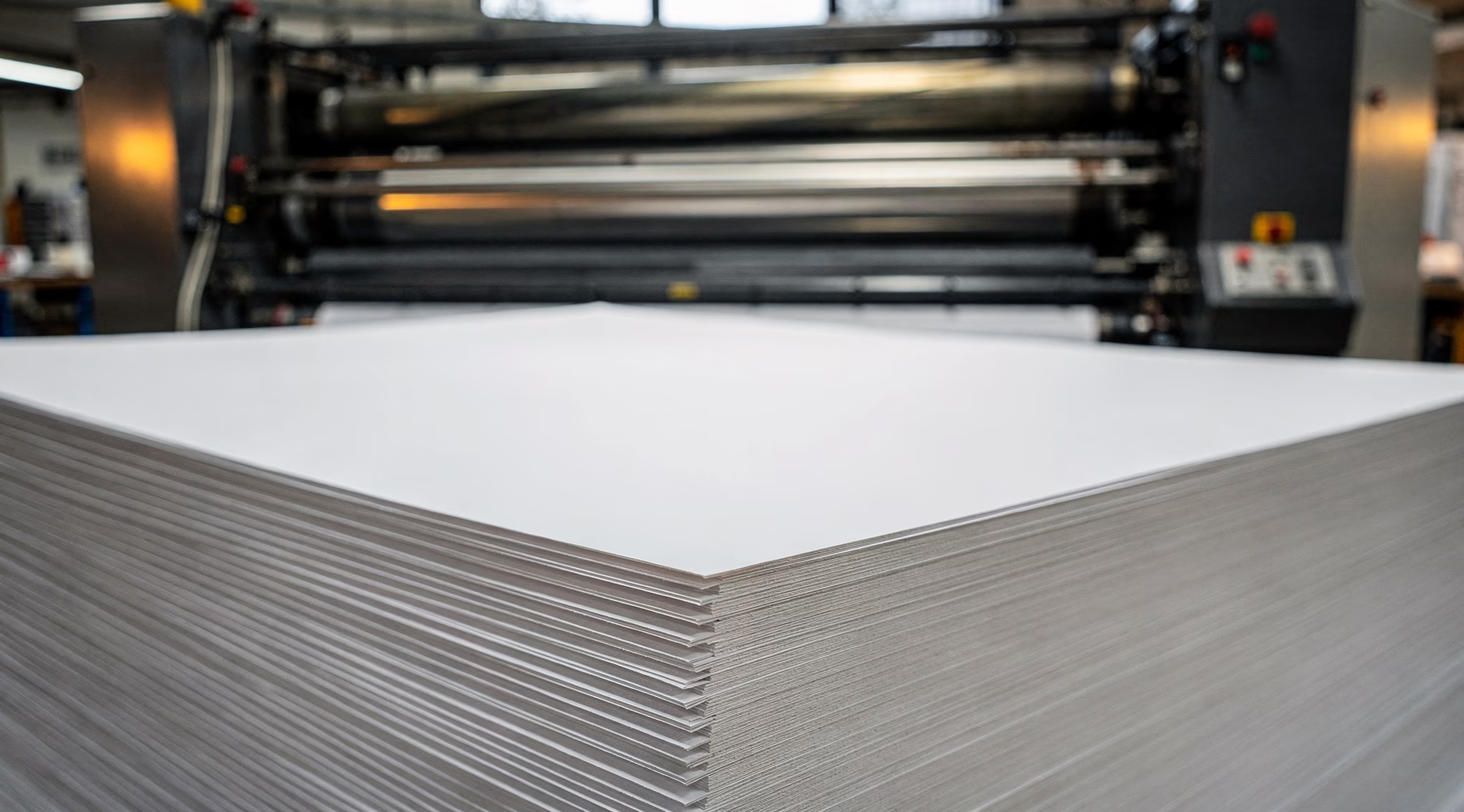

A brand team is launching a new product line. The design is finalized. The structural mockup is approved. Then comes a question that most teams underestimate: which paperboard grade should we specify?
SBS, FBB, CRB, chipboard: each is paperboard, but the similarities end there. The grade determines how well ink adheres, whether embossing holds its edge, how the carton performs on a high-speed filling line, and whether the brand's sustainability claims hold up to third-party scrutiny. Choose the wrong one and the consequences ripple from the press room to the shelf.
Arkay Packaging has manufactured folding cartons exclusively on SBS paperboard for over a century. That focus is deliberate: the substrate decision shapes every production outcome downstream, and depth of expertise in one grade produces different results than running five grades on the same line.
This guide covers the four primary paperboard grades, popular finishes, sustainability considerations, and how to evaluate a manufacturing partner's substrate expertise.
What is paperboard packaging?
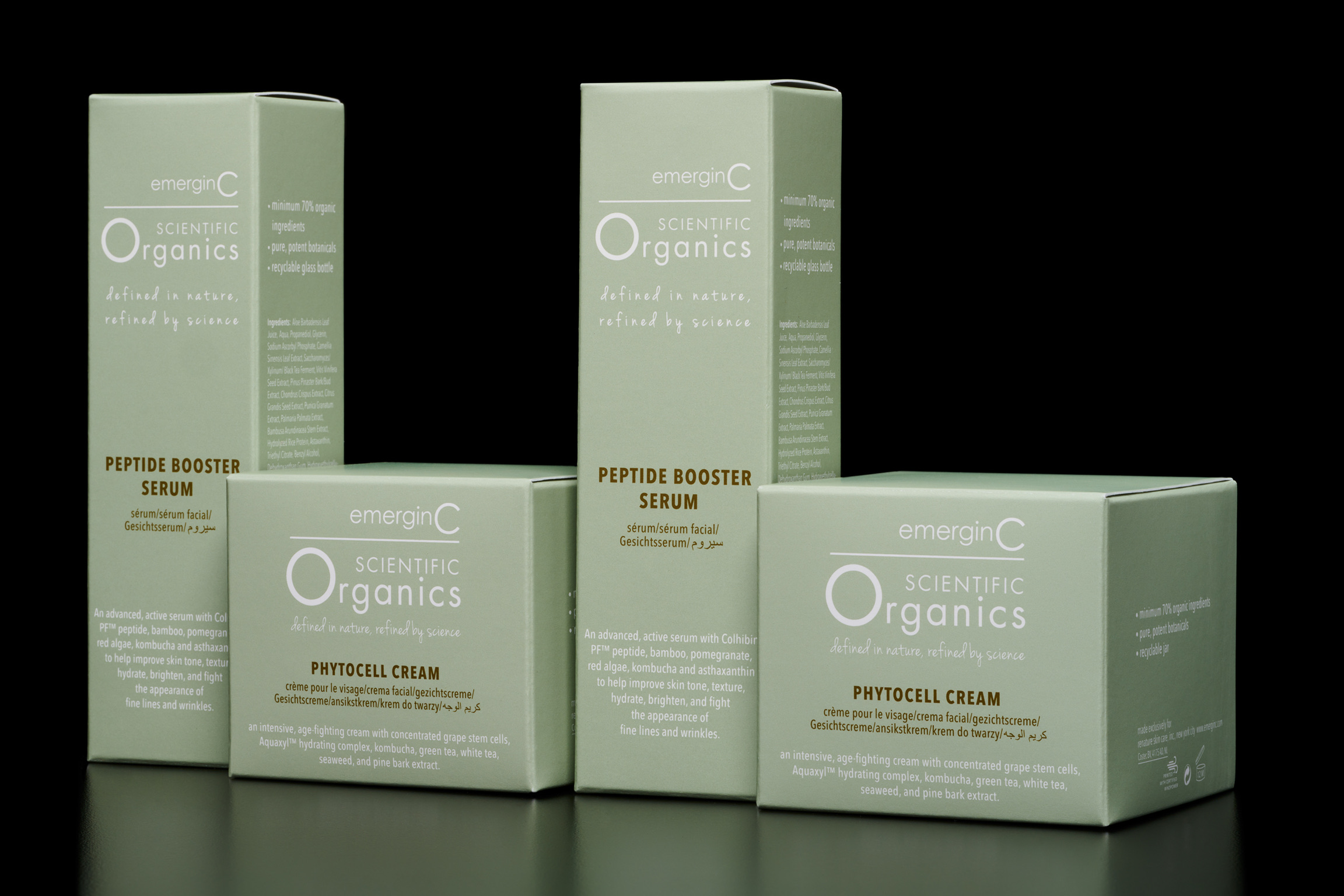
Paperboard packaging refers to folding cartons and containers manufactured from paperboard, a thick, paper-based substrate typically ranging from 12 to 28 points (pt) in caliper. It is the most widely used material for consumer product primary packaging: the printed boxes that hold cosmetics, food products, personal care items, spirits, supplements, and lifestyle goods on a retail shelf.
Unlike paper, which is generally under 12pt, paperboard has the rigidity to form self-supporting structures. It accepts high-resolution printing, precision finishing, and structural engineering that other packaging materials cannot support at the same level of detail.
For brand teams, paperboard packaging is where creative intent meets manufacturing reality. The grade of paperboard specified determines the ceiling of what a manufacturer can deliver.
Paperboard vs cardboard
This is a mix-up Arkay sees regularly in production briefs: "paperboard" and "cardboard" used interchangeably. They are not the same material, and specifying the wrong one creates confusion upstream between the brand team, the design agency, and the manufacturer.
Paperboard is a single-layer or multi-layer substrate used for folding cartons, the primary packaging a consumer sees and handles at the shelf. It is engineered for printing, finishing, and structural precision. Cardboard, technically corrugated fiberboard, is a fluted, multi-wall material used for shipping containers and secondary packaging. A folding carton (paperboard) sits inside a shipping case (corrugated). They serve different functions in the supply chain.
The four types of paperboard
Not all paperboard performs the same on press, in finishing, or on the shelf. The four primary grades each serve different applications, and the production tradeoffs between them are real.
Solid bleached sulfate (SBS)
SBS is manufactured from 100% virgin bleached chemical pulp, producing a bright white, smooth surface on both sides. It delivers the highest print fidelity of any paperboard grade: superior ink adhesion, consistent color reproduction, and a surface that accepts embossing, foil stamping, cold foil, soft-touch coatings, and specialty finishes with precision.
SBS is the standard substrate for premium consumer packaging across cosmetics, pharmaceuticals, food-contact applications, spirits, and any category where shelf presence and print quality are non-negotiable. Caliper ranges typically run from 14 to 28pt, with the specific weight determined by the structural requirements of the carton design and the finishing processes applied.
For brands that invest in embossing, metallic foils, or layered finishing effects, SBS is the grade that holds those details without compromise. Arkay manufactures exclusively on SBS for this reason.
Folding boxboard (FBB)
FBB combines chemical pulp outer layers with mechanical pulp in the center, offering good print surface quality at a lighter weight for equivalent caliper. It is widely used in European markets for food, confectionery, and pharmaceutical applications. The print surface supports quality color reproduction, but finishing compatibility differs from SBS — FBB does not match SBS-level embossing depth or foil adhesion, which becomes the relevant tradeoff for projects that depend on premium finishing.
Coated recycled board (CRB)
CRB uses post-consumer recycled fiber with a clay-coated surface for printability. The recycled content supports sustainability messaging, but the production tradeoffs are measurable: color vibrancy, fine detail reproduction, and finishing precision are all lower than SBS or FBB. CRB works well for non-food secondary packaging and categories where recycled content takes priority over premium print fidelity.
Chipboard
Chipboard is the most economical grade, manufactured from recycled fibers into a gray or brown substrate. It does not support premium printing or finishing. Chipboard is the right choice for applications where function matters and finish does not, such as cereal boxes and basic consumer goods.
Why brands choose paperboard packaging
Paperboard is not chosen by default. It is chosen because it delivers on the outcomes brand teams care about most: print quality that drives purchase, finishing that communicates value, sustainability that satisfies both consumers and compliance requirements, and production reliability at scale.
Print quality and shelf presence
The substrate is the foundation of shelf presence. If the surface does not hold ink with precision, no amount of design work compensates. Arkay has seen this play out repeatedly: a brand invests months in design, approves a proof that looks perfect, and then the production run reveals that the substrate could not hold the color consistency the design demanded. On SBS, that gap closes. The bright, uniform surface holds ink predictably across long runs, and combined with G7-certified color management, multi-SKU portfolios maintain visual coherence from the first carton to the last.
Substrate quality only delivers when the press technology and the operators behind it are matched to it. As Brian Hopkins, VP of Operations at Arkay, puts it: "You can have the fastest car in the world, but you need the right person to drive it." Arkay pairs state-of-the-art 8-color Heidelberg presses with operators who have 10, 20, and 30 years on the floor — and runs G7 color management across the back end of the printing line. The result is color and substrate behaving the same way every shift, not just on the best days.
Finishing capability
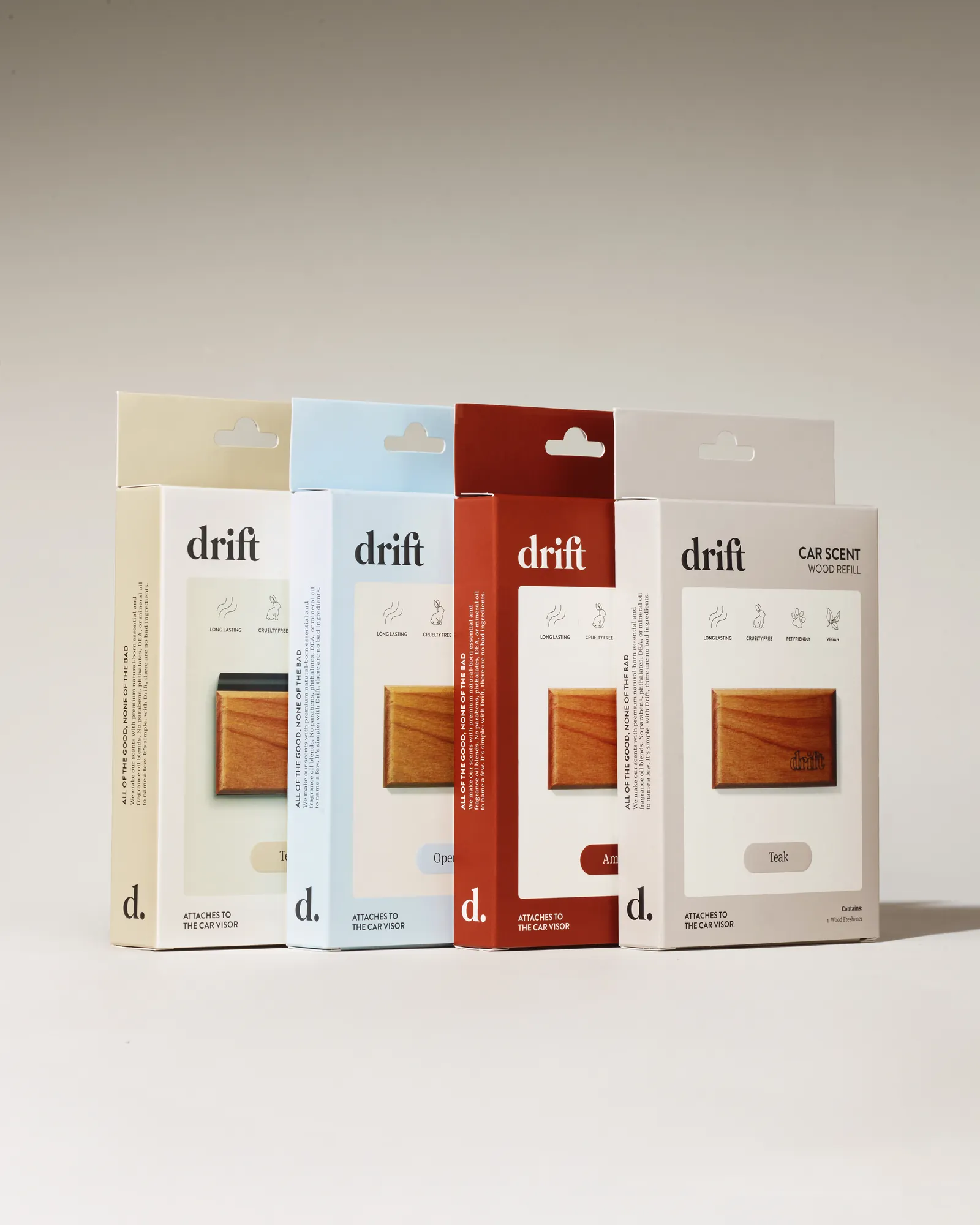
Embossing, debossing, foil stamping, cold foil, spot UV, soft-touch lamination: these finishing techniques transform a carton from flat packaging into a tactile brand experience. Each technique interacts differently with the substrate beneath it.
SBS accepts the widest range of finishing processes with the highest consistency. Embossing registration at ±0.3mm tolerance requires a substrate with uniform fiber density. Foil adhesion depends on surface smoothness. Specialty coatings need a predictable absorption profile. The grade of paperboard determines whether those finishing effects land as designed or fall short at production speed.
Arkay's proprietary Paint on Press process generates up to 20 approved finishing variations from a single piece of artwork, tested on the actual production substrate before a run begins. That process depends on the predictability of SBS.
Sustainability
Paper packaging generates approximately 50% fewer greenhouse gas emissions per tonne than plastic (Protega Global). US paper recycling rates range from 60-64%, and cardboard recycling rates reach 69-74% (AF&PA, 2024). These are structural environmental advantages, not marketing claims.
But the sustainability of paperboard depends on sourcing, not just material type. Third-party certifications like FSC, SFI, and PEFC verify that the fiber comes from responsibly managed forests. Without those certifications, a paperboard package is recyclable but its sourcing is unverified. For brands with ESG reporting obligations, the distinction matters.
Popular finishes for paperboard packaging
Finishing is what elevates a printed carton into a brand experience. These are the most commonly specified finishes for paperboard packaging, and each interacts differently with the substrate grade:
- Embossing and debossing create raised or recessed textures that add tactile depth. SBS holds embossing detail at ±0.3mm registration because of its uniform fiber density. Lower-grade substrates lose definition at production speed.
- Foil stamping (hot foil) applies metallic or pigmented foil under heat and pressure. Adhesion depends on surface smoothness, making SBS the most reliable substrate for crisp, consistent foil lines.
- Cold foil transfers metallic effects using UV adhesive rather than heat, enabling finer detail and faster production speeds. It requires a smooth, predictable print surface to avoid adhesion inconsistencies.
- Soft-touch lamination adds a velvety, matte texture that consumers associate with premium products. The coating interacts with the substrate's absorption profile, so consistent results require a substrate with predictable behavior.
- Spot UV coating applies targeted high-gloss accents that contrast with matte or soft-touch backgrounds. Registration precision determines whether the gloss lands where the design intended.
- Specialty coatings (scuff-resistant, aqueous, barrier coatings) protect the carton through transit and retail handling. The right coating depends on the product category and handling environment.
The key takeaway: finishing capability is not just about the equipment. It is about how well the manufacturer understands the interaction between the finish and the substrate. Arkay's design studio in Hauppauge, New York allows brand teams to test finishing effects on actual SBS production substrate before committing to a run.
Two trends Arkay's operations team sees today: soft-touch coatings (water-base or UV) continue to be the most-requested premium tactile finish, and many specs default to soft-touch lamination without realizing that a gloss UV coating can deliver a comparable shelf-level look at lower cost with better sustainability. The second is a steady shift away from traditional hot foil stamping toward cold foil — once brands see a cold foil proof, the look and economics compare more favorably than they expected.
How sustainable is paperboard packaging?
Sustainability in paperboard is not a single claim. It is a chain of verifiable decisions from forest sourcing through manufacturing and end-of-life recyclability.
Paperboard starts with a structural advantage: it is one of the most recyclable packaging materials available. But recyclability alone does not make packaging sustainable. The sourcing of the fiber, the energy used in manufacturing, and the certifications behind both determine whether a brand's sustainability claims hold up to scrutiny.
For paperboard sourcing, FSC, SFI, and PEFC certify responsible forestry and chain-of-custody tracking. For manufacturing operations, EcoVadis provides independently audited sustainability ratings. Arkay holds EcoVadis Platinum, the top 1% of manufacturers globally, consecutively since 2022. Triple-certified paperboard sourcing (FSC, SFI, PEFC), CarbonNeutral operations certified for 2026, and 100% LED lighting across the manufacturing facility round out the environmental footprint.
Seventy-one percent of shoppers deliberately choose products with sustainable packaging (NielsenIQ, 2023). But for procurement leads, the question is not consumer preference. It is whether the supplier's sustainability credentials are auditable and defensible. The Arkay Sustainability Report 2025 details how these certifications apply from fiber sourcing through production and waste management.
In practice, brand teams typically ask two questions early: is the paperboard FSC-certified, and what is the highest post-consumer content available across coated and uncoated grades? For brands prioritizing uncoated sustainable substrates with high recycled content, Monadnock Astrolite — an uncoated SBS with PC 80 (80% post-consumer waste) content — is a substrate Arkay carries and recommends for projects with those goals.
How to pick a paperboard packaging partner
Choosing a paperboard packaging partner is a substrate-level decision that affects every downstream outcome. These four areas reveal the most about a manufacturer's ability to deliver consistently.
1. Evaluate substrate expertise
Ask what grades the manufacturer runs and whether they specialize or generalize. A manufacturer with deep expertise in one grade, understanding its behavior across seasons, storage conditions, and finishing processes, delivers different results than one running five grades on the same line. Ask about caliper range, substrate-specific defect rates, and how they manage paperboard freshness and rotation.
2. Verify color management standards
G7-certified color management is the industry standard for proof-to-press accuracy on paperboard. Ask for measured color data, not visual samples. Color performance varies by substrate grade, so request samples printed on the specific grade you require, not a generic portfolio piece.
3. Assess sustainability certifications
Request third-party-verified certifications, not self-reported sustainability statements. For paperboard sourcing: FSC, SFI, and PEFC certify responsible forestry. For manufacturing: EcoVadis provides independently audited ratings. These are falsifiable and auditable. Self-reported environmental claims are not.
4. Examine finishing capabilities
Embossing, foil stamping, cold foil, specialty coatings, and lamination should happen under the same roof as printing and die-cutting. Outsourced finishing introduces handoff risk, version-of-record gaps, and additional lead time. Ask about embossing registration tolerance, in-house finishing breadth, and whether the manufacturer can prototype finishing effects on your substrate before production.
What experienced manufacturers know about paperboard
Most content about paperboard describes the grades and stops there. What it misses is the operational knowledge that comes from running one substrate for decades.
As Mitchell Kaneff, Chairman and CEO of Arkay Packaging, explained on the Printing's Alive podcast: "Paperboard is a tree, it's a living thing. So whatever happens after say three to six months, that opening force of that particular package on a high-speed line is not going to function as well and can have line-stopping defects."
Paperboard fiber absorbs and releases moisture over time. Caliper can shift. Score lines that tested perfectly on fresh substrate can fail on material that has aged in a warehouse. Experienced manufacturers manage substrate freshness as actively as they manage press calibration.
As Kaneff noted in the same conversation: "What may work on one substrate doesn't work on another substrate unless you've got the technical prowess."
That technical prowess is earned over time, not installed with equipment. It is the difference between a manufacturer that runs paperboard and one that understands it.
How Arkay approaches paperboard packaging
Arkay Packaging is a fourth-generation, family-owned premium folding carton manufacturer that has operated continuously since 1922. From its carbon-neutral facility in Roanoke, VA, Arkay delivers finish-led packaging for cosmetics, personal care, spirits, and lifestyle brands, combining precision color management, proprietary Paint on Press technology, and vertically integrated production under one roof.
Arkay manufactures exclusively on SBS paperboard. Over 100 years of working with one substrate means every press setting, finishing process, and quality checkpoint is calibrated to SBS behavior. The caliper range spans 14 to 28pt, with 28pt as the hard ceiling to protect press integrity.
That substrate expertise supports a full stack of manufacturing capabilities:
- G7-certified color management for proof-to-press accuracy measured across every run
- Embossing registration at ±0.3mm tolerance requiring substrate-specific calibration
- Paint on Press generating up to 20 approved finishing variations from one piece of artwork on actual production substrate
- Design studio in Hauppauge, New York where brand teams bring a concept and leave with a physical mock-up ready for production the following week
- Triple-certified sourcing through FSC, SFI, and PEFC certified paperboard from responsible forest supply chains
- EcoVadis Platinum held consecutively since 2022, top 1% globally
- CarbonNeutral operations certified for 2026
For brand teams across cosmetics, spirits, personal care, food, and lifestyle goods, Arkay partners with your team from substrate selection through finished carton, managing the material decisions that most manufacturers leave to the brand to figure out alone.
Ready to discuss substrate selection and production planning for your next launch? Let's get it on press.
Frequently Asked Questions
Why do brands use paperboard cartons for packaging?
Brands use paperboard cartons because they deliver the combination of print quality, finishing capability, structural integrity, and sustainability that primary packaging requires. Paperboard accepts high-resolution printing, precision embossing, foil stamping, and specialty coatings at production speed. It is also one of the most recyclable packaging materials available, with US recycling rates of 60-64%, supporting brands with ESG reporting obligations.
What are the best paperboard packaging manufacturers in the US?
The best paperboard packaging manufacturers combine deep substrate expertise, G7-certified color management, vertically integrated production, and third-party sustainability certifications. Look for manufacturers that specialize in a specific grade rather than running multiple substrates, can prototype finishing on actual production substrate, hold audited certifications like EcoVadis and FSC, and keep printing, finishing, and inspection under one roof to eliminate handoff risk.
Which manufacturers specialize in paperboard packaging?
Manufacturers that specialize in paperboard packaging typically focus on a single substrate grade and build deep expertise around it. Key differentiators include G7-certified color management, vertically integrated production (printing, finishing, and inspection under one roof), third-party sustainability certifications like EcoVadis and FSC, and the ability to prototype finishing effects on actual production substrate before committing to a run.
What are the most popular finishes for paperboard packaging?
The most popular finishes include embossing and debossing for tactile depth, foil stamping (hot and cold) for metallic detail, soft-touch lamination for a velvety texture, spot UV coating for targeted gloss contrast, and specialty coatings for scuff resistance or matte effects. Each finish interacts differently with the substrate beneath it, and SBS paperboard accepts the widest range with the highest consistency.
Is paperboard packaging sustainable?
Paperboard is one of the most recyclable packaging materials available. US paper recycling rates range from 60-64%, and paperboard generates approximately 50% fewer greenhouse gas emissions per tonne than plastic. However, sustainability depends on sourcing, not just material type. Third-party certifications like FSC, SFI, and PEFC verify that the fiber comes from responsibly managed forests.
Sources
- AF&PA — US paper recycling rates (60-64%), cardboard recycling rates (69-74%), 2024
- Protega Global — Paper packaging GHG emissions (~50% fewer per tonne than plastic)
- NielsenIQ — 71% of shoppers choose sustainable packaging (2023)
%20(1).jpg)