
Brand teams building a supply chain for the first time hit these two terms early, and the definitions they find often contradict each other.
A contract manufacturer makes the product itself, typically covering formulation, ingredient sourcing, production, and quality control, and frequently the packaging as well. A co-packer packages a product the brand supplies: filling, labeling, cartoning, assembly, and kitting. The contract manufacturer does strictly more.
This guide compares the two, sets out how to choose, and covers the part most explanations skip: where your folding cartons come from, who approves them, and how they reach the line. Arkay ships cartons to both kinds of partner, so what follows is the view from the carton side of that handoff.
Co-Packer vs Contract Manufacturer vs Contract Packager
Three terms, two genuinely distinct roles.
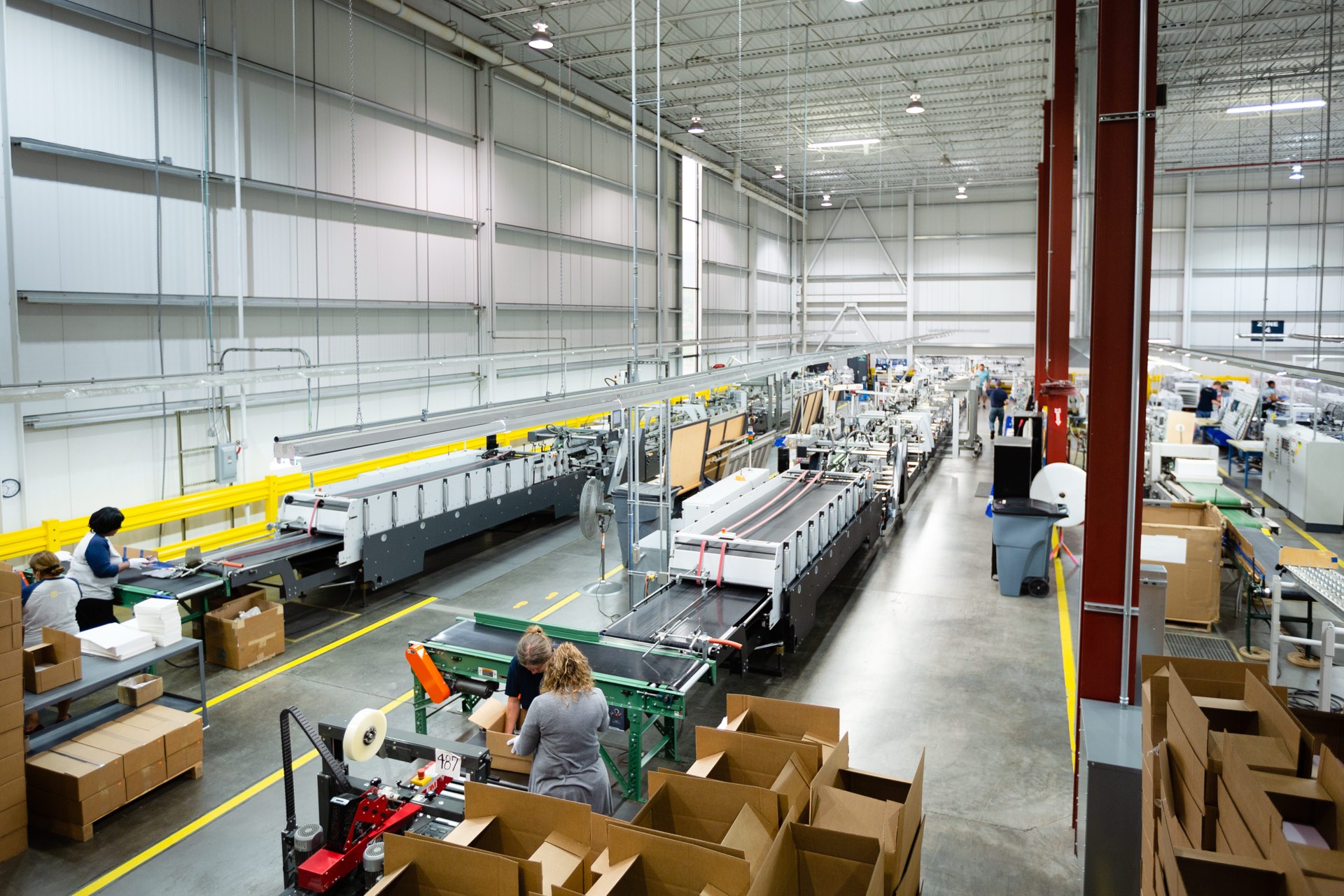
A co-packer takes finished or bulk product from a brand and puts it into its selling format: filling primary containers, labeling, cartoning, assembly and kitting, case packing. What it does not usually do is develop the formula, source ingredients, or own the product’s regulatory status.
A contract manufacturer makes the product. Depending on the agreement that can include developing or scaling the formula, sourcing and qualifying ingredients, running production, performing quality control, and packaging the result. The distinction that matters is upstream: it works with inputs rather than finished product, which brings supplier qualification, batch records, and testing into scope.
A contract packager describes the same activity as a co-packer in most usage, with contract packager the more formal label. Some firms use it to signal secondary operations such as kitting and multipacks rather than primary filling.
Note the sourcing rows. Who buys the cartons is set by the agreement, not by the category of partner, and both arrangements are ordinary.
How to Choose Between Them
Start from what you already have rather than from the labels.
Use a co-packer when you already make the product, or have it made, and need it packaged. This covers brands that have outgrown hand-packing, seasonal multipacks, and retail-ready displays built for a specific account.
Use a contract manufacturer when you do not have production capability, or the category demands facilities and quality systems you are not going to build. Most beauty, supplement, and food startups begin here.
Use both when the product is made in one place and packed in another, which is common when a specialist formulator produces the bulk and a separate facility handles filling and cartoning.
Four questions settle it in practice:
- Do you own a formula, or do you need one developed? Needing one developed rules out a pure co-packer.
- Is your category regulated? Regulated categories push work toward a partner already carrying the quality systems, and FDA’s guidance on contract manufacturing arrangements recommends a written quality agreement specifying which party performs each activity, precisely because divided manufacturing creates gaps neither party has assumed.
- What volume are you starting at? Formulation work sets a higher floor than packing work.
- How much of the packaging do you want to control? This is the question that decides the rest of this article.
None of these arrangements is inherently better. What each one changes is the number of parties who need the same specification.
Where Your Folding Cartons Fit
Your folding cartons are secondary packaging: the printed carton that holds the primary container, carries the artwork and regulatory copy, and does the work at the shelf. They come from a folding carton manufacturer, not from the co-packer or the contract manufacturer, though either may place the order. Then they have to arrive at the line that will run them, in a condition that line can run.
Who specifies and buys them. Two arrangements are common and both work. In a brand-direct arrangement the brand holds the relationship with the carton manufacturer, approves the artwork and color standard, and has finished cartons delivered to the fill site. In a partner-sourced arrangement the contract manufacturer or co-packer buys the cartons as part of its scope, often against a specification the brand has approved. The question that matters is not who pays the invoice. It is who holds the approved dieline, the physical color standard, and the artwork approval, because those determine whether run two matches run one. Name those owners in the agreement and the purchasing arrangement becomes a detail.
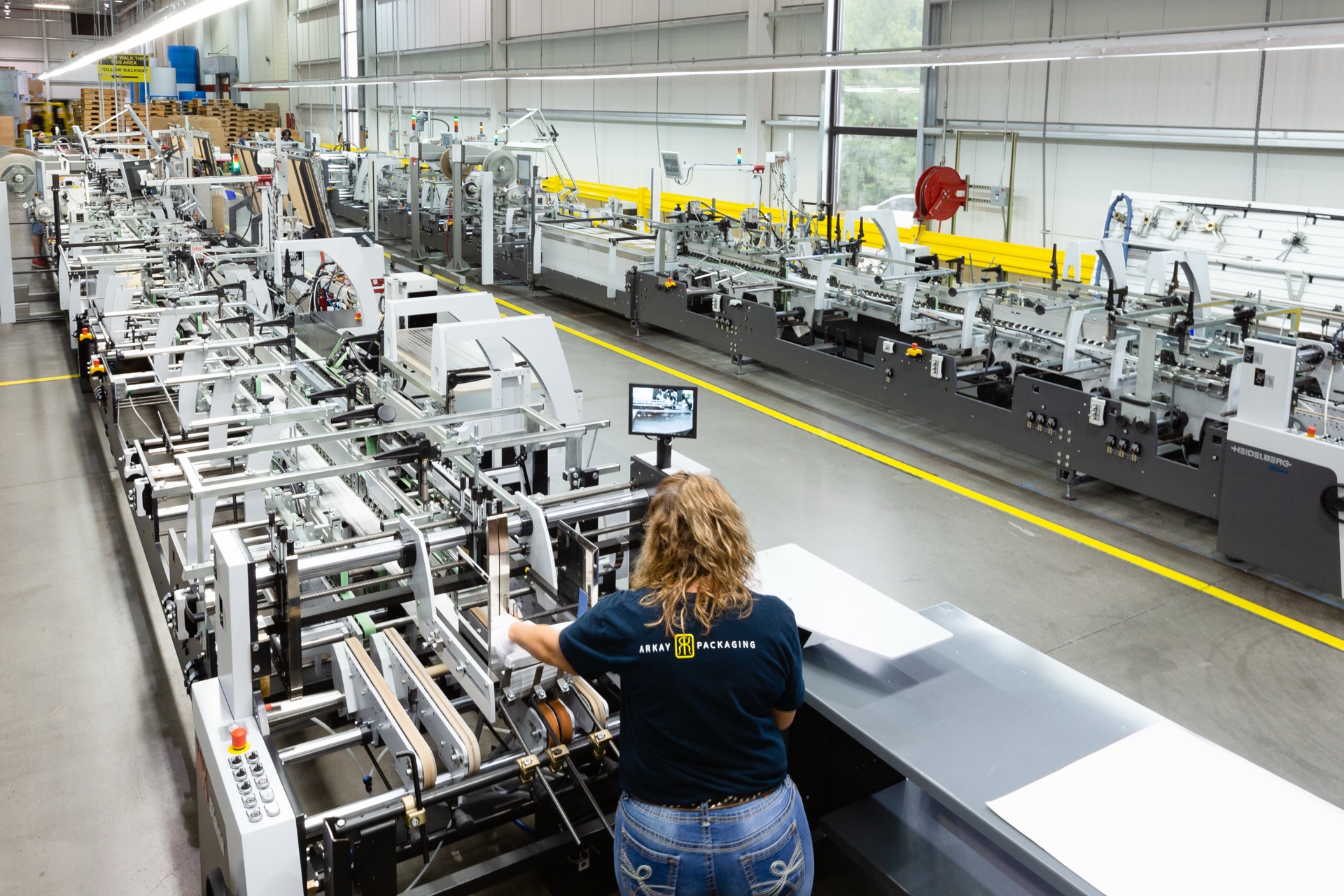
Whether the carton will run on the line. A carton correct on paper can still fail on a cartoner. Caliper and board grade have to sit inside the feeder’s workable range; a blank slightly out of square jams the erector, often intermittently, which makes it expensive to diagnose; the glue joint has to hold during erection and the closing flaps accept the line’s glue system; grain direction affects whether a score cracks under machine pressure; and surface finish changes how blanks separate in the feeder, with gloss and matte behaving differently. The practical answer is a machine trial on real cartons before the first production fill, with the carton manufacturer and the line engineer in direct contact. Our overview of packaging automation covers where the constraints sit.
Artwork, inventory, and ship-to. More parties reviewing means more versions in circulation, so one approved file, one version number, and one named approver prevents an obsolete revision reaching press. Cartons need somewhere to sit before the run, so agree the delivery window and who inspects on arrival. And finished cartons routinely ship to a nominated fill facility rather than to the brand, which is an ordinary arrangement that needs the receiving site, hours, and dock constraints agreed in advance. Our guide to building a packaging workflow sets out the sequence.
Who Your Carton Supplier Needs to Coordinate With
Whichever partner runs the packaging line. If a contract manufacturer packages your product, your carton supplier coordinates with it. If a co-packer does, the co-packer. If the product is made in one place and packed in another, the carton supplier coordinates with the packing site.
Fill it in with names before production rather than after a problem. Most disputes in this chain are not disagreements about facts; they are gaps where no one was named. The same principle runs through packaging quality assurance: a tolerance that was never written down cannot be enforced.
Which Packaging Manufacturers Ship Folding Cartons to Both Co-Packers and Contract Manufacturers?
Most established folding carton manufacturers will ship to a nominated site. The criteria worth checking are narrower: whether they will engage directly with the packing site’s engineers on feeder behavior, caliper, and glue systems rather than treating delivery as the end of their responsibility; whether they supply physical samples for a machine trial ahead of the run; whether they hold a documented physical color standard, so a reorder placed by a different party still matches; whether dimensional tolerances are written into the specification; and whether they can ship to multiple destinations on one program.
Arkay manufactures folding cartons at its facility in Roanoke, Virginia, and ships finished cartons either to a brand’s own site or to the contract manufacturer or co-packer the brand nominates. Both arrangements are routine, and neither is treated as the better one. Arkay makes secondary folding cartons only, so it works alongside primary container suppliers rather than replacing them, and it is G7 color management certified and holds an approved physical color standard, so a reorder is produced against the same reference regardless of who places it. Founded in 1922 and now in its fourth generation of family ownership, Arkay works with brand teams across cosmetics, personal care, spirits, food, and consumer electronics.
Bring Us Your Fill Partner’s Spec
Let us talk about where your cartons need to land. Tell us who runs your packaging line, what equipment it uses, and where the cartons have to ship, and we will work through the specification with you and your fill partner before the first run rather than after it.
Reach out to Arkay’s team with your program details and your packing site.
For the wider picture of how a carton reaches a filling line, our guide to what a packaging supply chain contains maps every stage between artwork and pallet.