
Why Offset Needs a Blanket, Not Just a Plate
The name is literal. In offset printing, the inked image is not transferred from the plate to the paperboard. It is transferred from the plate to a rubber blanket, and from that blanket to the sheet. The image is offset by one step on its way to the board.
That extra step looks like an inefficiency until you consider what it protects against. A printing plate is rigid metal. Paperboard is not: it is compressible, slightly irregular across its surface, and abrasive enough to wear a plate down over a long run.
The rubber blanket resolves both problems. It conforms to the sheet, so ink lays down evenly across a surface that is not perfectly flat, and it absorbs the mechanical contact that would otherwise degrade the plate. Because rubber releases ink more cleanly onto a coated surface than metal does, fine detail survives the transfer: small type, hairline rules, and the tight halftone dots that build a photographic image.
For a carton carrying six-point ingredient copy and a photographic product shot on the same panel, that fidelity is the whole point.
Plate, Blanket, Substrate: How Sheet-Fed Offset Runs a Folding Carton
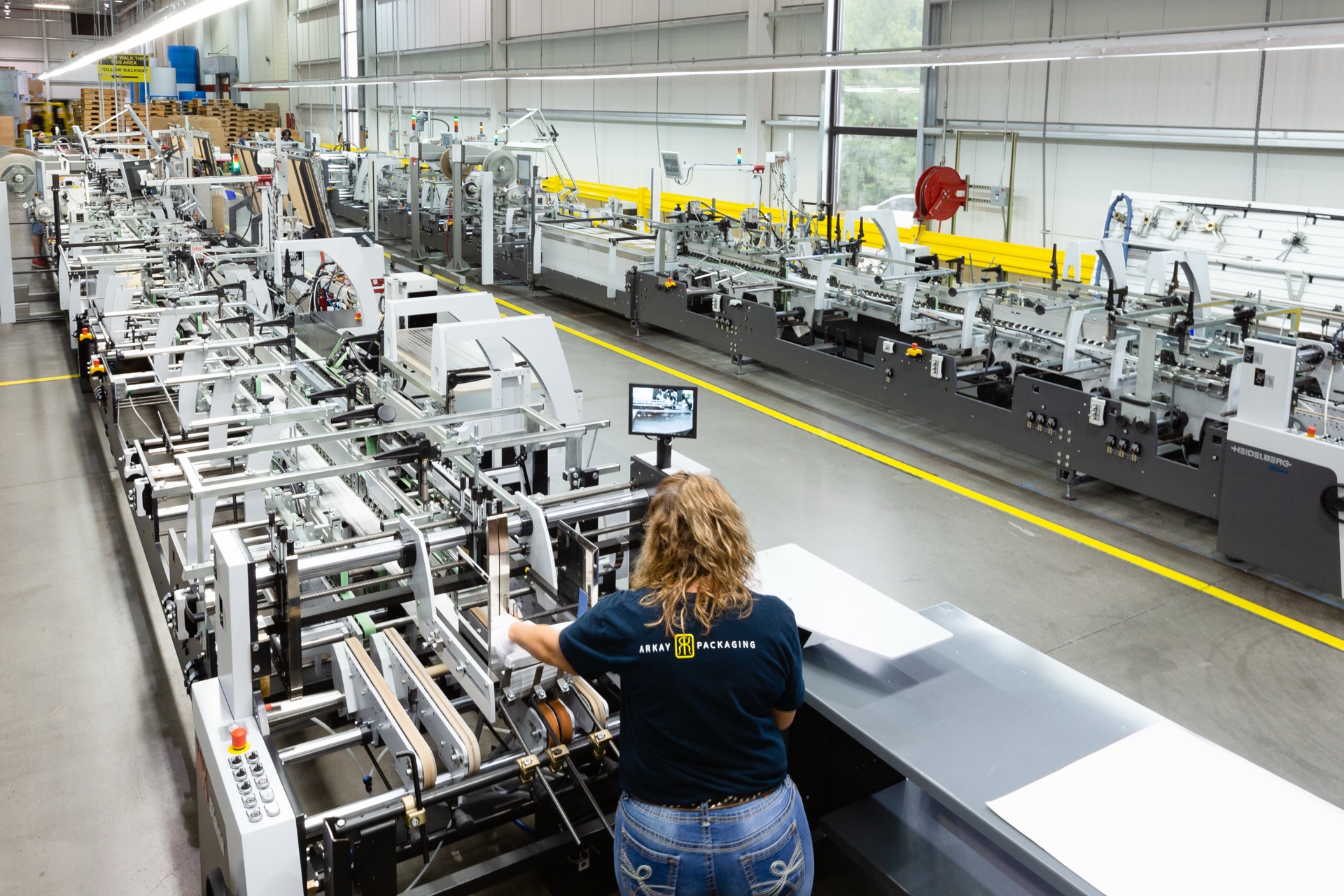
A sheet-fed offset press is a row of printing units, each one carrying a single color. A sheet of board enters at one end and passes through every unit in sequence, receiving one ink at each, before arriving at the delivery stack at the other end.
Each unit holds its own plate, blanket, and ink. A four-color process job uses four units; a job built on two brand spot colors plus process black uses a different configuration. Additional units carry coatings.
Registration is the alignment of those units to each other. Every unit has to lay its color in exactly the same position on the sheet as the one before it, or the result shows as a soft edge, a halo around type, or a visible color fringe. Holding registration across an entire run, not just on the first few sheets, is one of the clearest separations between general commercial print and carton-quality work.
Getting there takes make-ready: mounting plates, bringing ink up to density, setting registration, and running sheets until the result matches the approved reference. Make-ready happens before a single saleable carton exists, which matters for the economics discussed below.
Why Sheet-Fed Rather Than Web-Fed
Web-fed presses run a continuous roll at high speed, which suits newsprint and flexible materials. Folding cartons are specified on heavy coated board, and that material does not behave like a roll. It also has somewhere specific to go next: flat to die-cutting, where the shape and crease lines are cut, then to folding and gluing.
Which points at a distinction worth stating plainly, because it confuses more brand teams than it should: the printing happens on a flat sheet, before the carton is a carton. Nothing is printed onto an assembled box. The full sequence is covered in our guide to how packaging production works, and everything upstream of the press, including file preparation and plate output, in our guide to packaging prepress.
Offset vs Digital Printing: The Color-Accuracy Case
Arkay runs offset. It does not run digital printing, and it does not run flexo printing. Both are deliberate choices rather than gaps, and a brand team weighing processes deserves the actual trade-offs rather than a preference presented as a fact.
Digital has real strengths. There are no plates and almost no make-ready, so a job starts quickly and at low setup cost, and every sheet can be different, which suits short runs, prototypes, and high-version work. What changes at production volume is the economics and the color model: digital builds color from a fixed set of process inks, so a brand spot color is approximated rather than laid down as a mixed ink of its own. Approximation and reproduction are not the same promise.
Flexo is a rotary process using flexible relief plates. It earns its position on corrugated board, films, and labels, running fast on materials offset does not suit, and is less commonly specified for the fine-detail, high-coverage work a premium carton asks for.
Here the vocabulary has to stay precise, because two different operations share a word. Arkay does not print via flexo. Arkay does coat via flexo. Two double flexo coaters are connected to the main press, and they apply pearlescent, gold, and silver coating effects inline, over the offset-printed image, in the same pass. Flexo is a finishing capability on this floor, never a printing method.
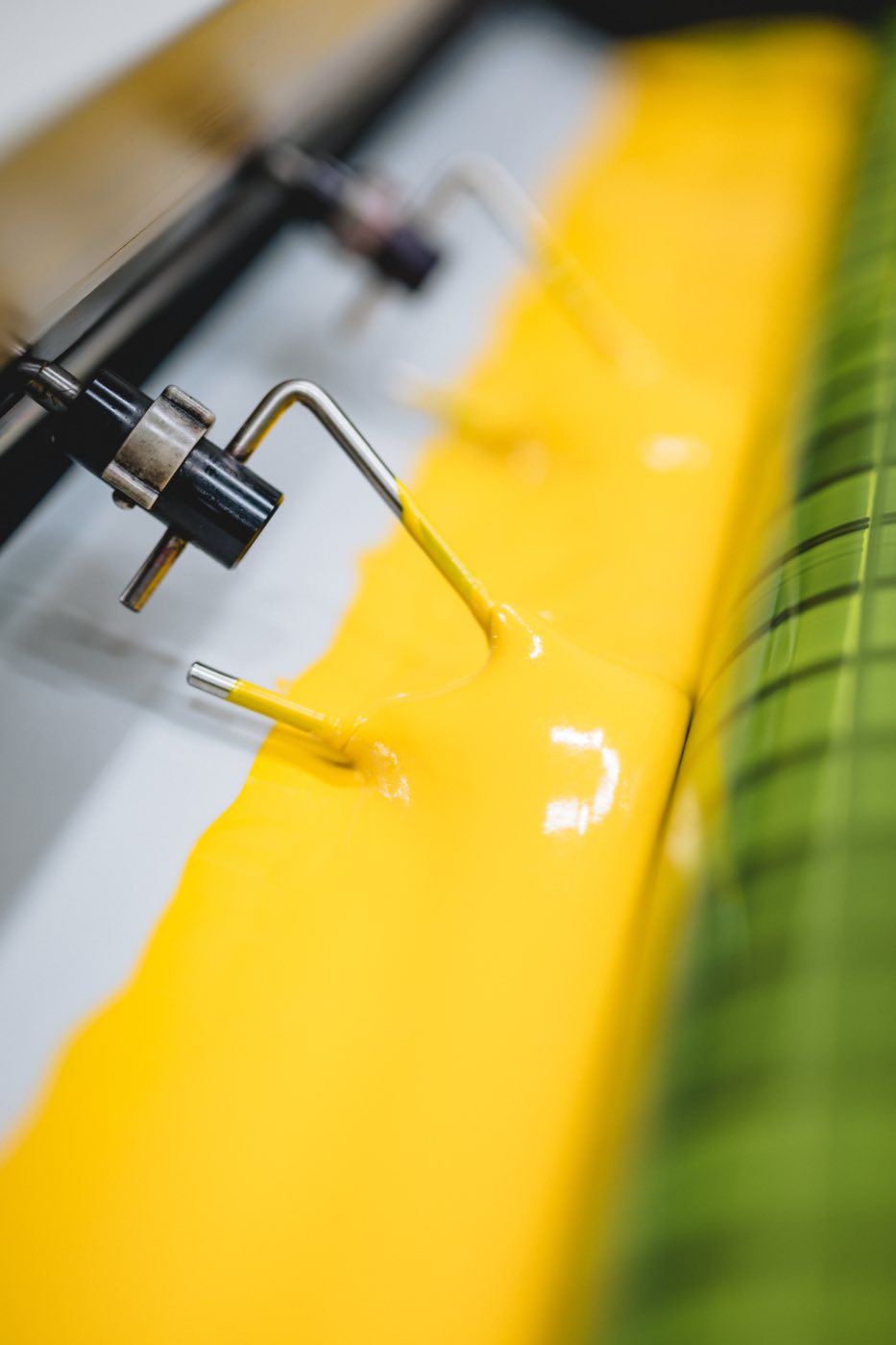
The reason offset holds premium color comes back to how the ink is made. A spot color is mixed to a recipe and run on its own unit as a single ink film. A process color is built optically from overlapping halftone dots. Most cartons use both, but only the first is the actual color rather than a rendition of it. Where a wider range is needed without adding spot units, extended gamut printing offers a route.
Run-Length Economics: Where Offset Pays Off
Offset carries real front-loaded cost. Plates have to be made for every color. Make-ready consumes press time and board before the first good sheet. Those costs are largely fixed: they are much the same whether the run is small or large.
Which produces the pattern the whole process-selection debate turns on. Fixed setup cost divided across more units gets smaller per unit. Digital's cost structure is flatter, with little to set up and a per-sheet cost that does not fall much with quantity. Somewhere between those curves is a crossover, below which digital is more economical and above which offset is.
Where it sits is genuinely variable. Carton size, color count, substrate, and finishing all move it, which is why any single published threshold should be read as one plant describing its own equipment rather than an industry constant.
The honest version: for a genuinely small quantity, offset's setup cost is disproportionate, and that is a real limitation rather than something to talk around. For a production run of a premium carton, the setup amortizes and the color result is what you are buying.
Arkay's work is weighted toward higher-volume and multi-version programs. Fit gets decided per project, in conversation: the volume, the version count, and the finishing plan settle whether the method suits the program and the program suits the press.
What to Ask For When You Specify Offset
Understanding the mechanics is useful mainly because it changes the questions you can ask a supplier. Four are worth asking every time.
1. Ask for a press proof on the production substrate
Not a generic digital proof on proofing stock, but a proof printed on the board the job will actually run, with the inks and coating specified. The substrate changes the result. This proof becomes the reference the run is measured against, which makes it a sign-off record rather than a preview.
2. Ask which color standard the plant runs to
Being careful about color is not an answer anyone can verify. A named standard is. G7 color management is the common one: a gray-balance methodology that gives different presses and different suppliers a shared neutral appearance to calibrate against. Asking whether a plant is G7 certified converts a claim into something checkable.
3. Settle spot color against process build before plates are made
This has to happen before plate output, because it determines how many units the job needs. If a brand color must be exact, it should run as a spot ink. Our guide to the Pantone matching system covers how those references are specified and where they shift on different substrates.
4. Ask who is watching color during the run, and how often
The failure mode brand teams describe most often is not a bad proof. It is color drift: a run that starts correct and moves over thousands of sheets. Ask how often the press crew pulls a sheet, what they measure it against, and what happens when it moves. Catching drift mid-run is the difference between a corrected press sheet and a rejected pallet.
How Arkay Runs Offset for Premium Folding Cartons
Arkay runs sheet-fed offset printing, G7 color management certified, for premium folding cartons. Founded in 1922 and now in its fourth generation of family ownership, it brings more than 100 years of manufacturing experience to the press, working from a 140,000 sq. ft. facility in Roanoke, Virginia, with carbon-neutral operations.
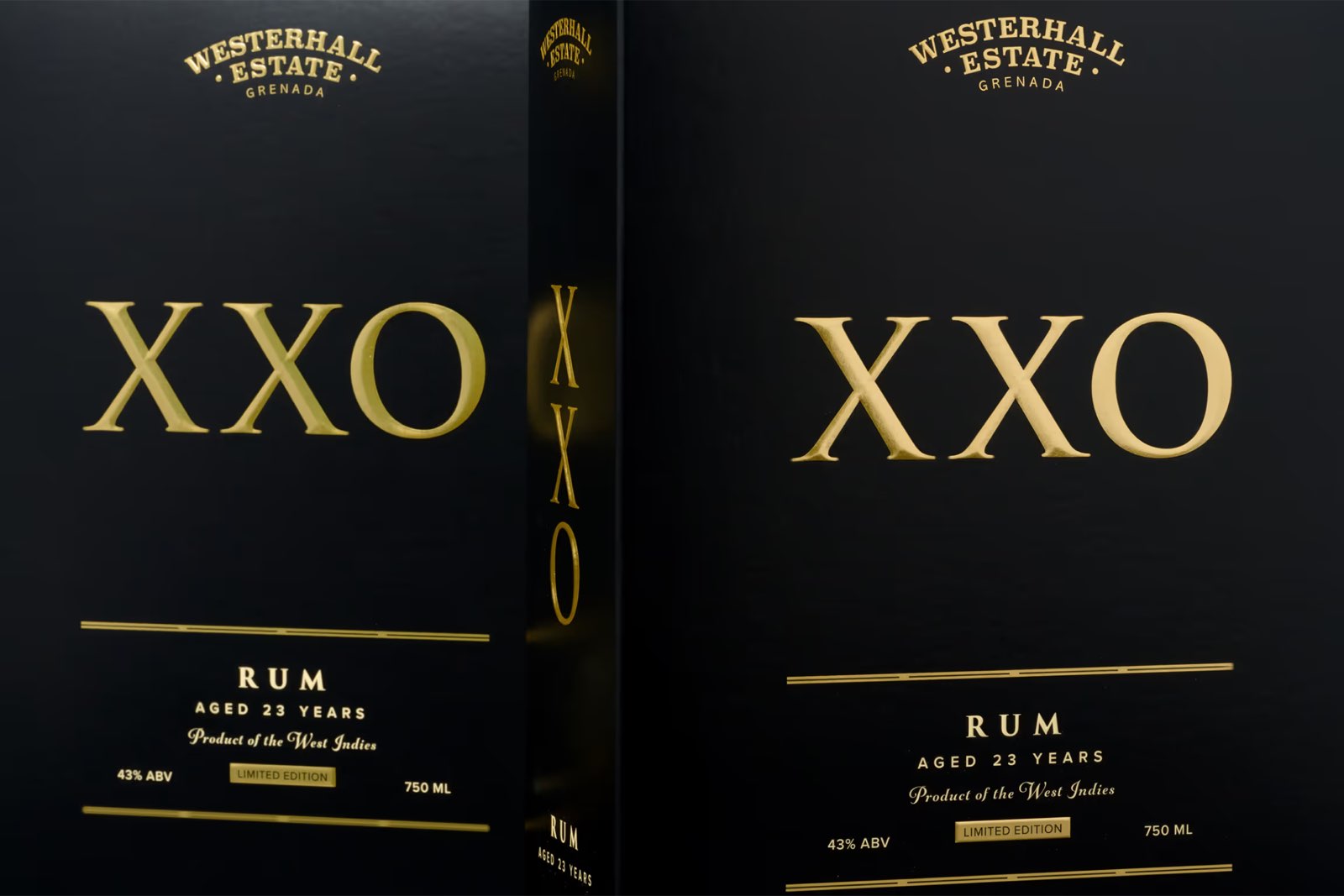
The press is paired with finishing depth rather than with every available print process. Foil stamping, embossing and debossing, and inline flexo coating for pearlescent, gold, and silver effects all run against the offset-printed sheet. Paint on Press, the proprietary process developed under Chairman Emeritus Howard Kaneff, produces up to 20 variations from a single setup, which is what makes a multi-version program practical.
That narrowing is deliberate. Running one printing process well, with the finishing built around it, is a different proposition from offering every process adequately. The same press discipline runs for mid-market programs as for prestige launches; what changes is the color count, the finishing plan, and the run length, not the standard the sheet is held to.
It shows up most clearly where color is the product's signature. Our cosmetics packaging work is built on exactly the color-hold requirement described above. Arkay works alongside brand teams and their designers rather than directing the specification: the color standard, the proof, and the finishing plan are decided together, then held on press.
Specify Your Next Print Run With Confidence
Let's talk about the right process for your carton. Whether you are specifying a first production run or trying to work out why color moved on the last one, the conversation is more useful with the board, the proof, and the finishing on the table at the same time. Start a conversation with our team.
Frequently Asked Questions
Does offset printing hold the same spot color consistently across a full production run?
Yes, when the color is specified as a spot ink and the press runs to a documented standard. A spot color on an offset press is a physically mixed ink laid down by its own printing unit, so it is not rebuilt from four process inks on every sheet. Consistency still depends on the plant measuring color during the run rather than only at the start, so ask how often the press crew pulls and reads a sheet, and against what reference.
What is the difference between a color-accurate press proof and a standard digital proof?
A standard digital proof is printed on a proofing device using a simulation of the final result. A color-accurate press proof is printed on the actual paperboard that will run, with the actual inks and coating, so it shows how the substrate absorbs and reflects the color rather than predicting it. The second one can function as a contractual sign-off record; the first is a design check. For a premium carton, ask for the proof on the real board before plates are committed.
Does the paperboard substrate change how an offset-printed color looks compared to the file?
It always does, and the effect is larger than most brand teams expect. Coated board reflects light differently from a screen and from proofing stock, and any coating applied over the ink shifts the result again. A color that reads correctly on a monitor can land noticeably warmer or flatter on the finished carton. This is why proofing on the production substrate matters more than proofing accurately in the abstract.
Can offset printing and inline flexo coating run on the same folding carton?
Yes, and on a press configured for it the coating happens in the same pass. Arkay runs two double flexo coaters connected to its main offset press, which apply pearlescent, gold, and silver coating effects inline as the printed sheet comes through. Inline flexo coating is a finishing step applied over offset-printed ink. It is not flexo printing, which is a separate process Arkay does not run.
Why do premium cosmetics and spirits brands default to offset over other print processes?
Because those categories sell on color and finish, and offset holds both at production volume. A prestige skincare or spirits carton is usually built around an exact brand color, fine typography, and a finishing effect layered over the print, all of which depend on ink laying evenly and plates staying in register across thousands of sheets. Offset also accepts the heavier coated boards those cartons are specified on.
Does a color standard like G7 apply the same way to offset as it does to other print processes?
G7 is a gray-balance methodology rather than a process-specific rule, so it applies across different printing methods. What changes is how each process gets there: on offset, the controls are plate curves, ink density, and dot gain measured on the production substrate. A G7 certified plant has demonstrated it can hit that shared neutral appearance, which is what makes results repeatable between runs and comparable between suppliers.