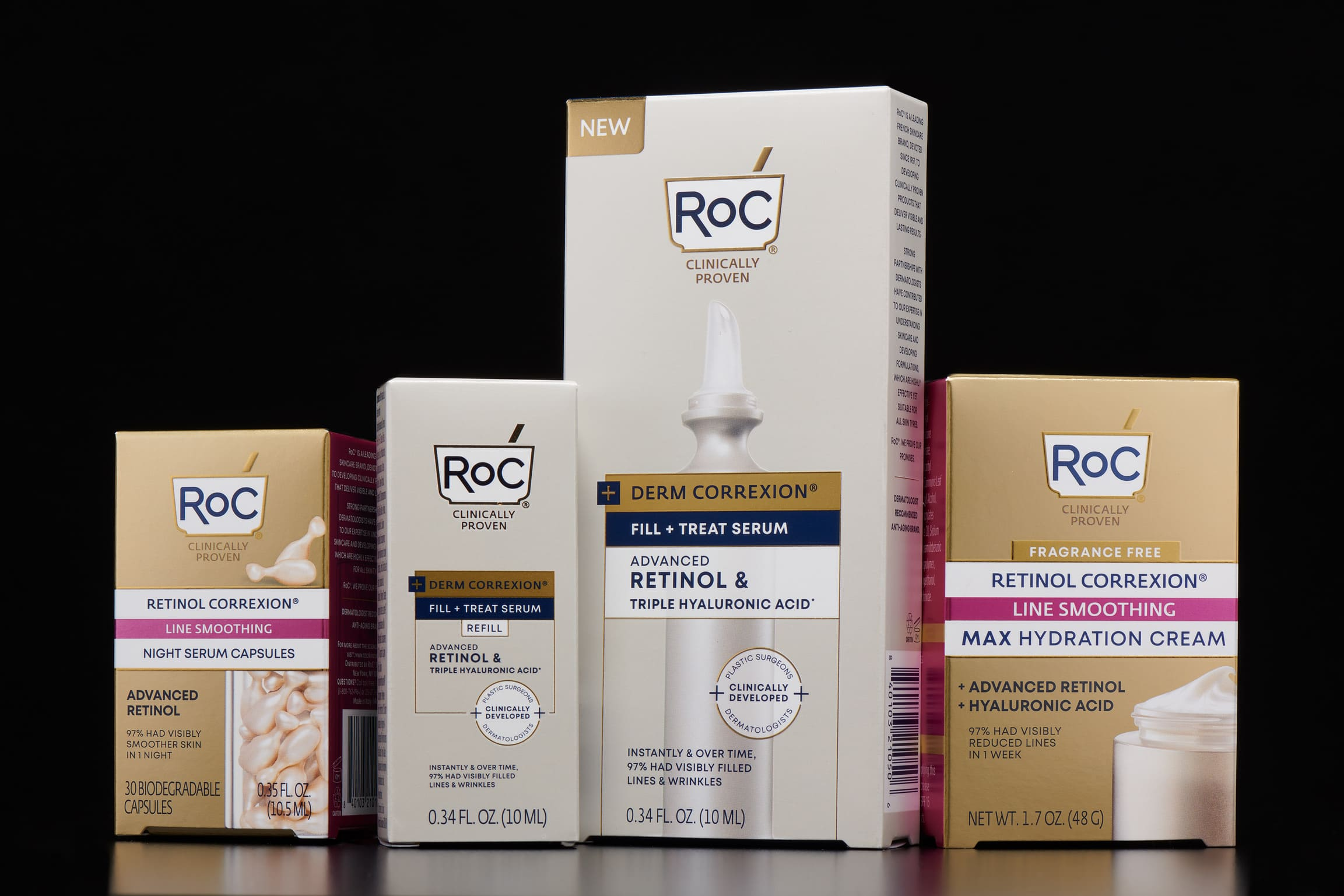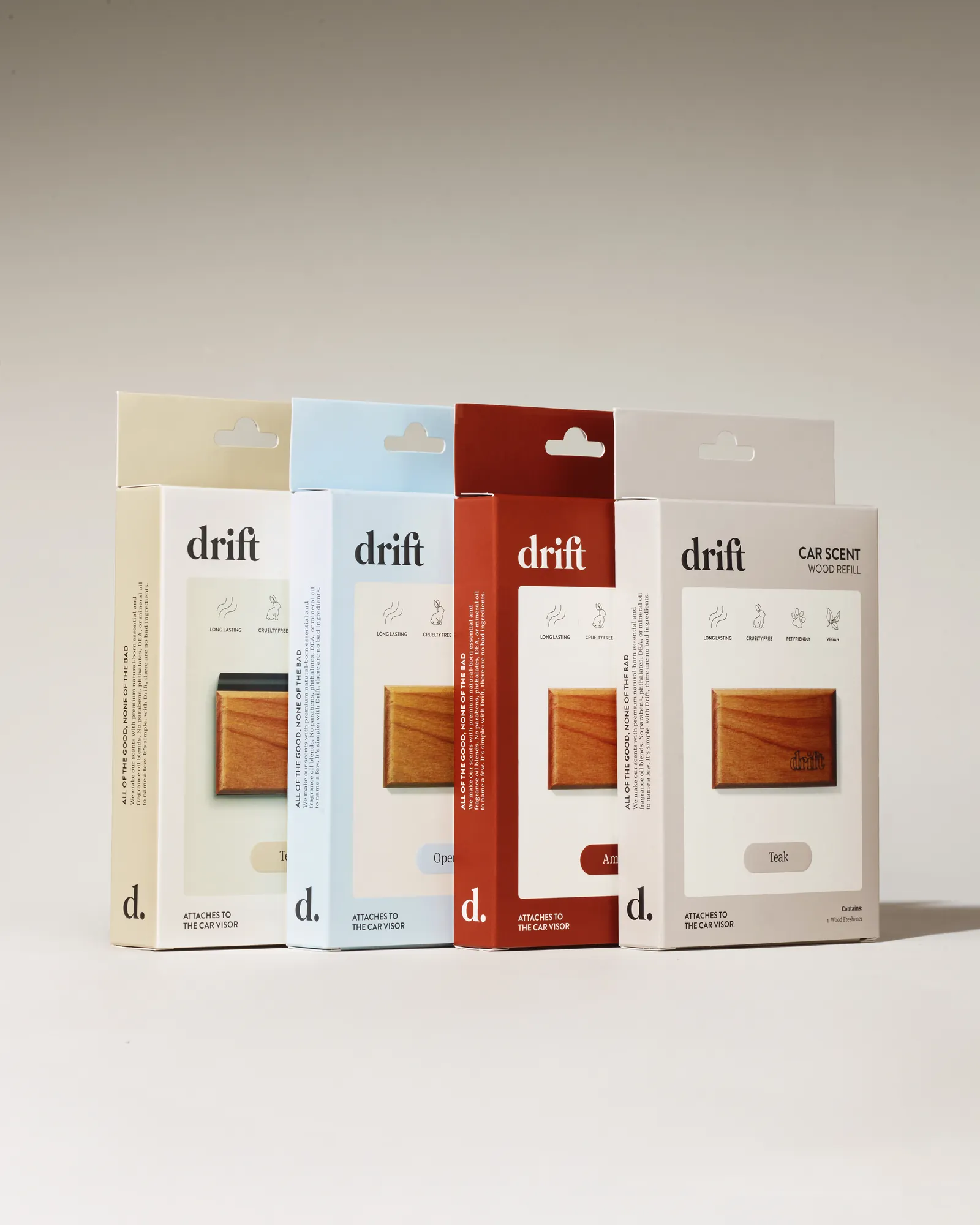

A buyer at a national grocery chain tells you the product needs to arrive shelf-ready. Your current case is a plain brown box that a colleague opens with a knife and unpacks unit by unit. Between those two facts sit a tooling decision, a case-count negotiation, and a cost nobody has agreed to carry.
This guide covers what shelf-ready packaging is, what it does, the formats available, what makes one work, and what the evidence actually says about sales.
What Is Shelf-Ready Packaging?
Shelf-ready packaging, usually shortened to SRP, is secondary packaging designed so a group of products can go straight onto a retail shelf as a single unit. The case the product ships in is also the display it sits in. Nobody decants individual units. A colleague removes a lid or tears a perforation, slides the tray into position, and moves on.
The definition comes from ECR Europe, the retail and manufacturing body that published the guidance the industry still works from in 2006. It describes SRP as a ready-merchandised unit that is easy to identify, easy to open, easy to place on the shelf and easy to dispose of, in a way that improves both replenishment speed and product visibility.
That last point matters. Shelf-ready packaging is judged on two things at once: how quickly store staff can handle it, and how it looks to a shopper once it is in place.
Shelf-ready or retail-ready: the same thing
You will see both terms, along with a few others, and they mean the same thing. ECR Europe states directly that SRP and retail-ready packaging are synonymous, alongside the French prêt-à-vendre and the phrase ready to sell. Its own glossary simply redirects the retail-ready entry to the shelf-ready one.
What varies is regional and organizational habit rather than meaning:
Some articles describe retail-ready as the broader or more brand-led term and shelf-ready as the narrower, more operational one. That split is not in the source material. Use whichever term your buyer uses. Nobody in the supply chain will misunderstand you.
A note on scope, since the two get confused. Our guide to secondary packaging covers the underlying formats and finishes in detail, and the difference is this: a plain shipping case is judged only on whether the product survives the journey. Shelf-ready packaging has to do that too, and then perform on the shelf. The protective job does not go away.
What Shelf-Ready Packaging Does
The value sits in what the industry calls the last 50 meters, the stretch between a pallet arriving at a store and the product reaching a shelf. A meaningful share of out-of-stocks originate there: staff cannot find the product in a crowded back room, or they damage it getting it out, or opening the case and refilling takes long enough that it does not happen during a busy shift.
Shelf-ready packaging addresses each of those. The practical benefits break into three groups.
Faster replenishment. A case that goes onto the shelf in one movement, rather than being opened and unpacked unit by unit, cuts the labour in every restock. This is the benefit with the clearest evidence behind it and the one retailers care most about.
Better on-shelf availability. Faster restocking means gaps get filled sooner, which is the mechanism by which shelf-ready packaging is supposed to protect sales. Note the distinction: it protects availability, which is not the same as lifting demand.
Improved presentation and recognition. A printed tray holding your cartons face-out is easier for a shopper to find than loose units pushed into a gap. Shopper research consistently shows people value the functional side of this, finding products and avoiding untidy shelves, more than they value how attractive the display is.
There is a fourth consequence worth naming because it shapes every commercial conversation that follows. The cost of shelf-ready packaging sits with the supplier, while the benefit of faster replenishment sits with the retailer. You buy the tooling and the extra board; your retailer banks the labour saving. Industry guidance recommends that trading partners share the investment rather than letting it fall entirely on one side, which makes funding a commercial negotiation rather than a packaging decision. It is worth raising before you commit to tooling.
Types of Shelf-Ready Packaging
The formats fall into three families.
Shelf formats are trays or modified cases that sit on a shelf or at the end of an aisle. This is what most people picture, and it is the most common.
Merchandising units stand on the floor rather than a shelf: promotional displays, dollies, and full, half or quarter pallets that ship as a complete unit.
Reusable formats, principally plastic crates, are returned and refilled rather than disposed of. They eliminate the disposal step entirely, which is why they are common in fresh produce.
Within the shelf family, four constructions cover most of what you will be quoted:
That last one deserves attention because it changes what is affordable. A regular slotted carton counts as a legitimate shelf-ready format. Shelf-ready does not automatically mean a bespoke die-cut display, and the industry guidance is explicit that the answer is not restricted to a corrugated tray.
Three format details are worth knowing before artwork is approved, because each one gets packs rejected. On shrink-wrapped trays, individual retail barcodes must not be scannable in the warehouse or back of store, and film seams must not cross them. On tray-and-hood constructions, keep perforations clear of barcodes, ideally with the barcode above the tear line. And inkjet-printed barcodes are not accepted.
The Five Features That Define a Shelf-Ready Pack
ECR Europe set out five functional requirements, and they remain the checklist retailers score against. Four of them serve store staff. Only one serves the shopper, which explains why the business case so often favours the retailer.
1. Easy to identify
Staff need to find the right product in a crowded back room, from around three meters away. That means the product code, name, contents, variant and date printed clearly on at least two sides, and brand and variant on at least four. Barcodes sit roughly 32 mm up from the base of the carton and no closer than 19 mm to a vertical edge.
2. Easy to open
No tools. Knives are discouraged because they damage product and risk injury, and opening should never need two people. Tearing must not leave a rough or sharp edge, and perforations need to run clean, which in practice means they must not be crossed by tape or glue. Finger holes help.
3. Easy to shelf
The case goes onto the shelf in one movement rather than being decanted. It should fill the shelf without leaving air gaps, and whatever remains after the lid or wrap comes off has to stand up on its own without twisting or sagging under the weight of the product.
4. Easy to dispose
What is left should collapse flat with minimal handling, without tools, and separate into recyclable materials.
5. Easy to shop
The shopper’s view. The unit has to be easy to identify, pick from and replace, and it has to still look right when it is half empty, which is the state it spends most of its life in.
One caveat matters more than the list itself. Full compliance with all five is not the target. The guidance is explicit that some requirements will not apply to a given product, and that partial adoption is legitimate. The single exception is easy identification, treated as best practice for almost any pack whether or not it is shelf-ready. That is also the cheapest of the five, because it is a print and layout decision rather than a tooling one.
Where retailers score packs formally, a typical pass mark is around 75 percent overall with no individual requirement below 65 percent.
What retailers specify
Most major retailers keep their packaging specifications behind supplier-portal logins, so the honest answer to what yours requires is to ask your buyer early. The Australian Food and Grocery Council publishes real figures, which is useful as an illustration even though the numbers are specific to that market: shelf depths between 455 mm and 505 mm, with the design goal being two cases per SKU on the shelf, arranged two deep, then two stacked, then two adjacent.
One detail catches brands out. Acceptance can be set per store rather than per chain. Woolworths marks the shelf label store by store to tell the filler whether a product qualifies, and where the pack does not fit a particular store’s facings, that marker is simply absent. Head-office approval does not guarantee the format works everywhere.
Does Shelf-Ready Packaging Increase Sales?
Almost every supplier page says yes. The source material is considerably more careful, and it is worth knowing why before you build a business case on it.
ECR Europe does assert in passing that shelf-ready packaging improves availability and reduces out-of-stocks, resulting in increased sales. That sentence sits in a framework document with no study attached. Elsewhere in the same report, working through how to build an actual business case, it concedes that sales uplift is harder to predict and calculate than cost.
Its recommended workaround tells you most. Where uplift cannot be forecast, the guidance suggests working backwards: calculate the lift you would need to cover the investment within an acceptable payback period, then ask whether that number is plausible. Its own worked example is a format change requiring a 20 percent sales lift to pay for itself. That is not the method you use when you have evidence.
The report’s own summary is blunter still. It states that shelf-ready packaging cannot be considered a standalone best practice whose general adoption would bring substantial, measurable industry-level benefits, and that implementation should be assessed case by case rather than applied systematically. It also notes that remarkably little shopper research exists on how people actually interact with these formats.
The one independent measurement points the same way. A 2009 study from Lund University, examining ready-to-sell packaging through IKEA’s supply chain, found pallet-based solutions cost efficient and shelf-level solutions cost inefficient in general, because the additional material cost exceeded the replenishment saving. It also found shelf solutions were used as intended only about 65 percent of the time, against nearly 90 percent for pallet formats, mostly because packs were oversized. On one product family, restocking was actually faster with the ordinary case.
Weigh that with its limits in view. It is a master’s thesis rather than peer-reviewed work, a single company in furniture rather than grocery, with a small product sample and data from 2009. It does not prove shelf-ready packaging fails to pay in a supermarket. It does establish that the cost case is genuinely contested, which is more than any vendor page will tell you.
There is also a hard commercial ceiling. Shopper research across four European markets found that shoppers will not pay extra for the benefit of shelf-ready packaging, and that poorly executed formats actively put people off.
So the honest position: shelf-ready packaging is an availability and labour play whose value has to be proven per product, per category and per channel. Where the costs outweigh the benefits for a given line, the guidance itself says to reconsider it. You will not find a credible published figure for how much faster replenishment gets or how much sales rise, because those numbers do not exist.
What a Growing Brand Can Afford
If the full format does not pay for itself yet, the answer is not to do nothing. It is to do part of it.
Start with easy identification. It is a print and layout decision rather than a tooling one, and it is the requirement that applies to almost any pack. Clear code, name, contents, variant and date, readable across a back room.
Treat partial adoption as legitimate. The guidance explicitly allows for selected wins where the full business case fails, and notes that functionality can often improve with little or no investment by targeting individual requirements.
Question whether you need a die-cut display. A modified case with a clean perforation and better print may satisfy what your buyer is actually asking for.
Pool the case across products or partners rather than scoping it to one line and one retailer. Not yet having reached critical mass is a legitimate reason to wait.
Check what you already have. If you source product from overseas in an existing shelf-ready format, it may work locally without paying for rework.
Agree case configuration before tooling. It follows rate of sale and has to be settled with the buying team first. There is no universal formula, and getting the count wrong is the mistake tooling makes permanent.
On volume, our position is straightforward. Our work is weighted toward higher-volume and multi-version programs, and we do not publish a minimum order quantity, because fit is settled project by project rather than by a threshold. For brands running several variants, Paint on Press is often what makes a split program work, testing up to 20 foil and finish variations from a single setup. Our guide to short-run packaging covers when that calculation favors a smaller run.
Where Folding Cartons Fit
Corrugated cases, trays and display shippers are a different manufacturing discipline from folding cartons, and they usually come from a different supplier. Arkay makes paperboard folding cartons, not corrugated trays. This guide covers the whole landscape so you can brief the right partner for each part.
That said, the printed carton is not a bystander in a shelf-ready program.
The carton decides whether easy shop succeeds. The guidance requires that the outer unit must not cover information a shopper expects to see on the pack itself, and that the front facing should echo the consumer units inside. The tray and the carton have to be designed as one system, because a well-built tray around a poorly designed carton still fails the only requirement aimed at your shopper.
Print quality is a stated requirement, not a preference. ECR Europe advises against unprinted brown corrugate on the grounds that it degrades the shopper experience, and suggests brand colors be used to draw attention and distinguish variants. That is an industry body, not a printer, making the case for print.
The half-empty test is a carton problem. The unit has to stay identifiable and appealing when half emptied, and at that point what a shopper sees is your cartons, edge on, in whatever order the last person left them.
How Arkay Builds Cartons for Retail Programs
Our part of a shelf-ready program is the printed carton inside the tray. After four generations and a century of folding carton production since 1922, what we can speak to there is consistency and finish precision rather than structural strength.
We print offset on solid bleached sulfate board only, in a caliper range of 14 to 28pt, which keeps substrate composition consistent across a year of production rather than varying by delivery. Most of that work runs for beauty, personal care and food and nutraceutical brands, the categories where case-ready formats are furthest along. Color is managed to G7 standards, which matters more than it sounds for a retail program: a variant range has to look like a range when four facings sit side by side, and a reprint six months later has to match the first run.
Finishing runs in-house, including emboss and deboss to a registration tolerance of ±0.3mm, foil stamping, and inline specialty coating through two double flexo coaters for pearlescent, gold and silver effects. Where a tactile finish is wanted, we run inline soft-touch aqueous coating, which adds no separate film layer to the board and stays repulpable. We do not offer soft-touch film lamination.
Fiber sourcing is triple-certified to FSC, SFI and PEFC, and our sustainability credentials set out what each covers. Production runs from a carbon-neutral 140,000 square foot facility in Roanoke, Virginia, and our production capabilities list what happens under that roof.
Talk to Us Before You Tool the Case
Let’s talk about what your buyer is actually asking for.
The expensive mistakes in a shelf-ready program happen early: a case count agreed after tooling, a carton designed without knowing what the tray will cover, a finish specified before anyone checked how it survives a perforation. All of those are inexpensive to fix at dieline stage and costly to fix afterwards.
Send us the carton spec, the retailer you are selling into, and the case configuration if you have one. If you do not have one yet, that is the more useful conversation. Our design studio in Hauppauge can usually turn a concept into a physical mock-up within a week, which is the least costly point at which to find out a case does not sit right on a shelf.
Reach out to Arkay’s team with a spec or a shelf problem.
Two guides are worth reading alongside this one: folding carton types and styles on the structures themselves, and how to write a packaging brief on specifying case configuration before it becomes a tooling decision.
Frequently Asked Questions
What is a regular slotted carton, and does it count as shelf-ready?
A regular slotted carton is the standard four-flap shipping box, and the Australian industry guidelines list it as a legitimate shelf-ready format. That matters because it contradicts the common assumption that shelf-ready means a bespoke die-cut display. ECR Europe makes the same point, warning that the answer is “not restricted to a corrugate tray or case displayed on-shelf.” A modified case with a clean perforation, clear identification on four sides and a stable remaining structure can satisfy what a buyer is asking for, at a fraction of the tooling commitment a custom tray requires.
Can I use the shelf-ready packaging my offshore supplier already makes?
Often yes, and it is worth checking before you pay for anything new. The Australian guidelines recommend that products sourced offshore in existing shelf-ready formats be considered for local markets, with the retailer challenged on whether the existing format can be used, specifically to avoid expensive rework. The things to verify are the ones retailers score: whether identification is readable on enough faces, whether the case fits the shelf depth at the right count, and whether barcodes survive the perforation line.
How many units should go in a shelf-ready case?
Enough to fill the shelf twice over, which in practice means the case is sized to the product’s rate of sale rather than to a standard count. The Australian guidelines set the best-in-class goal as a shelf capacity accommodating two cartons per SKU, with the operational preference running two cartons deep, then two stacked, then two adjacent. There is no universal formula. Both ECR Europe and the AFGC are explicit that configuration has to be agreed with the retailer’s buying or category team before development starts, because getting the case count wrong after tooling is the expensive mistake.
Do I need shelf-ready packaging to get into a major retailer?
Increasingly yes for grocery, though it depends on the category. The Australian industry guidelines record that retailers have requested all new products be presented in SRP formats, with existing products on time-bound migration plans. The stated exception is large and bulky goods, which do not lend themselves to SRP. One detail worth knowing: acceptance can be set per store rather than per chain. Woolworths marks the shelf label store by store to tell the filler the product is in acceptable shelf friendly packaging, and where the product does not fit a particular store’s facings, that signifier is absent.
Does shelf-ready packaging use more material than a plain case?
Often yes, and ECR Europe treats that as a real tension rather than a footnote. Its guiding principles warn that if an SRP execution leads to more packaging material, the impact reaches waste, transport and air quality, and that if SRP comes to be seen as at odds with environmental concerns, consumer acceptance of it will be undermined. The Australian guidance frames the same trade-off from the other direction: smaller case sizes improve merchandising flexibility but have to be balanced against the total amount of packaging used. Neither body treats more material as automatically justified.
What does non-retail packaging mean on Amazon?
On Amazon, non-retail packaging means the item arrives in plain manufacturer or bulk packaging rather than the display packaging it would carry on a shop shelf. It is the opposite end of the same decision shelf-ready packaging sits at. Amazon optimizes for a parcel network and one customer opening a box, so its Ships in Product Packaging program rewards a pack that survives a conveyor without an overbox and opens within 120 seconds. Retail shelf-ready packaging optimizes for a shelf and a store colleague. The two rarely produce the same specification.