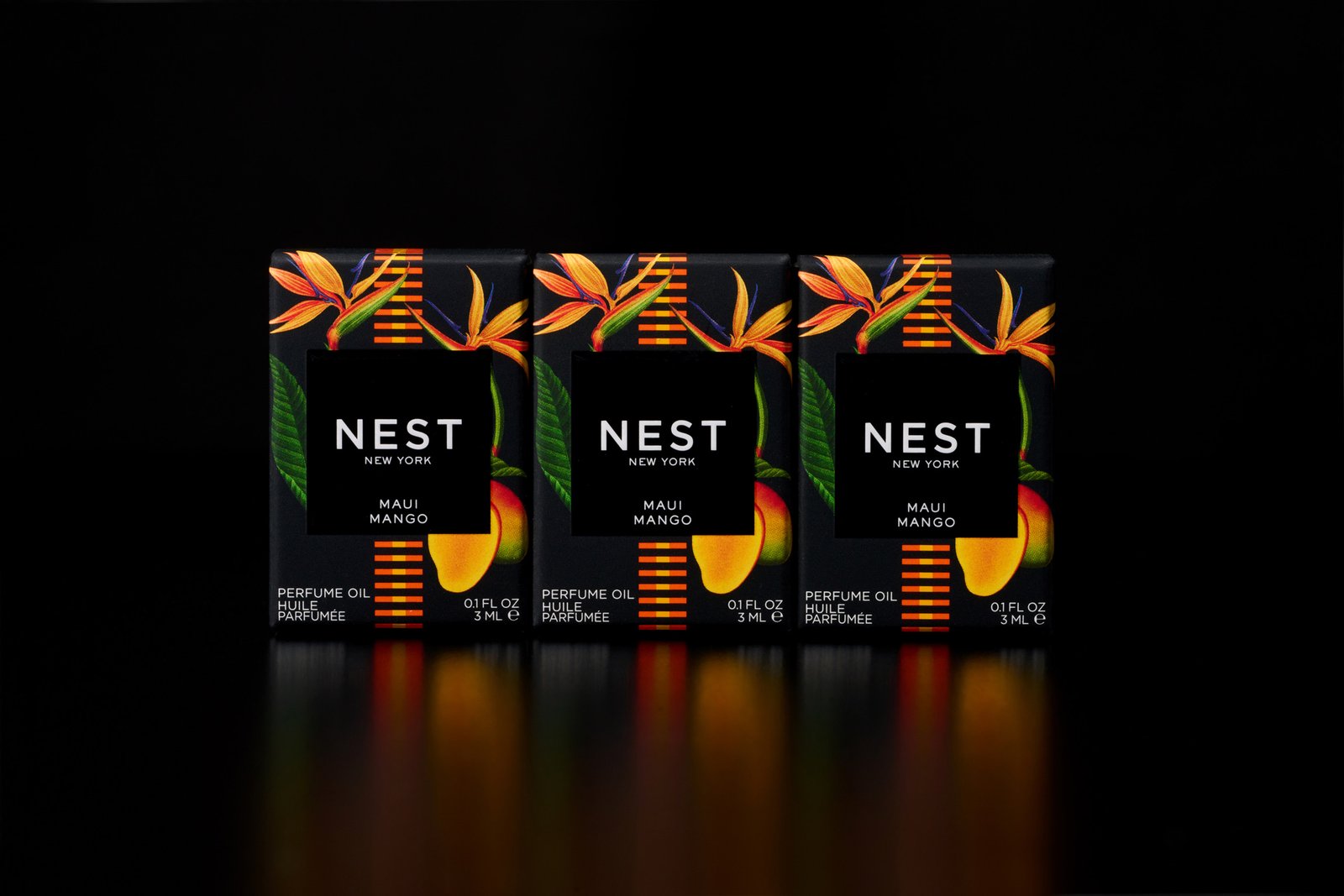

Most published guidance on cosmetic packaging lead times is really about primary packaging: injection molds for a bottle, tooling for a closure, sourcing pumps and droppers across multiple vendors, compatibility and stability testing. That work is real and it is often the longest pole in a launch. It is also a different manufacturing discipline from the one covered here.
This article is about the folding carton: the printed secondary packaging that carries the brand, the claims, and the barcode. Arkay makes cartons and does not make bottles, tubes, caps, jars, pumps, or droppers, so primary components appear below only where they belong, as the parallel track a launch depends on and a different supplier delivers.
That distinction is not housekeeping. Cartons and primary tooling have separate critical paths, and treating them as one sequential chain is among the most common ways a launch date slips. For the mechanics of how a carton is actually produced, rather than how long it takes, see our walkthrough of how packaging production works.
One more thing worth saying at the outset. Every figure below is a typical range that moves with the specifics of a project. Anyone offering a fixed date before seeing a structure, a finish schedule, and an artwork status is guessing, and the audience for this article has usually already been on the receiving end of that.
What Cosmetic Packaging Lead Times Actually Look Like
The carton and the bottle run on different clocks, and conflating them is where most launch planning goes wrong.
For the folding carton, Arkay publishes its own figures. Domestic production runs 1 to 4 weeks. A custom carton program runs 4 to 8 weeks end to end: around 4 on a repeat order where tooling already exists, and 6 to 8 on a new project. A new customer’s proofing phase takes about 2 weeks from purchase order and final files. Tooling adds 1 to 3 weeks where a new die is required. Going offshore adds 6 to 12 weeks of ocean transit and customs on top of production. Details sit in our guides to packaging procurement and the packaging supply chain.
For primary components, the picture is longer and it is not Arkay’s to quote. Beauty Packaging asked packaging executives directly: on stock items, Michelle Wu of Allstar Packaging said “we can deliver within two to three weeks or less for items sold as-is from our stock packaging inventory,” while on custom work Liana Cook, VP at ABA Packaging, said “a ten to twelve-week lead time or longer is not uncommon for primary packaging” (Beauty Packaging, July 2025).
Put those side by side and the planning implication is immediate. A custom carton at 4 to 8 weeks and a custom bottle at 10 to 12 or longer are not the same problem, and running them as one sequential chain means the shorter track waits on the longer one for no reason. They should be scheduled as parallel tracks against a shared shelf date.
One point worth making plainly, because it matters more than any single number. A timeline that holds is worth more than a shorter one that slips. A brand planning against fourteen predictable weeks ships on schedule; a brand planning against ten optimistic ones rebooks a photoshoot.
The Folding Carton Calendar, Stage by Stage
The table below is the carton track. Ranges reflect typical projects and flex with urgency and specification.
Board procurement is the row most likely to be quoted to you as a fixed number, and it is not one. Where a board is held under an inventory program, and Arkay runs programs on special grades as well as standard ones, sourcing is largely absorbed and stops being a line on the critical path at all. Where it is not, it varies with grade, caliper, and mill availability. This is why a general board lead time is close to meaningless as a planning figure: the same grade can be a non-event on one program and a genuine constraint on another. The question worth asking a supplier is not how long board takes, but whether the board your specification calls for is on a program.
A digitally printed sample skips plate setup, which is why it lands inside two weeks. That is a prototyping route, not a production one: Arkay prints production work offset, and the digital step exists so a brand can hold something accurate before committing to plates and dies.
Genuinely elastic: structural development when a die can be reused, prepress when files arrive clean, make-ready, and finishing when effects can run inline rather than offline. This is where a schedule is won.
Semi-fixed by physics: prototype assembly and cure, the plate-to-press cycle, ink drying between separate finishing passes. These do not compress meaningfully because chemistry does not negotiate.
Elastic in the wrong direction: approval rounds. This is the only category that reliably expands, and it is the subject of the next section.
Two of these stages have their own detail worth reading separately. Prototype rounds and what each type validates are covered in our guide to prototyping in packaging design, and the phase structure a carton program moves through is covered in our guide to building a packaging workflow.
What Makes a Carton Take Longer
Ranked by how much each one moves the calendar in practice.
1. Whether a Die Must Be Cut or Can Be Reused
This single variable explains most of the range in structural development. A new structure with custom emboss tooling is weeks of work. A line extension onto a validated existing die skips the stage almost entirely. Brands running multiple SKUs get an outsized return from designing the first structure to carry the whole line.
2. The Number of Separate Finishing Passes
Foil stamping, embossing, and specialty coating each add time, but how much depends entirely on whether they run separately or together. A combination die that applies foil and emboss in one pass, or a coating applied inline in the same pass as printing, adds a step to a cycle. Three separate offline passes add three cycles, each with its own handling and drying. Two cartons with comparable shelf presence can sit weeks apart on this basis alone. Our guide to foil stamping covers where the decorative choices actually differ.
3. Approval Round Count
The largest controllable factor, and the best evidenced. Covered in full below.
4. Brief and File Completeness at Handoff
Incomplete specifications, a missing Pantone reference, an unconfirmed substrate, an unresolved finish, cost 1 to 3 days per round. Files that are not print-ready cost more. Both compound when repeated, because each iteration re-enters a queue rather than resuming where it stopped (3D Color).
5. Scope Creep Between Rounds
A structural change introduced during color review resets 2 to 5 days per round, because it invalidates work already done rather than adding work alongside it (3D Color).
6. Board Grade and Availability
A specified caliper and grade has to actually be available, and this is a genuine bottleneck more often than brands expect. It is also the stage a brand has least visibility into, which is a reason to ask about it early rather than assume it.
7. Press and Finishing Capacity
Seasonal rather than constant. Covered in the planning section below.
Where the Time Actually Goes
This is the most useful finding behind this article, and it is worth stating carefully because it can read as blame when it is closer to good news.
Start with Arkay’s own number: artwork approval alone consumes 30 to 40 percent of a project’s total timeline (packaging procurement). Not prepress, not printing, not finishing. Approval. On a 6-week carton program that is roughly two weeks spent waiting for sign-off, and it is the block a brand controls outright.
The wider industry data says the same thing.
A March 2026 survey of 107 enterprise compliance and marketing executives found that 89 percent cite review capacity, not technical or manufacturing limits, as the factor slowing speed to market. A minor packaging or label change adds 4 to 8 weeks purely from review backlog. And 94 percent of legal and regulatory teams require full manual re-verification of unchanged elements whenever anything on a pack changes, which means a small revision triggers a large re-check (Puntt AI survey).
A prototyping firm handling more than 76,000 comps annually across 250-plus CPG brands describes approval bottlenecks, specifically multiple reviewers giving conflicting feedback or going unresponsive, as often the single largest source of timeline loss, costing 2 to 7 days per instance waiting for consolidated direction (3D Color).
Then the figure that makes the point actionable. CPG teams that restructured sequential approval workflows into parallel ones cut cycle time by 45 percent on average, from 4.6 weeks to 2.5, and cut revision rounds by 38 percent, from 4.2 to 2.6 (3D Color).
Nothing changed in manufacturing to produce that. No press ran faster, no board arrived sooner. The approval process was rearranged, and roughly half the calendar came back.
Read across all of it, the pattern is consistent: the number that moves is the approval number. That is worth knowing because it relocates the largest available saving to the side of the table that can actually act on it without renegotiating anything with a supplier. The frequently cited Gartner finding that 45 percent of product launches are delayed by at least one month, published in 2019 and still the standard benchmark in this space, is a good deal less mysterious in that light (Gartner, 2019).
How Brands Compress the Timeline
Ordered roughly by return.
1. Run the Carton and the Primary Tooling in Parallel
Not nose to tail. The two tracks have different critical paths and different suppliers, and sequencing them means the carton waits on a bottle decision that may not constrain it at all. Splitting a pack across bottle, pump, cap, and decoration vendors introduces coordination risk whenever those are run as one chain rather than as concurrent tracks. Carton structural work can begin as soon as the primary container’s outside dimensions are settled, which is typically well before its tooling is finished.
2. Lock the Structure Early, or Reuse One
The single largest compression available, per the drivers above. It also front-loads a decision that gets more expensive to change the longer it stays open.
3. Freeze Artwork Before It Reaches Prepress
Late changes are the documented cause of round resets. A file that arrives complete, with substrate and finishes confirmed, moves through prepress in days. A file that arrives provisional re-enters a queue every time it changes.
4. Front-Load Regulatory and Claims Review
The Puntt finding is that sequential legal review is the delay mechanism. Getting claims, ingredient copy, and regulatory language reviewed while creative is still in progress inverts the pattern that causes the backlog rather than trying to accelerate it later.
5. Approve Color on the Real Substrate the First Time
Approving a color against generic proofing stock, and then discovering the board reads differently, resets an entire round. Getting the draw-down on the actual production sheet before sign-off avoids the round rather than shortening it.
6. Reduce Separate Finishing Passes
Inline coating and combination dies where the design allows. This removes production cycles, which is a different order of saving from making a cycle faster.
7. Consolidate SKUs Onto Fewer Press Forms
Fewer forms means fewer make-readies. The saving scales with the number of versions in the program.
8. Ask About Board Early
Grade and caliper availability is a real constraint and one of the few that a brand cannot see coming. Asking at specification stage rather than at order stage sometimes changes the specification for the better.
Domestic or Overseas: How Many Weeks
The manufacturing calendar is only part of the difference between the two routes.
Ocean transit from Asia to the US East Coast runs roughly 28 to 45 days port to port, and 40 to 55 days door to door once trucking and customs are included. Stacking transit, customs clearance, drayage, and a realistic buffer puts the practical floor for a firm delivery date around 7 to 9 weeks. Congestion risk also concentrates between August and October, which collides directly with fourth-quarter holiday demand (freight transit benchmarks).
Beyond the wait, three costs that rarely appear in a lead-time comparison:
- Carrying cost. Fully loaded inventory holding cost typically runs 20 to 35 percent of inventory value per year (Cogsy). Safety stock held to buffer a long cycle is an ongoing expense, not a one-time one.
- Minimum quantities and obsolescence. Longer overseas cycles generally come with higher order minimums, which ties up capital and raises obsolescence risk. The acute exposure is a claims or regulatory change stranding the remainder.
- Forecast risk. A 12-to-20-week cycle commits a brand to a demand estimate made three to five months before the product reaches a shelf. A domestic cycle can be called considerably closer to launch.
None of this is an argument that offshore manufacturing is poorly run. It is an argument about calendar certainty and where risk sits. Domestic production removes ocean transit, customs, and port congestion from the schedule, keeps communication inside one time zone, and keeps artwork and tooling inside domestic IP protection. Our editorial on domestic manufacturing covers that case, and the broader sourcing picture is covered in our guide to the packaging supply chain.
When to Order for Your Launch Date
Capacity, not transit, is what usually catches brands out, and it is seasonal.
A large share of a packaging supplier’s annual volume lands in the fourth quarter, which means the queue lengthens exactly when beauty gifting demand peaks. A format that turns around quickly in a quiet quarter can take considerably longer in October, with nothing about the job having changed.
There is a question here worth putting to a supplier directly, because general lead-time guidance skips it: does finishing capacity fill before base printing capacity? Foil stamping, embossing, and die cutting run through narrower equipment bottlenecks than the press itself, so where that is true, a gift carton with three decorative elements needs an earlier slot than a plain carton of identical size, and needs it earlier in the season than the press schedule alone would suggest. It is a specific question with a specific answer, and it is worth asking before booking a decorated Q4 run.
The practical guidance that follows: place fourth-quarter orders by July or August, and no later than early October. Start a holiday gifting program several months ahead of that, using the earliest weeks for supplier conversations and reserving a specific block for artwork and packaging approval, because that is the stage most likely to take longer than planned.
For a brand working backward from a date, the sequence is: fix the shelf date, subtract shipping and quality control, subtract the production and finishing cycle, subtract plate making, subtract the proofing rounds you will realistically need rather than the ones you hope for, subtract prepress, and subtract structural development if the die does not yet exist. What remains is the date artwork has to be frozen. It is usually earlier than expected, and the gap is almost always in the approval allowance.
How Arkay Protects a Launch Calendar
Arkay has been manufacturing folding cartons since 1922, now in its fourth generation of family ownership, and most of what the company can offer on a calendar comes from where the work physically happens rather than from working faster.
Production runs at a single 140,000 sq. ft. carbon-neutral facility in Roanoke, VA. Domestic means no ocean transit, no customs clearance, and no port congestion in the schedule, and the facility sits logistically well for brands with operations within roughly 400 miles, which covers North Carolina, South Carolina, Pennsylvania, Ohio, New Jersey, Long Island, Kentucky, and Tennessee.
The Design Studio in Hauppauge, NY addresses the most elastic stage in the table directly. A brand team can bring an idea and leave with a physical mock-up, typically within one week and as fast as one day when urgency genuinely demands it. For a category as seasonal as beauty, compressing the front end is often worth more than compressing the press run, because it is the stage where a project either starts or waits.
Prepress, computer-to-plate platemaking, printing, and finishing all sit under that one roof. Given that the evidence points to handoffs and review cycles as the real consumers of calendar, removing organizational boundaries between prepress and press matters more than it might appear: the file that gets approved is the file that gets imaged. Our guide to packaging prepress covers what happens in that stage and why version control is where the expensive errors live.
Inline coating and combination tooling are the mechanism for adding finish without adding passes, which is the same lever described above and the reason a decorated carton does not automatically cost weeks. Arkay’s production capabilities exist so a specification can be built around a real date rather than an optimistic one, and the cosmetics and beauty programs Arkay runs are where those decisions get made most often.
On volume: Arkay evaluates each project case-by-case, based on fit. Every conversation starts with the project rather than with a volume threshold, which matters for a first launch as much as for a line extension.
Work Backward From Your Launch Date With Us
Start from the shelf date and work backward. Subtract shipping, the production and finishing cycle, plate making, the proof rounds you will realistically need rather than the ones you hope for, prepress, and structural development if the die does not yet exist.
Whatever is left is the date your artwork has to be frozen. It is almost always earlier than expected, and the gap is almost always in the approval allowance.
Reach out to Arkay’s team and we will map that calendar against your launch window, or bring a structure to the Design Studio in Hauppauge, NY to take the front end of it off the critical path.
Frequently Asked Questions
How much buffer should a launch plan hold for packaging?
Enough to absorb one unplanned approval round, which in practice is the failure mode that actually happens. Buffering the manufacturing stages tends to be less useful, because those are the parts of the calendar that behave predictably. A plan with a firm shelf date and no allowance for a second color round is not really a plan, it is an optimistic forecast, and the industry data on approval cycles suggests the second round is closer to normal than exceptional.
Who should be in the room for a packaging approval?
Everyone whose sign-off is required, at the same time, which sounds obvious and is rarely how it works. Most approval delay is not review work, it is queue time between reviewers: creative waits on brand, brand waits on legal, legal waits on regulatory. Getting those parties reviewing in parallel rather than in sequence, against one file version, is the change that industry data associates with the largest reductions in cycle time, and it costs nothing but scheduling.
Can a packaging order be expedited once it is placed?
Sometimes, but the levers are narrower than brands expect and they mostly sit before the order rather than after it. Once plates are made and a press slot is scheduled, the remaining stages are governed by drying, finishing passes, and the queue ahead of you. Genuine acceleration usually means removing a finishing pass, splitting the order so a first tranche ships early, or moving to an existing structure. Any of those is a specification change, which is why the conversation is more productive early.
Does reusing an existing carton structure actually save meaningful time?
Yes, and it is usually the single largest saving available. Reusing a validated die removes structural development almost entirely, a stage that otherwise ranges from a day to several weeks depending on complexity. On a line extension it lets a project move straight to artwork and prepress, which is why brands planning multiple SKUs benefit from designing the first structure to carry the whole line.
How many finishing passes should a premium carton have?
The count matters more than the choice, because each separate offline pass adds its own production cycle rather than lengthening an existing one. Combination dies that apply foil and embossing together in one pass, and coatings applied inline in the same pass as printing, are how a carton gains shelf impact without gaining calendar. Three separate decorative passes and one combined pass can produce comparable results on very different timelines.
What is the biggest hidden cost of a long lead time, beyond the wait?
Carrying cost. Fully loaded inventory holding cost typically runs 20 to 35 percent of inventory value per year, so a 12-week-plus overseas cycle is not just a longer wait but a more expensive one, since it usually comes with higher minimum quantities. The sharper exposure is obsolescence: a regulatory change or a claims revision can strand remaining stock entirely, and the longer the cycle, the more stock there is to strand.
Does Arkay supply bottles, pumps, and caps as well as cartons?
No. Arkay manufactures secondary folding cartons and works alongside a brand’s primary component and insert suppliers rather than replacing them. That distinction matters for planning: the carton track and the primary tooling track have different critical paths, and running them in parallel rather than in sequence is one of the most effective ways to protect a launch date.