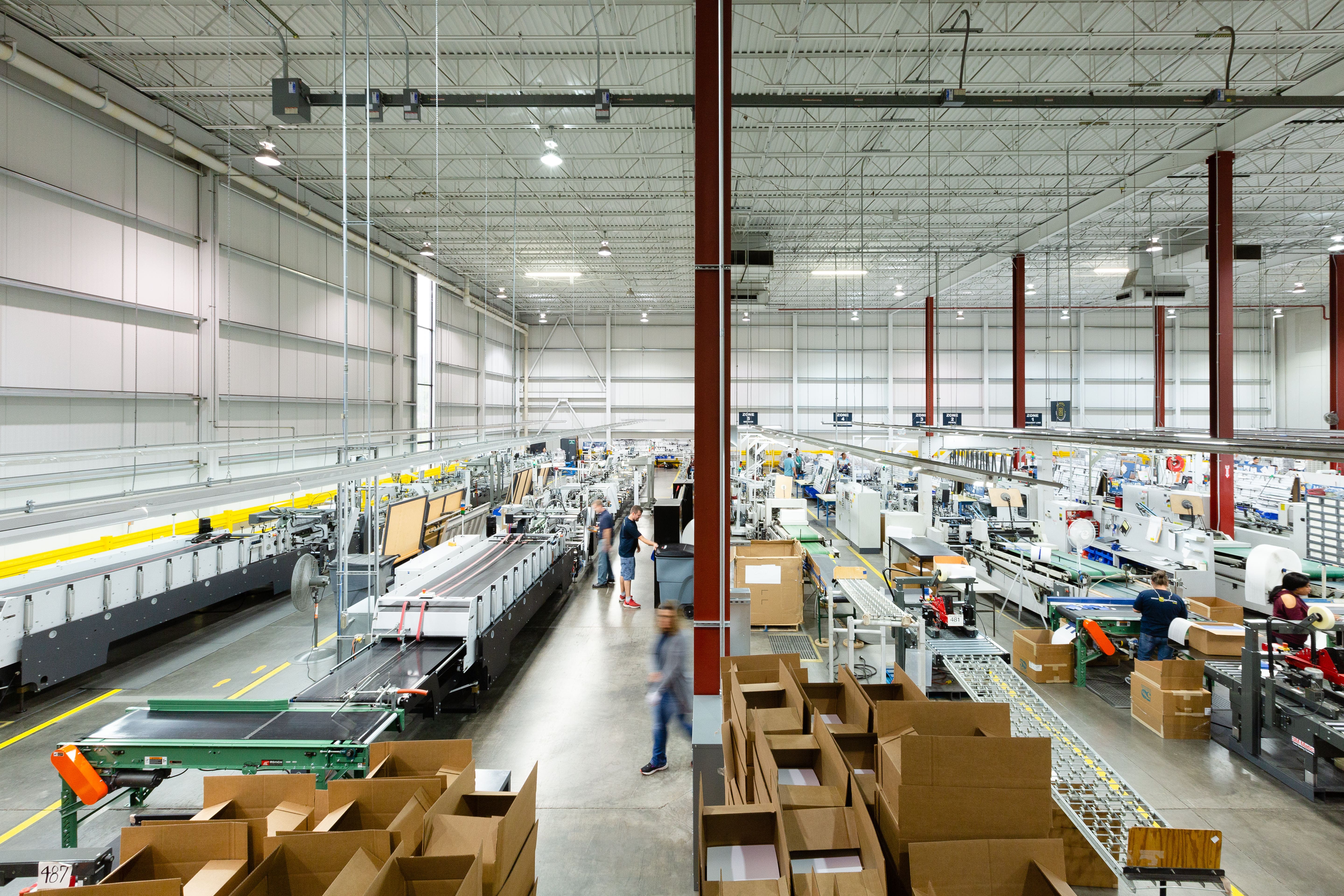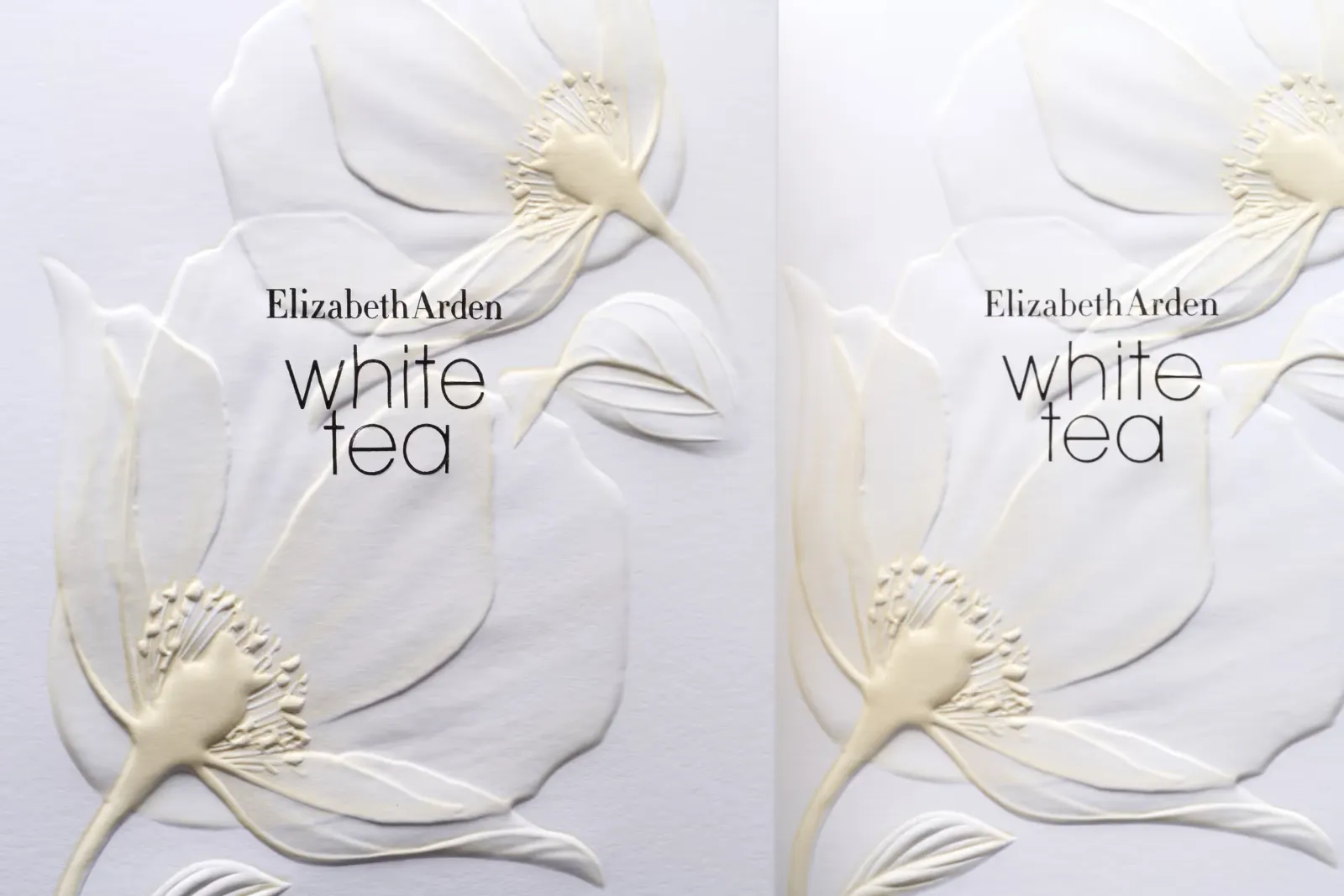

A blind emboss has nothing to hide behind: No ink to carry the shape, no foil to catch the eye, only a raised surface and the way light falls across it. Brand teams reach for blind embossing when they want a carton to feel more high-end without metallics, but it disappoints when they choose the die, board, or depth in isolation. Arkay, a folding carton manufacturer founded in 1922, specifies all three as one decision.
What Is Blind Embossing?
Blind embossing is a finishing process that raises a logo, pattern, or texture from the paperboard using a metal die and a matching counter die under pressure, usually with heat. The sheet is squeezed between the two halves and permanently reshaped. “Blind” means the relief stands alone: It is not registered to printed ink or foil stamping, so the design exists only as form.
Arkay Packaging is a fourth-generation, family-owned folding carton manufacturer that runs this work on solid bleached sulfate (SBS) board at its carbon-neutral facility in Roanoke, Virginia, alongside printing, die cutting, and gluing.
How Blind Embossing Works
Blind embossing turns a flat file into a permanent shape in four stages.
- Artwork becomes a die. The emboss design is supplied as its own vector layer, and a die maker engraves it into metal: The die carries the design in reverse, and the counter die carries its mirror image, so the two fit together like a mold.
- The tools are set up for the board. The counter die is built and adjusted to the thickness and give of the paperboard that will run, which is why a board change usually means new tooling.
- The sheet is pressed. The printed, coated sheet passes between the die and counter die, which squeeze it under pressure, usually with heat, so the fibers stretch into the shape of the relief and set there. Embossing normally comes after printing and coating, so the finished surface is what gets shaped.
- The result is proven on a sample. Depth, crispness, and placement are checked on an embossed sheet of the production board before the full run is approved.
Because nothing is printed, the only things that change the result are the die, the board, the depth, and the pressure. That is why those choices get made together.
Common Uses of Blind Embossing on Packaging
On a folding carton, blind embossing usually lands on the front panel or the lid, where the hand and the eye meet the box first. The most common uses:
- Brand marks and logotypes: A raised logo on an otherwise clean panel, often on white or a single solid color.
- Monograms, crests, and seals: Heritage marks that suit a multi-level die, with an emblem lifted above a raised field.
- All-over textures and patterns: A linen weave, a geometric repeat, or a pattern that covers the whole panel and turns plain board into a surface people want to touch.
- Quiet accents on minimalist designs: A single raised line, border, or name on a carton that relies on restraint rather than color.
- Tactile cues: A raised mark that helps the hand find the front of the carton or the place to open it. Our guide to inclusive packaging covers tactile design in more depth.
Blind embossing shows up most in categories where the carton is part of the product’s value: Skincare and cosmetics packaging, fragrance, premium spirits, and gift and limited-edition cartons.
How Blind Embossing Makes a Packaging Design Feel Luxury
Luxury packaging often signals value through what it leaves out, and blind embossing is a finish built on restraint. Four things make it work:
- It invites touch: A raised edge is something the fingers find without being told, and a carton that rewards handling feels more considered than one that only looks good.
- It plays with light: The raised face catches light, the sloped edge of the relief (the shoulder) throws a small shadow, and the mark appears and fades as the carton turns in the hand.
- It signals confidence: A design that needs no metallic or extra color to carry the brand reads as assured rather than loud, which suits brands whose identity is already strong.
- It shows craft: Embossing needs dedicated tooling matched to the board, and a crisp relief is visible proof that the carton was made with care.
The effect depends entirely on execution. A shallow, soft emboss on the wrong board reads as a production fault rather than a design choice, which is why the die, board, and depth sections below matter as much as the idea.
Blind Embossing or Debossing: Which Reads Better on a Carton?
It depends on the light and the brand. A blind emboss pushes the mark toward the viewer, so its raised face catches light and reads from further away on a shelf. A blind deboss presses the mark into the board, reads through shadow, and suits a quieter, more architectural look. Our guide to embossing vs debossing compares the two in full.
Embossing Dies: Single-Level, Multi-Level, and Sculpted
The die carries the design, and its construction decides what relief the carton can show. Embossing dies fall into three families, and the right one follows the artwork.
Single-Level Dies
A single-level die raises the whole design to one flat height, like a plateau. It suits logotypes, simple marks, and geometric patterns where a clean outline matters more than modeling. The sides of the relief can be cut flat, beveled, V-shaped, or rounded; a beveled or rounded side softens the shoulder, which helps on deeper dies where a sharp edge can cut into the board.
Multi-Level Dies
A multi-level die steps the design up to two or more distinct heights: A crest on a raised field, with its emblem lifted again above that. It gives hierarchy a single plateau cannot, but each extra level stretches the board again.
Sculpted Dies
A sculpted die models the design in continuous, rounded relief, closer to a coin than a stamp. Sculpted embossing tools are typically cut by a CNC engraver from a grayscale depth map, where each shade of gray stands for a height, then finished by hand, which puts them at the top of the cost range. Brass is the usual metal because it takes hand finishing and holds up across long runs.
Die Metals and How Long They Last
The metal decides both what the die can do and how long it lasts. Two paperboard makers publish consistent guidance:
Sources: Iggesund Paperboard Graphics Handbook, n.d. (configuration); Billerud, 2023 (durability).
For a carton that will be reordered for years, the durability column carries the decision: A brass embossing die costs more up front, but a die remade partway through a program costs more again and has to match the original exactly.
The Counter Die Is Built for Your Board
The counter die (also called the make-ready) carries the mirror image of the design and is adjusted to the thickness and compressibility of the board. Iggesund’s handbook notes that tooling is usually built for one board grade and weight, and that running a different grade through the same tool is very difficult. So send the die maker a sample of the board you will actually run, and treat a board change as a tooling question, as you would with die cutting.
How Deep Can a Blind Emboss Go?
There are real limits to how far you can press paperboard out before it cracks, and the published ranges are wide because they depend on the board and the die. Iggesund puts relief height or depth at 0.15 to 2.5mm. In everyday terms, the shallow end is about the thickness of one and a half sheets of copy paper; the deep end is about as thick as one and a half US quarters stacked. Billerud (2023) gives a narrower range for embossing generally, from a subtle 0.004 inch (about one sheet of copy paper) to a dramatic 0.025 inch (about 0.6mm, a little thinner than a credit card).
There is no published formula linking depth to board thickness. Depth is set for the specific board and design, then proven on a sample. Detail matters as much as board: Iggesund notes that the finer the detail and the deeper the relief, the fewer boards can deliver both, so intricate artwork usually calls for a shallower die.
Which Paperboard Stocks Hold a Crisp Blind Emboss?
A crisp blind emboss needs a board that behaves like good leather: Stiff enough to hold a sharp edge, elastic enough to stretch without splitting, and willing to keep its new shape once the pressure is off.
Fiber Is What Lets the Board Stretch
Long, strong fibers carry a deep emboss without cracking. Iggesund’s guidance is that board made from chemically processed long fibers meets the demands, and that fully bleached, multi-ply board with uniform density gives the best result for deep relief. That describes SBS, the default board for premium embossed cartons. Our overview of paperboard grades covers how SBS compares with other grades.
Caliper Sets How Much Board There Is to Work With
Caliper is board thickness, measured in points, where one point is a thousandth of an inch. Arkay runs SBS from 14 to 28pt, and 18pt and heavier is the typical choice for embossing. For scale, 18pt is roughly 60 percent of the thickness of a credit card, and 28pt is close to a credit card’s full thickness. A heavier caliper gives the die more material to shape: A cleaner shoulder and a mark that survives handling.
Coatings and Laminates Decide Whether the Surface Cracks
The board’s surface has to stretch with the fibers beneath it. Iggesund stresses that high elasticity in the coating is what prevents surface cracking. One print vendor’s published guide makes the same point from the other side: A heavy gloss coat is the surface most likely to craze along the shoulder, and coated, heavily calendered sheets crack there more readily. Film laminates add another layer that has to stretch over the relief. Iggesund’s handbook places embossing last, after print, varnish, or lamination, so any surface planned for an embossed panel should be proved on an embossed sample sheet before it is approved.
Preparing Artwork for a Blind Emboss
Most blind-emboss problems begin in the file. Five habits prevent them:
- Put the emboss on its own layer: Supply it as vector artwork filled with a single named spot color, separate from the print layers, so the die maker cannot confuse it with ink.
- Draw for the die, not the screen: Hairlines, small serifs, tight counters, gradients, and photographs do not translate into relief.
- Go bolder than you think: With no ink to define its edges, embossed type and line work read smaller and lighter than the same artwork printed.
- Brief sculpted work in three dimensions: A sculpted die needs height information: A grayscale depth map, a reference sample, or both. A flat vector alone does not tell the engraver where the design rises and falls.
- Keep relief clear of folds and glue areas: Every emboss zone is checked against the carton’s die-line, a review Arkay calls “omitting.” Relief that crowds a score can stop the panel folding cleanly, so the two are planned together.
The emboss layer then goes through the same packaging prepress checks as the rest of the carton file.
Production Constraints to Plan For
Four constraints shape the schedule and the result.
1. Treat the Die as Tooling, Chosen for the Program’s Length
The die is a one-time tool built for one design at one size. Change the mark, move it, or resize the panel, and the tool has to be remade. Choose the metal for the whole program rather than the first order, and time artwork changes to coincide with tooling decisions.
2. Approve the Emboss on the Board That Will Run
Because the counter die is tuned to one board, the approval sample has to be on the production board and caliper, with the production coating. A physical prototype shows what a screen cannot: How deep the relief reads, how the shoulder looks under shop lighting, and how the mark feels.
3. Expect Depth to Cost Speed and Stack Height
Iggesund notes that relief with only small differences in level lets the press run faster and makes finished sheets easier to stack. Cartons are stacked, shipped flat, and run through folder-gluers before anyone opens them, so a depth that looks right on a single proof has to survive that journey without flattening. Choose the shallowest depth that still reads.
4. Plan Where the Emboss Lands on the Carton
Blind embossing has no printed element to line up with, but on a carton it still has to land in an exact spot on the panel, centered on the face and clear of the scores. Arkay holds emboss registration to ±0.3mm, which is roughly the thickness of three sheets of copy paper.
How Arkay Engineers Blind-Embossed Cartons
With four generations of family ownership and more than 100 years of manufacturing behind it, Arkay treats a blind emboss as a specification, with board, die, and depth agreed together. Every embossed carton runs on SBS from 14 to 28pt, emboss zones are reviewed against the die-line, and finishing runs under the same roof as G7-certified printing and die cutting, as our manufacturing capabilities page sets out.
For brand teams still shaping an idea, the Arkay Design Studio in Hauppauge, New York, can typically turn a concept into a physical mock-up within a week. For decisions that need production equipment, Arkay’s proprietary Paint on Press process, developed under Chairman Emeritus Howard Kaneff, can run up to 20 variations, including embossing and debossing combinations, before a brand commits to a full run.
On cosmetics cartons, one of Arkay’s core categories, a quiet blind-embossed mark often does more than another color.
Send Us the Mark You Want to Raise
Let’s talk about the mark you want your customers to feel.
A blind emboss is easiest to get right at the start: The artwork, the board, and the depth decided together, before the die is cut. Send us the artwork and the board you have in mind, even if neither is final, and we will work through with you which die suits it and how deep the relief can go.
Contact the Arkay team to start with a sample rather than a guess.