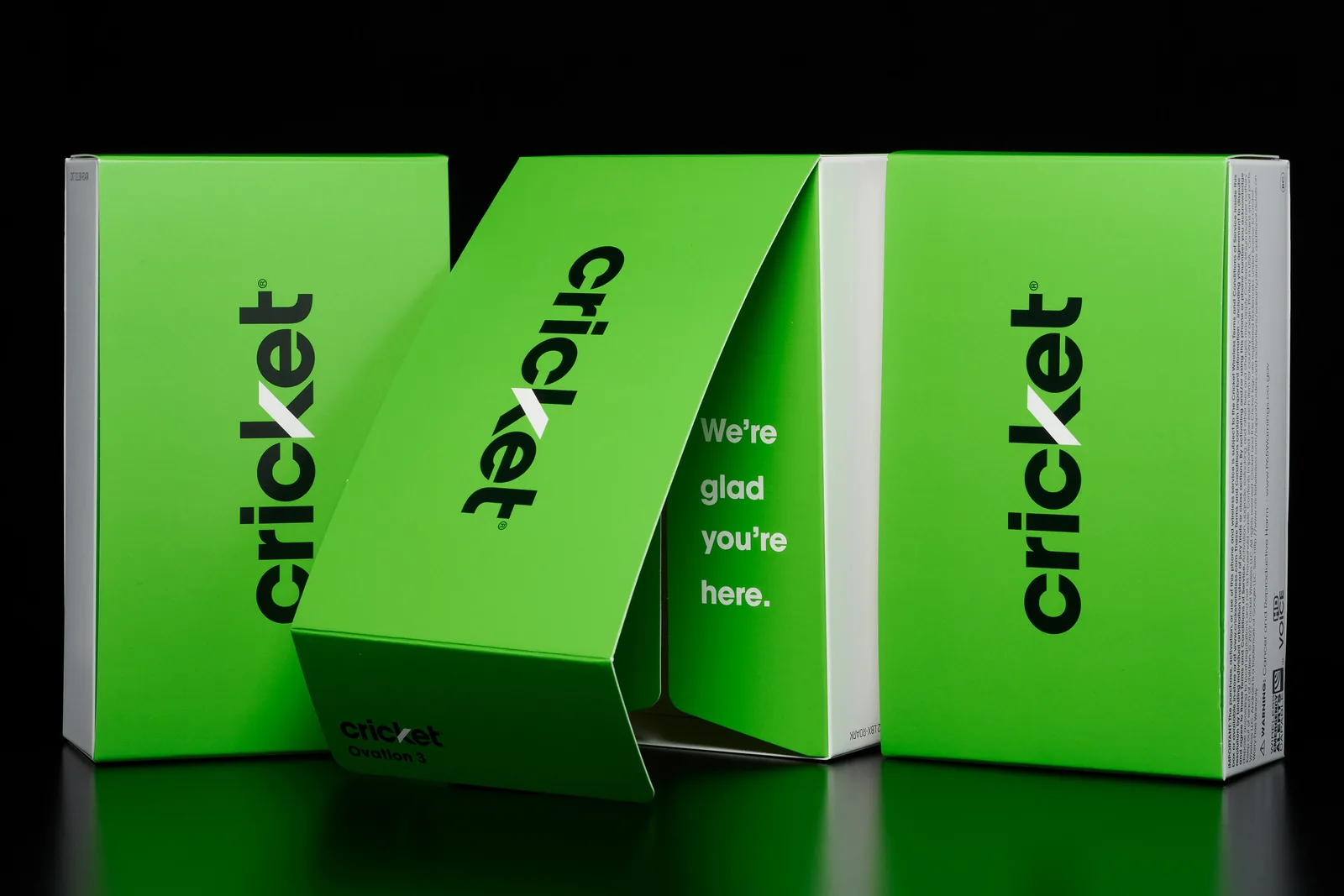

A product sealed in a welded clamshell, wired to a card, has the buyer reaching for a box cutter before the product. Frustration-free packaging designs that moment out of the pack.
Amazon started the initiative in November 2008 with 19 products, targeting hard plastic clamshells and wire ties, and launched a certification program a year later. The term has since stretched to mean any pack designed to open easily, protect the product, and waste less, which is different from the specific rules a retailer tests against.
For a folding carton, the distinction is practical, and the folding carton is where Arkay works. A fourth-generation, family-owned folding carton manufacturer operating since 1922, Arkay engineers paperboard cartons whose opening, closure, and structure are decided at the dieline, long before a shopper ever touches one.
What Frustration-Free Packaging Means
Frustration-free packaging (FFP) is packaging designed so the customer can open it quickly, by hand, without damaging the product, and dispose of it easily afterward. In practice, a frustration-free pack meets three tests:
- Easy to open: The product can be removed by hand within 120 seconds, without scissors, knives, or box cutters.
- Eco-friendly materials: The pack uses 100% curbside-recyclable materials and is free of plastic inserts, blister packs, welded clamshells, and packaging peanuts.
- Compact design: The container is custom-sized to match the product closely, rather than shipped in an oversized box with excessive void filler.
The term carries two meanings that are easy to confuse. As a design philosophy, it describes principles any brand can apply to any pack. As a certification, it is a specific retailer program with measurable rules and a mandatory transit test.
What to Expect From a Frustration-Free Pack
Two consequences follow for the buyer, and both are worth planning for:
- SIPP compliance: A certified frustration-free pack meets Amazon’s Ships in Product Packaging (SIPP) standards, which means the item often ships directly in its own retail box, with only a shipping label added.
- Retail box risk: For collectibles such as LEGO sets, the shipping label may be applied straight onto the manufacturer’s box with no outer protective carton, which can leave scuffs or damage that matter to collectors.
That second point is why the box itself has to be designed for the trip. Where the box is part of the product, a right-sized overbox is often the better call.
The Five Principles of Frustration-Free Packaging
Each of the five principles below changes something specific on a carton.
1. It Opens Without Tools
The opening path is built into the pack rather than left to a blade: A tear strip, a perforated panel, or a tuck that releases cleanly. On a carton, this is decided at the dieline, before any printing.
2. It Protects the Product on Its Own
Easy to open cannot mean easy to break. A frustration-free pack has to hold the product still and keep the closure shut through sorting, conveyors, and doorstep delivery, often with no overbox around it. Every certification route ends in a transit test, because the pack has to arrive in the condition it left.
3. It Uses Only the Material the Product Needs
Right-sizing the carton reduces board use, shipping volume, and void space at the same time. On a folding carton, this is set at the structural design stage, when the internal dimensions and any paperboard partitions are fixed.
4. It Recycles at the Curb
The buyer should not have to separate materials. That favors a single material family, such as paperboard with a paper-compatible finish, over a carton with a plastic window or insert. A recyclable carton starts with the board and holds that status only if the finish does not compromise it.
5. It Can Ship in Its Own Container
The pack travels to the customer as it is. This is the principle that shapes the structure most, because the closure, the board, and the dimensions now carry the product through the parcel network.
Frustration-Free Principles vs Retailer Certification
The principles are a design approach any brand can use; certification is a retailer’s test of one specific pack. Amazon’s program, renamed Ships in Product Packaging in December 2023, is the best-known example: Its Tier 2 covers packs that ship with no overbox, and its stricter Tier 1, Frustration-Free Packaging, adds the recyclability and easy-open requirements.
Requirements vary by retailer and change over time, so check the current version before designing to one. Certification also belongs to the brand that sells the product, not to the carton supplier. Our guide to shelf-ready packaging covers how a parcel-network specification differs from what a store retailer asks of a case.
Standard vs Frustration-Free Packaging: What Changes
Standard retail packaging and frustration-free packaging are optimized for different moments. Standard packaging is built to sell from a shelf and is usually protected in transit by a shipper or overbox. Frustration-free packaging is built to be opened easily at home and to survive the trip there.
Standard retail packaging is often oversized to gain shelf presence and uses windows and cut-outs that an online customer does not need. Those are exactly the features that make a pack work in a store. A brand selling through both channels is choosing, product by product, which of those jobs the carton does.
How Good Packaging Design Avoids Frustration
Opening is one moment in a longer experience. A carton can tear open in seconds and still frustrate the buyer if the product is wedged in, the instructions are on the flap that just got ripped away, or the empty pack needs three bins. Good design looks at each stage the customer goes through:
- Finding the way in: A visible cue, such as a printed arrow, a “pull here” tab, or a tear strip in a contrasting color, so nobody has to hunt for the opening or attack the wrong panel.
- Opening cleanly: Tear lines that run along the structure rather than across the artwork, so the carton still looks good once it is open and can be kept if the buyer wants to.
- Getting the product out: No friction fit that needs shaking, and paperboard partitions that lift out with the product rather than trapping it.
- Reading what matters: Usage and care information placed on a panel that survives the opening, in type large enough to read. Our guide to inclusive packaging covers legibility and accessible opening in more depth.
- Disposing of it: One material family that flattens easily and goes straight into the recycling bin.
None of this requires plain brown board. Presentation moves from a window, a hang tab, or an oversized footprint to print, color, and finish on flat panels, and to the opening itself: A clean tear strip that pulls along a printed panel becomes part of the unboxing.
The harder question is whether one carton should do both jobs. For many products the better answer is two specifications, a shelf carton for retail and a ships-alone carton for e-commerce, with shared artwork. For others, a single right-sized carton with a robust closure serves both. That decision is best made early, before the dieline is drawn, because it changes the structure rather than the artwork.
Applying Frustration-Free Principles to a Retail Folding Carton
The carton decisions sit in a predictable order, and each one costs less to change at the dieline than after tooling.
1. Design the Opening Path Into the Dieline
Decide where the customer’s hands go first. A tear strip or perforated opening is cut into the carton during die cutting, using a perforating rule that makes a partial cut rather than a full one. The balance is delicate: Too weak and the perforation opens in transit, too strong and it tears across the artwork instead of along the line.
2. Choose a Closure That Holds in Transit and Releases by Hand
Tuck ends, auto-lock bottoms, and crash-lock bottoms each behave differently under load and when opened, and our overview of folding carton styles compares them. For a ships-alone carton, a locking closure matters, since a plain tuck with no lock is the closure most likely to need tape to survive a parcel network. Easy opening can also pull against tamper-evident cartons, where a tear strip doubles as proof the pack has not been opened, so settle which job the feature does.
3. Right-Size at the Structural Stage
Fix the internal dimensions to the product, not to a shelf facing, and use paperboard partitions rather than loose fill to hold it still. Structural packaging design is where this happens, and it is also where oversized packaging gets caught before it inflates shipping volume.
4. Keep the Carton Mono-Material
A plastic window, a laminated film, or a plastic insert makes the carton harder to recycle and can rule it out of frustration-free certification. Paperboard with a paper-compatible finish keeps the carton in one material family. An aqueous coating protects the print without adding a separate film layer.
5. Prove the Opening on Real Samples
A tear strip that works on a drawing can fail on the board. Physical samples let a brand team time the opening, check that the closure survives handling, and send units to a test lab before committing to production. Packaging prototyping is the least expensive point at which to find out.
How Arkay Engineers Easier-Opening Cartons
With more than 100 years of manufacturing experience across four generations, Arkay makes secondary folding cartons in solid bleached sulfate board from 14 to 28pt (0.014 to 0.028 inch thick, so the heaviest board is just under the thickness of a credit card), printed offset and finished in-house at a carbon-neutral 140,000 sq. ft. facility in Roanoke, Virginia. In practice, we make the paperboard carton, and we work alongside the brand’s designers and the primary-pack supplier rather than replacing either.
Our structural engineers turn a brand’s 2D artwork into a 3D carton, working with the brand team on the opening path, closure, and internal dimensions. Our Design Studio in Hauppauge, New York, can typically turn a concept into a physical mock-up within a week, and a structural prototype usually takes around 2 weeks depending on urgency and project needs, so a brand can open, time, and test a carton before anything is tooled.
On recyclability, we are FSC, SFI, and PEFC certified, and recyclability is anchored to the paperboard, with finish compatibility assessed against it. Spec sheets covering substrate certification, finish composition, and recyclability characteristics are available per project on request. Where a tactile finish is wanted, we run inline soft-touch aqueous coating, which stays repulpable. Our capabilities page lists what runs under one roof, and our guide to paperboard grades covers board choice.
Certification belongs to the brand selling the product, so a carton can be built to the principles without the manufacturer holding one.
Engineer the Opening Into Your Next Carton
Let’s talk about how your carton opens.
Moving a product online, or tired of reviews that mention a box cutter? Start with what the carton has to protect, where it ships, and whether one specification can serve both shelf and doorstep. Bring a current carton or a dieline, and we will work through the opening path and closure with your team before the structure is locked.
Reach out to Arkay’s team to start that conversation.