
A sealed box cannot show what a product smells like. Scented packaging closes that gap by putting fragrance on the pack itself, so a shopper can smell a perfume or a candle before opening anything.
A folding carton can carry scent too, usually as a coating or label applied by specialist scent printers. Arkay Packaging, a family business making folding cartons since 1922, produces cartons for fragrance and beauty brands, so this guide covers how scent is added, what suits a carton, and what to plan around it.
What Is Scented Packaging?
Scented packaging carries fragrance on its printed surface or on an attached component. The fragrance is almost always sealed in microcapsules: Droplets of fragrance oil inside a polymer or gelatin shell about 20 to 30 microns across, finer than a human hair.
The capsules are mixed into an ink, a clear varnish, or a coating and printed onto the pack. In scratch-and-sniff printing, rubbing breaks some capsules to release the scent, and the unbroken ones hold their fragrance for later rubs. Other formats give off scent passively or when a label layer is peeled back.
How Is Scent Added to Printed Packaging?
Scent printers mix the capsules into a slurry with a binder and apply it by screen printing, flexo printing, or a coating unit. The options differ in where the capsules sit and how the scent comes out.
The layers underneath matter too. Scent printer H&H Graphics reports the best results over UV coatings, with a non-aqueous varnish laid down before the scent layer, so plan scent alongside the other types of packaging finishes from the start.
Can a Folding Carton Be Scented?
Yes. A folding carton can carry a rub-release varnish, a passive fragrance coating, or an applied scented label, and fragrance coating specialists list folding cartons among the formats they coat.
Where the Scent Can Go
- Exterior panels: A rub area on the front or side lets shoppers sample at the shelf.
- Inner flaps and lid panels: Scent revealed at opening becomes part of the unboxing, as long as the panel does not touch the product.
- Promotional areas: A sampling panel on a gift set can carry scent without touching the main artwork.
What the Board and Process Need
Scratch-and-sniff coatings perform best on coated stock, according to H&H Graphics. Folding cartons are made from paperboard, not corrugated cardboard, and SBS paperboard has a smooth, coated surface suited to fine print and coatings.
Even so, test the scent layer with the real board, inks, and finishes. The capsules are built to break under pressure, so folding, gluing, and packing need checking on a sample too.
What Is Scented Packaging Used For?
Common uses include:
- Perfume and fragrance: A scented panel previews the fragrance without a tester.
- Beauty and personal care: Body, hair, and bath products can signal their scent on cosmetics cartons.
- Candles and home fragrance: A scented panel hints at what is inside a sealed box, a fit for lifestyle goods packaging.
- Food and beverage promotions: Aroma panels on outer packaging only, subject to the product-contact checks below.
- Limited editions and campaigns: Scent can mark a seasonal or limited edition release without changing the structure.
- Sampling and interactive retail: Gift sets and displays where trying the scent is the point.
What Does Fragrance Packaging Include?
A fragrance pack brings together the bottle, its label, and the outer box, and each has its own job.
- Bottles and vials: Glass, from 10 ml sampler vials (about two teaspoons) to 100 ml bottles (about 3.4 ounces), with a spray atomizer for most perfumes or a roll-on for oil-based scents.
- Outer boxes and cartons: Paperboard folding cartons make light retail packaging. Rigid two-piece or tray-and-sleeve boxes suit luxury lines and gift sets, often with an insert that holds the bottle still.
- Finishes and embellishments: Matte or gloss coatings, foil stamping in gold or silver, embossing, debossing, and spot UV.
- Regulatory labeling: The outer box typically carries the ingredient list and the brand or manufacturer name and address, plus expiry or period-after-opening details in some markets. Our guide to cosmetic packaging compliance covers the US rules.
Arkay makes the outer folding carton, working alongside the suppliers of the bottle, the label, and any insert. Our guides to fragrance packaging and perfume packaging trends cover that carton in more depth.
What Are the Benefits of Scented Packaging?
Scented packaging reaches a sense that print, color, and texture cannot. Used well, it:
- Creates a multisensory experience, so the carton feels like part of the product.
- Stands out on the shelf, giving shoppers a reason to pick it up.
- Invites engagement, turning browsing into interaction.
- Supports sampling, so shoppers can smell it before buying.
- Helps people remember the product, especially at first contact or during the unboxing experience.
Each depends on the scent fitting the product. A scent that clashes or overpowers works against the brand.
What Should Brands Consider Before Choosing Scented Packaging?
1. Fragrance Selection
Match the scent to the product, so the carton previews what is inside.
2. Intensity
Too faint goes unnoticed; too strong reads as cloying. Judge intensity on a printed sample, not a vial.
3. Longevity and Release
Decide whether scent should wait for a rub or be present from the start. Rub-release keeps fragrance sealed until use, while passive coatings release it continuously.
4. Compatibility With Print and Finishes
Check the scent layer against the inks, foil, and base coating. Water-based aqueous coating is a common carton finish, so confirm which base coat the scent supplier needs.
5. Product Contact
Keep scent off surfaces that touch the product, and test filled cartons for fragrance transfer. On food and nutraceutical cartons, never place a scented coating where it could contact food.
6. Regulatory and Safety Documentation
Ask the coating supplier for safety data sheets and written confirmation that the coating suits the intended use, and file both with the carton specification.
7. Storage and Environment
Heat, pressure, and long storage affect capsules, so plan how cartons are stacked, shipped, and warehoused.
8. Feasibility and a Physical Sample
Scent adds a material, a step, and testing time. Approve it on a packaging prototype with the real board, print, and finishes.
How Arkay Builds Fragrance and Beauty Cartons
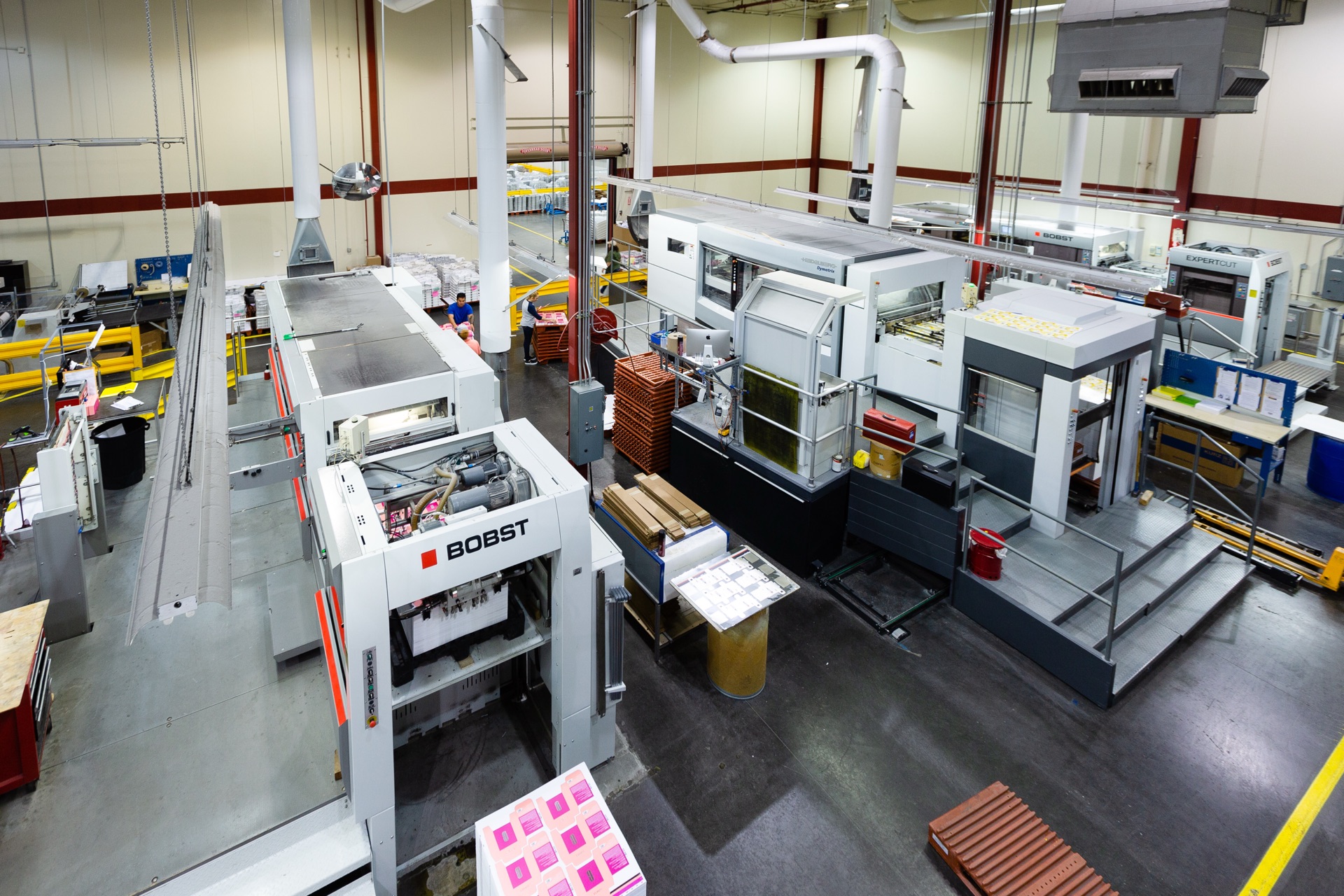
Arkay has made cartons since 1922, with the same family at the helm for four generations. Its carbon-neutral plant in Roanoke, Virginia, prints offset on SBS paperboard from 14 to 28pt, roughly a business card up to about twice that. G7 color management keeps color consistent from proof to press, and two double flexo coaters apply pearlescent, gold, or silver effects inline.
The plant is also BRCGS certified for packaging safety, a global standard for safe packaging manufacture. Arkay’s Design Studio, based in Hauppauge, NY, can turn a carton idea into a physical sample, usually within a week, with the team working alongside brand and design teams and the bottle and label suppliers. See the full range of capabilities.
See What We Can Do for Your Fragrance Carton
Let’s talk about your fragrance carton. Share the product and where it will sell, and our team will walk you through what Arkay can do on the board, the print, and the finish, from foil and embossing to inline pearlescent coatings and Paint on Press. Tell us about your project.