
At some point in every carton project, the manufacturer asks for artwork placed on its dieline. It sounds like a file-format request. In practice it is closer to a contract: The dieline decides where the board will be cut, where it folds, which panel faces the shopper, and where the glue goes. Artwork placed on the wrong version can look perfect on a monitor and still come off the folder-gluer with a logo split across a fold.
Here is what a dieline is, why it matters, what dielines look like for common carton styles, who should create one, and the checks to run before artwork approval, from a manufacturer that has printed and cut paperboard cartons since 1922.
What Is a Dieline?
A dieline is a flat drawing of a package before it is folded, drawn at full size, showing every line where the board will be cut, creased, perforated, or glued. Designers place their artwork over it. Manufacturers use it to build the cutting die and to confirm that the printed sheet lines up with the structure.
The name is literal. In folding carton production, a steel-rule die, a board fitted with sharp cutting rules and blunt creasing rules, presses the printed sheet into flat carton blanks. The dieline is the drawing that die is built from, which is where our guide to die cutting picks up.
Three terms get mixed up. The dieline is the drawing. The die is the physical tool made from it. The artwork is the graphic file laid over the dieline. The dieline sits on its own layer so the press and the cutter can read it, and it never appears on the carton that ships.
Arkay Packaging, a fourth-generation, family-owned premium folding carton manufacturer operating since 1922, works on both sides of that drawing: Its structural engineers design dielines for custom folding cartons, and its Roanoke, VA, plant prints and cuts the cartons made from them.
Key Components of a Dieline
Every line on a dieline is either an instruction to a machine or a margin for the artwork. Suppliers vary the colors and dash patterns, so follow the legend on the file you receive, but the six components below appear on almost every carton:
- Cut lines (trim lines): Solid lines showing where the machine will slice through the board to form the outer shape. Sheets shift very slightly on the press and in the die cutter, which is why bleed and safe zones exist.
- Fold lines (crease lines): Dashed or distinctly colored lines showing where the board will be bent or folded. Paperboard wraps around a small rounded corner rather than folding to a knife edge, so fine type sitting on a crease can look off-center once the carton stands up.
- Perforation lines: Dotted lines that create tear-away strips or easy-open sections. They weaken the board on purpose, which makes them the wrong place for a barcode or regulatory text.
- Bleed lines: An outer margin, usually 3 to 5 mm (about 1/8 to 3/16 inch), where background artwork extends past the cut line so the edge shows ink rather than a white sliver of board. Converters set bleed for their own presses, so the dieline you receive should state it.
- Safety zones: Boundaries inside the cut and fold lines that keep important text and logos from being trimmed off or wrapped around an edge. Background color can run straight through them to the bleed.
- Glue tabs: Designated areas left free of ink and varnish so adhesive can bond the package together. Adhesive grips bare board more reliably than coated print, but the panel that closes over the tab still needs bleed, or a thin white line shows at the seam.
Why Dielines Matter
A dieline is the one file that structural design and print production share, and three things depend on it.
A Visual Blueprint of the Whole Box
A dieline lets a designer see a 3D box laid out completely flat, with every panel, tab, and graphic visible at once. That is where a designer spots that the back panel reads upside down, or that a flap hides part of the logo, before anyone folds a sample.
Manufacturing Accuracy
The dieline travels to the printer and the die-cutting equipment as a separate vector layer, usually built in software such as Adobe Illustrator, to guide automated cutting and creasing. It has to be drawn for the actual board: Thickness, called caliper, changes the numbers. Arkay prints on solid bleached sulfate (SBS) board from 14 to 28pt. A point is one-thousandth of an inch, so that range runs from about the thickness of a sturdy postcard to roughly twice that, and a dieline drawn for one caliper is not automatically right for another. Finishes need the same precision: Foil, embossing, and spot coating each sit on their own layer aligned to the dieline, and Arkay holds embossing registration to ±0.3mm, so a raised area lands within about a third of a millimeter of where the file puts it.
Error Prevention
Working from a dieline confirms that artwork alignment, text orientation, and structural proportions are right before money goes into mass production. Correcting a misplaced barcode takes minutes while artwork is still a file; once it is printed on board, it means new plates and a scrapped run. Confusing inside and outside dimensions is one of the errors a dieline review catches.
Dieline Examples for Common Carton Styles
Every carton style produces a recognizably different dieline. The examples below show what to look for on each, and our overview of folding carton styles compares how they perform.
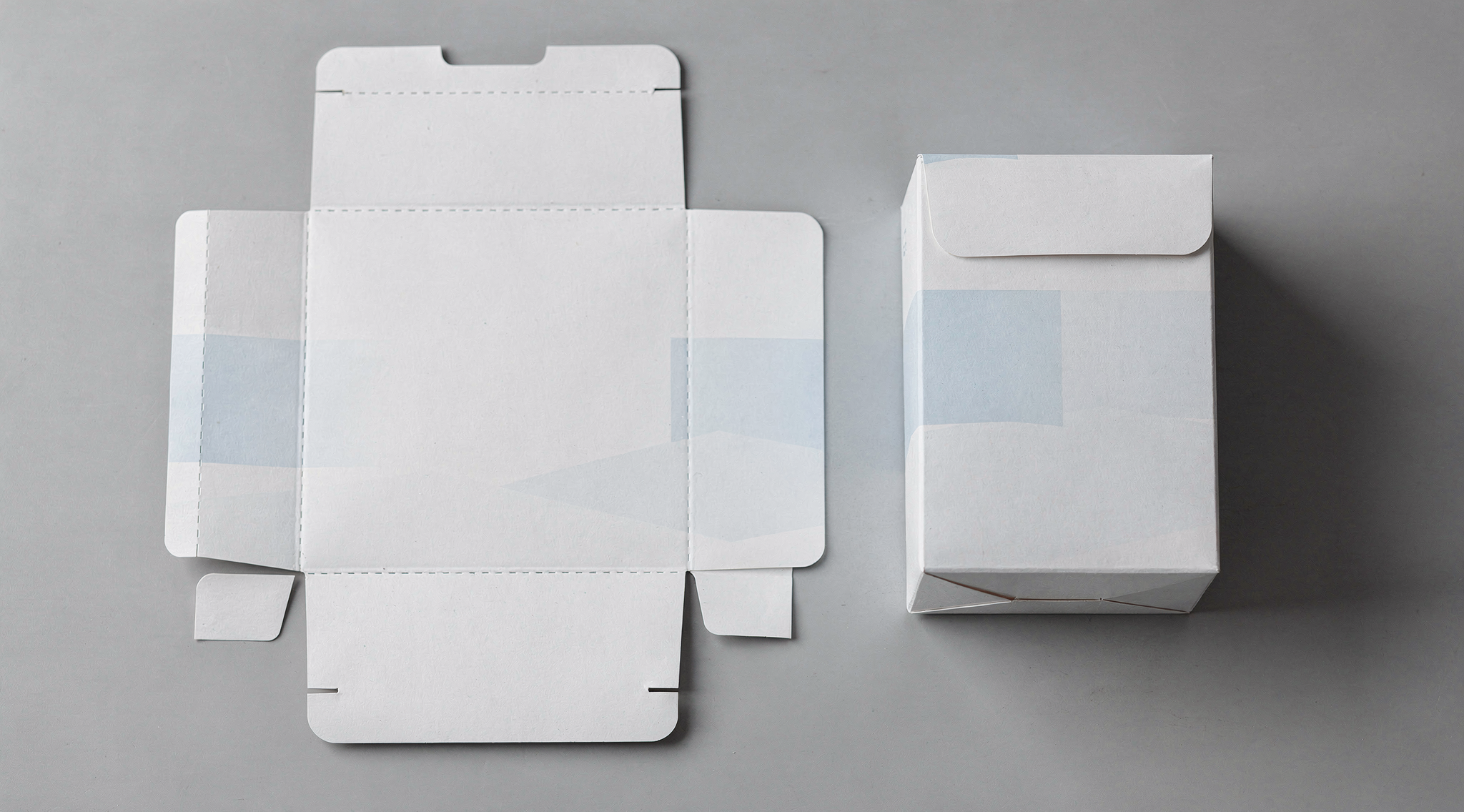
Straight Tuck End
The top and bottom tuck flaps both hinge from the same panel, so on the flat both closures extend from that one panel, one above it and one below. Once folded, both tuck in the same direction, so the tuck seams sit on one face and the opposite face stays uninterrupted. That suits cosmetics and other products where a clean display panel carries the brand.
Reverse Tuck End
The tuck flaps hinge from opposite panels, top flap on one and bottom flap on another. Once folded, the closures tuck in opposite directions. On the flat, that offset lets blanks nest closely on a press sheet, which is why it is such a widely used folding carton layout.
Auto-Lock Bottom
Also called a crash-lock bottom, it shows extra glue areas on the bottom flaps, because the base is pre-glued at the plant and pops into place when the carton is squared up. Expect a more complex dieline with more glue tabs to keep free of ink and varnish. It suits heavier products and fast packing lines.
Sleeve
The simplest dieline of all: Four panels and a glue tab, open at both ends. With no flaps to worry about, the work is all in the bleed and in keeping copy clear of the glue seam.
Carton With a Tear Strip
Two parallel perforation lines, or a zipper cut, run across one panel or around the carton, marking the strip that pulls away to open it. On the dieline, check that no barcode, claim, or ingredient copy crosses the strip, and that the artwork still reads once the strip is gone.
Who Should Create the Dieline: Designer or Carton Manufacturer?
The carton manufacturer should create the dieline, and the designer should build the artwork on it. The split comes down to who owns the equipment: The die, the board, the press sheet layout, and the folder-gluer all belong to the converter, and the dieline has to fit all four.
A designer’s sketch or a template from a past project can look close enough, but neither reflects the caliper, the plant’s creasing rules, or how the blank sits on a press sheet. It gets redrawn anyway, and any artwork built on it has to move.
The pattern that avoids rework runs in three steps:
- The manufacturer issues the dieline for the agreed structure and board, with a version number or date in the file name.
- The designer builds artwork on that exact file, with the dieline on its own locked layer.
- Both sides review the artwork against the dieline, ideally on a folded sample, before the artwork is approved and plates are made.
The same rule holds for an existing carton. Ask the converter for the current dieline rather than reusing a file from a past supplier or an old project folder.
Common Dieline Mistakes Before Printing
Each of these passes a quick look on screen and shows up only once the carton is folded.
1. Building Art on a Template the Converter Did Not Issue
A dieline found online, drawn in-house, or carried over from another supplier can match the shape and still miss on flap length, glue tab width, or tuck clearance. Ask for the production dieline before layout begins.
2. Keeping an Old Version in Circulation
A structural sample shows a tuck flap needs another millimeter, the dieline is updated, and the earlier file stays in the design folder under a similar name. Date or number every dieline file, and archive anything superseded.
3. Stopping the Background at the Cut Line
Art that ends exactly on the cut leaves no margin for normal movement, and white board shows on the edge. The same failure happens on flaps that wrap the glue tab and inside window openings, which are easy to miss because they are not on the outside edge.
4. Placing Critical Copy Across a Crease or Near a Cut
A claim or barcode that crosses a fold reads as a mistake and may not scan. Anything that has to be legible stays inside the safety zone on one flat panel.
5. Leaving the Dieline Layer Set to Print
If the dieline is drawn in a process color, or is not set to overprint, it can print on the carton or knock a thin white line through the artwork below it. Draw it in a named spot color, label it as not for print, set it to overprint, and keep it on its own layer.
6. Drawing Finishes Without Checking the Structure
A foil band that runs over a fold, an emboss that sits on a score, or a coating that covers the glue tab all look fine in a flat proof. Arkay’s production team reviews emboss zones against the score lines before the die is made, a step it calls omitting; check every finish layer against the creases and the glue area before artwork goes for approval. Our guides to foil stamping and embossing and debossing cover how each finish behaves.
A Prepress Checklist for Dieline Artwork
Run the following checks before artwork goes out for approval. They are the checks a designer and brand team can do themselves; the manufacturer’s own packaging prepress still handles separations, trapping, and plate output afterward.
- Dieline source: Issued by the manufacturer for this structure and this board caliper, with the version or date in the file name.
- Dieline layer: On its own locked layer, in a named spot color, set to overprint, and marked not for print.
- Finish layers: Foil, emboss, spot coating, and window areas each on a separate named layer, aligned to the dieline.
- Bleed: Background art carried past every cut, including flap edges and window openings, to the bleed the converter specifies.
- Safety zone: Every piece of text, every logo, and every barcode inside the safe area on its panel.
- Creases and perforations: No fine type, thin rules, or barcodes running across a fold or a tear line.
- Glue tabs: Kept clear of ink and varnish unless the manufacturer has said otherwise.
- Orientation: Front panel and “this way up” marked, and checked on a folded print or sample.
- Sign-off: Designer and manufacturer have both reviewed the artwork against the same dieline version.
How Arkay Works With Designers Before Artwork Approval
With more than 100 years of manufacturing experience across four generations, Arkay treats the dieline as shared ground between a brand’s designer and its own production team. Its structural engineers at the Design Studio in Hauppauge, NY, design custom dielines for folding cartons, working out the shape in structural packaging design first. The studio can turn that structure into a physical mock-up typically within a week, and faster when a launch calls for it. The sample is where cuts, creases, and panel orientation get checked in the hand rather than on a monitor.
Arkay does not replace the brand’s designer. Arkay engineers the structure alongside the brand team; the artwork comes from the brand team or its agency. When the artwork comes back, prepress runs in-house in Roanoke, VA, in the same 140,000 sq. ft. facility as printing, die cutting, and gluing, so the file is checked against the structure that will actually be cut. Color is managed to the G7 standard on press, an industry method for keeping printed color consistent from run to run, as part of Arkay’s wider production capabilities, and our guide to paperboard grades covers how board choice feeds into the structure.
Talk Dielines With Our Structural Engineers
Let’s talk about the structure before the artwork is locked. Tell us the product, the board, and the finishes you have in mind, and our structural engineers will work out the dieline before the art is finalized.
Reach out to Arkay’s team to start the conversation.